
 111
111 2
2 3
3 4
4 5
5 6
6 7
7 8
8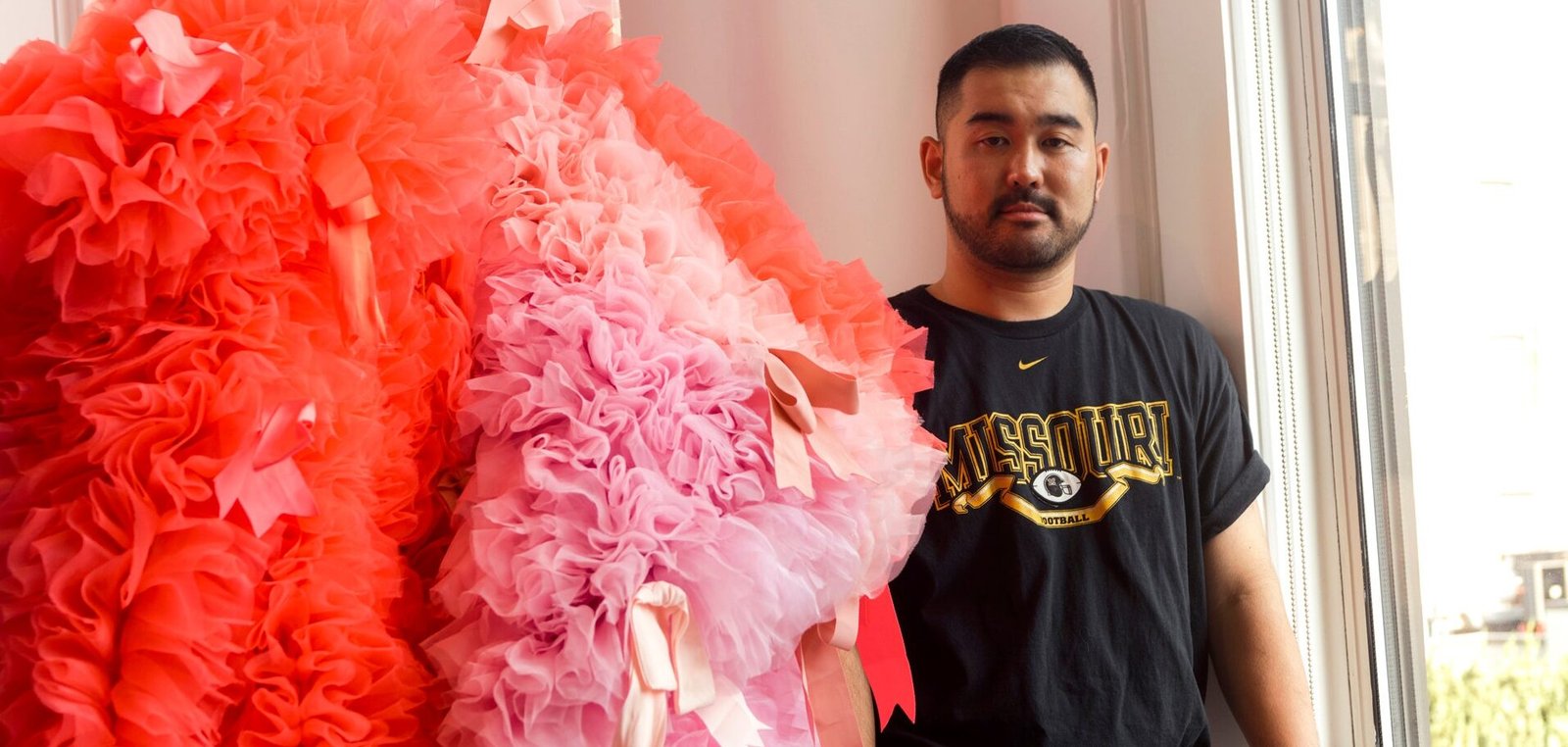
In an industry increasingly governed by commercial restraint, Tomo Koizumi’s (小泉智貴) world unfolds as a brilliant counter-narrative: a realm where hundreds of meters of vibrant Japanese organza are sculpted into floating, architectural clouds. From his quiet origins studying Fine Arts at Chiba National University to captivating Marc Jacobs, Katie Grand, and the heritage ateliers of Emilio Pucci, Sacai, and Dolce & Gabbana, Koizumi’s rise reflects the rare power of uncompromising artistic vision.
Before capturing the imagination of New York and Milan, Tomo Koizumi grew up in the quiet prefecture of Chiba, east of Tokyo—far removed from the traditional fashion capitals of Paris or Milan. Having never attended a formal fashion design school, Koizumi approached garment construction purely through the lens of Fine Arts while studying at Chiba National University.
His earliest aesthetic revelations stemmed not from classic pattern-making, but from the theatricality of Japanese pop stage costumes, John Galliano’s hyperbolic late-1990s haute couture for Christian Dior, and the vivid, feminine iconography of anime, most notably the exaggerated silhouettes of Sailor Moon.
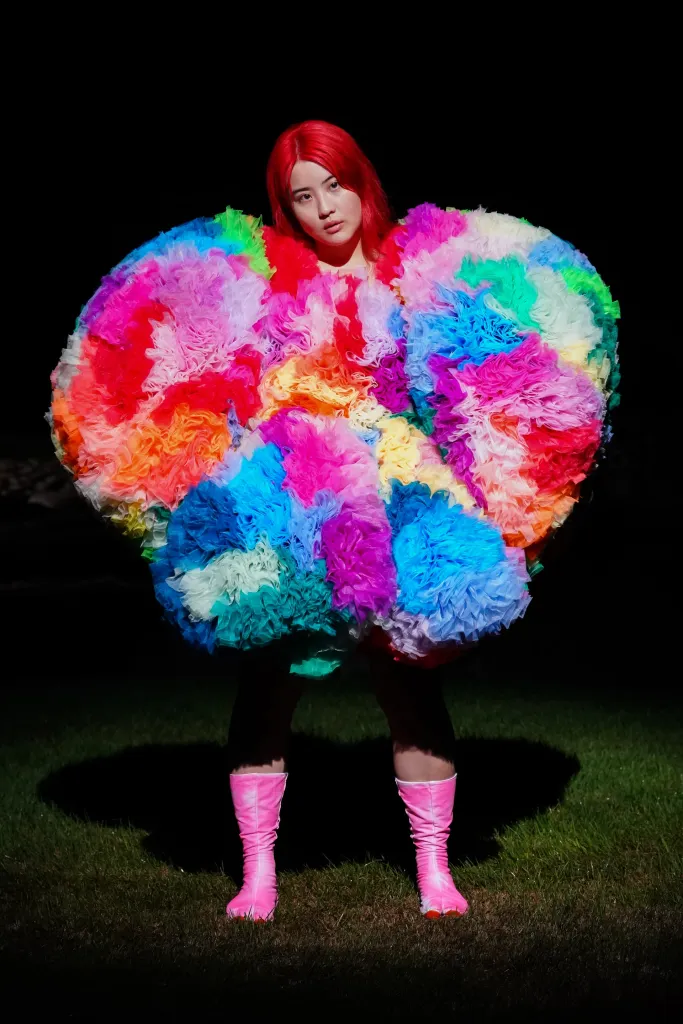
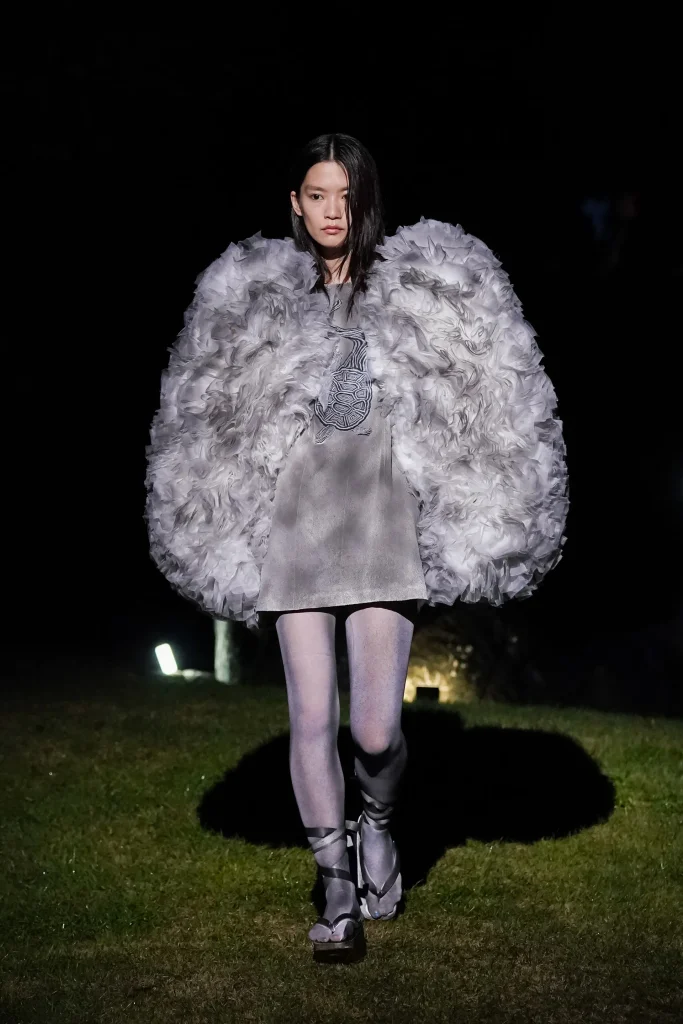
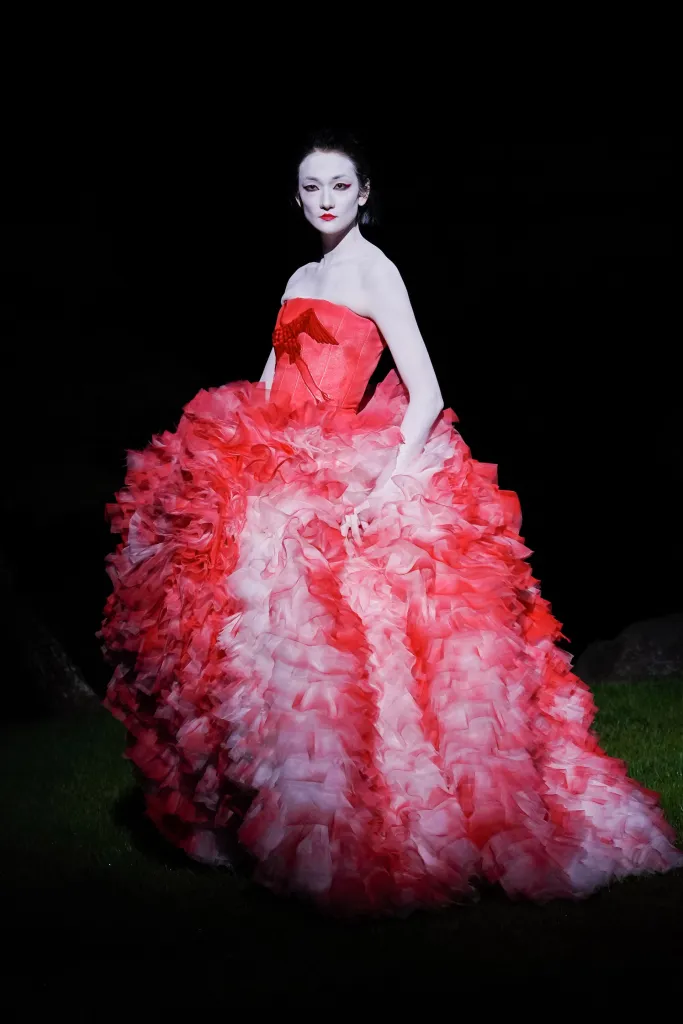
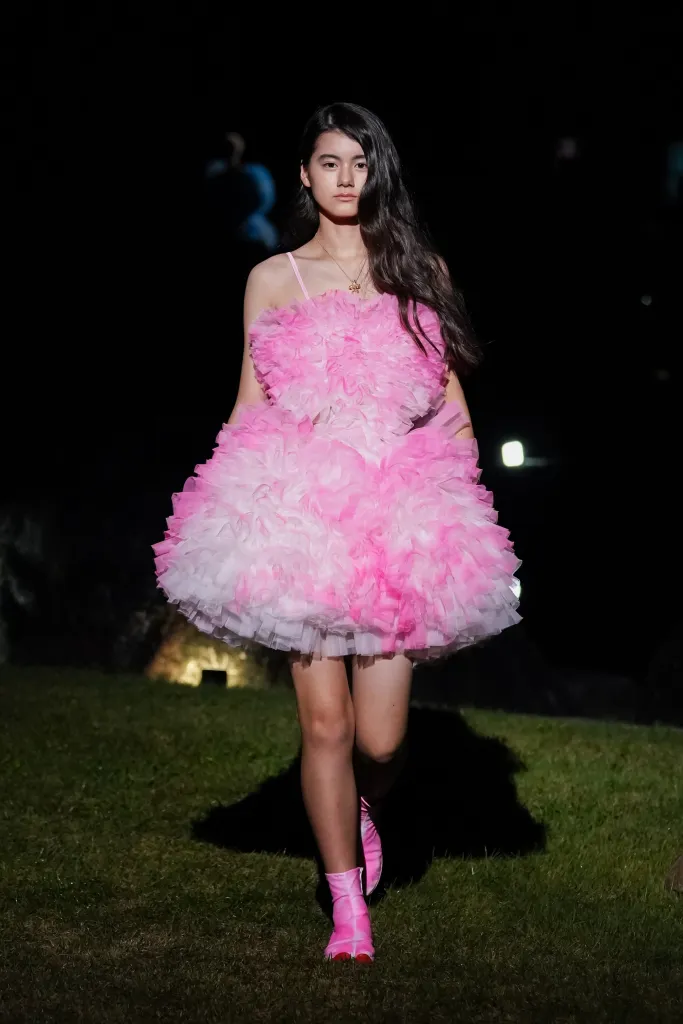
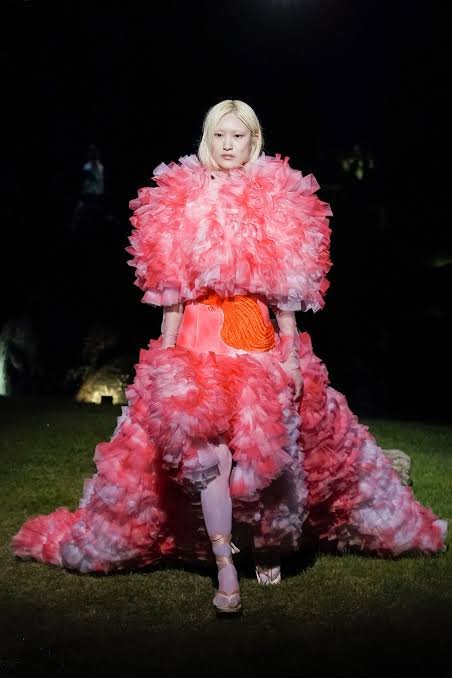
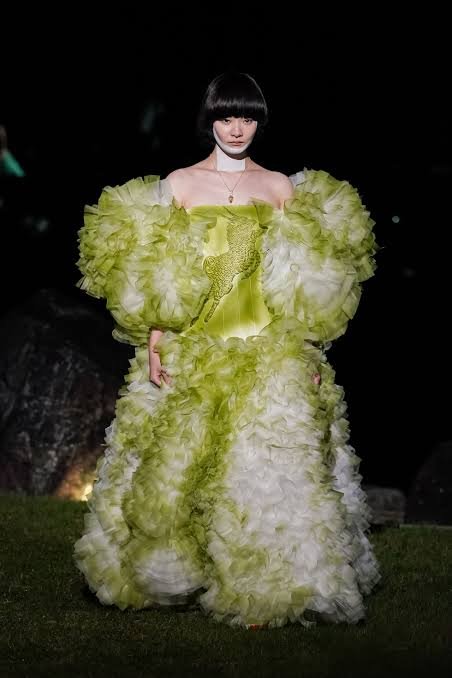
While still an undergraduate, Koizumi began creating bespoke, handmade garments for friends. The sheer visual impact of these early pieces caught the attention of Perfume, one of Japan’s most influential J-Pop girl groups, who commissioned him to design full concert wardrobe sets. This milestone established the foundational chapter of his career: a creator focused on theatrical performance wear, where a garment exists not for mundane utility, but for pure visual devotion.
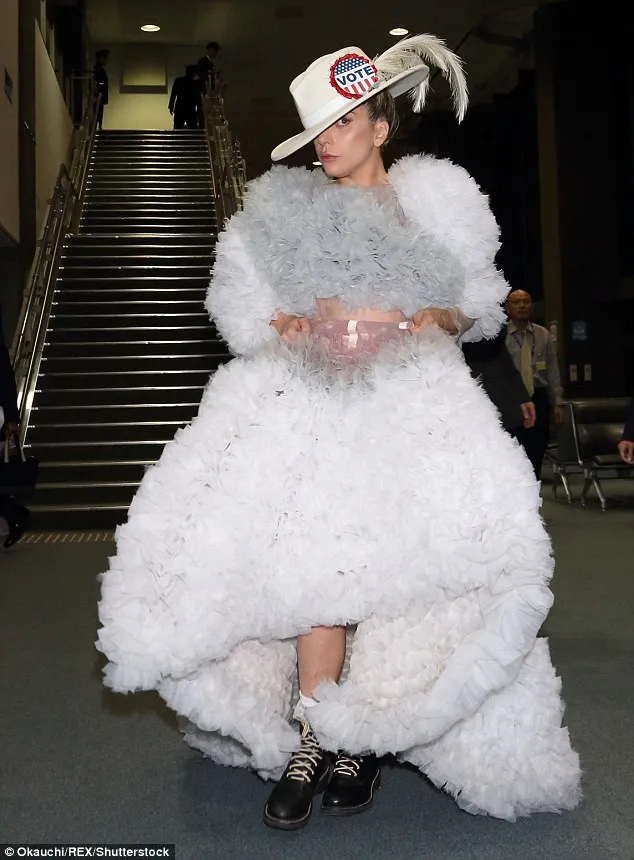
Koizumi’s path into the international fashion ecosystem stands as one of the most compelling digital-era narratives in modern design. In 2016, during a visit to Tokyo to promote her album Joanne, Lady Gaga stepped out wearing one of Koizumi’s voluminous, cloud-like creations. While this celebrity endorsement brought immediate notoriety in Japan, his global breakthrough emerged through social media.

Vogue Italia editor Sara Maino discovered Koizumi’s work on Instagram and shared an image of his ruffled organza gowns. The post caught the eye of British designer Giles Deacon, who immediately forwarded it to stylist and LOVE Magazine founder Katie Grand.
Struck by the scale of Koizumi’s talent and the complete absence of cynical industrialism in his work, Grand mobilized within weeks to orchestrate his official debut at New York Fashion Week for the Autumn/Winter 2019 season.
In February 2019, Marc Jacobs’ flagship boutique on Madison Avenue served as the intimate backdrop for one of the most celebrated NYFW debuts of the 21st century. Operating without a corporate budget or sponsorship, but with the personal support of Jacobs and Grand, Koizumi unveiled his collection.
The runway presentation featured an extraordinary cast: Gwendoline Christie, Bella Hadid, Joan Smalls, Karen Elson, and Emily Ratajkowski descended a narrow spiral staircase wrapped in monumental gowns that resembled floating cotton-candy sculptures, exotic avian plumage, and three-dimensional origami.
Critical acclaim was immediate. Fashion critics hailed the show as an antidote to commercial fatigue—a pure infusion of sartorial joy and escapism. That same year, New York’s Metropolitan Museum of Art (Met) selected one of Koizumi’s gowns for inclusion in its landmark Camp: Notes on Fashion exhibition.
What distinguishes Tomo Koizumi from other designers working with volume is his radical material philosophy and handcrafted technique.
On July 23, 2021, a global audience tuned in to the Opening Ceremony of the Tokyo 2020 Olympic Games. For the ceremony’s climax,the performance of the Japanese national anthem (Kimigayo), pop icon MISIA stood at the center of the National Stadium in a monumental gown designed by Tomo Koizumi. The garment, a sweeping white organza cloud that cascaded into rainbow gradients at its base, served as a powerful national symbol of diversity, hope, and contemporary Japanese craftsmanship.
The moment cemented Koizumi not merely as a runway favorite, but as a national cultural figure capable of representing modern Japanese aesthetics on the world stage.
Unlike many independent designers who resist corporate partnerships, Koizumi has seamlessly integrated his artistic vocabulary into legacy luxury houses:
In a landscape dominated by mass commercialization and functional casualwear, Tomo Koizumi represents a steadfast commitment to fashion as pure art. His work proves that Haute Couture does not require centuries-old Parisian heritage to evoke wonder.
By transforming an accessible, everyday material into an unforgettable emotional experience, Koizumi stands as a true heir to the theatricality of Galliano, the poetry of Alexander McQueen, and the joyful spirit of Japanese pop culture.
All images featured in this article are credited to owners . They are used for editorial and illustrative purposes only, with no commercial intent. All rights remain with their respective owners.