 111
111 2
2 3
3 4
4 5
5 6
6 7
7 8
8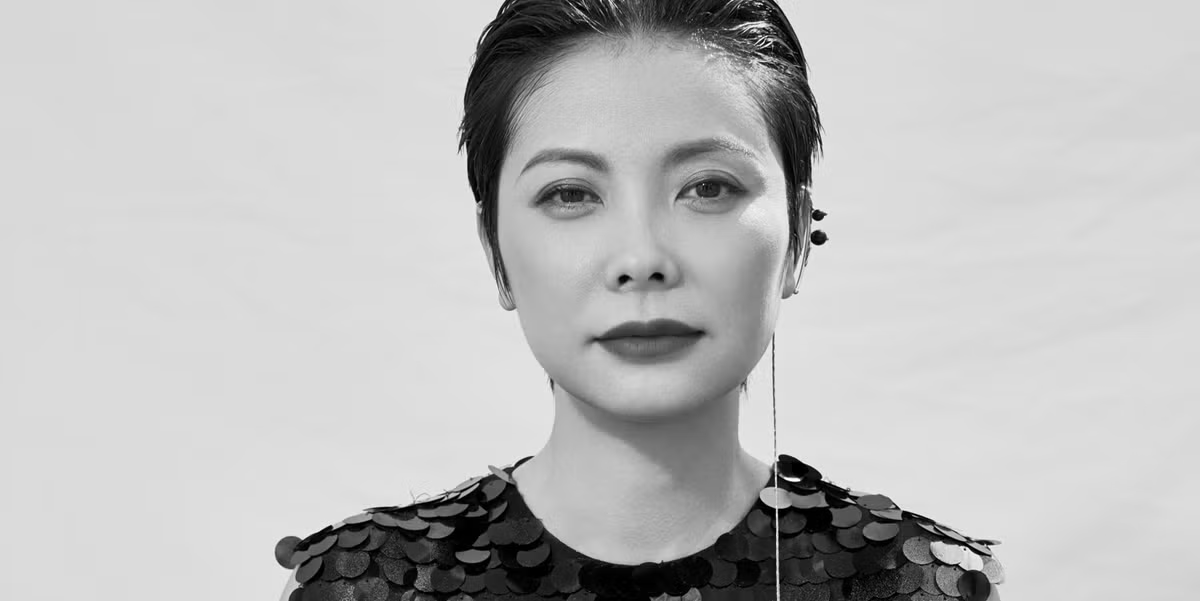
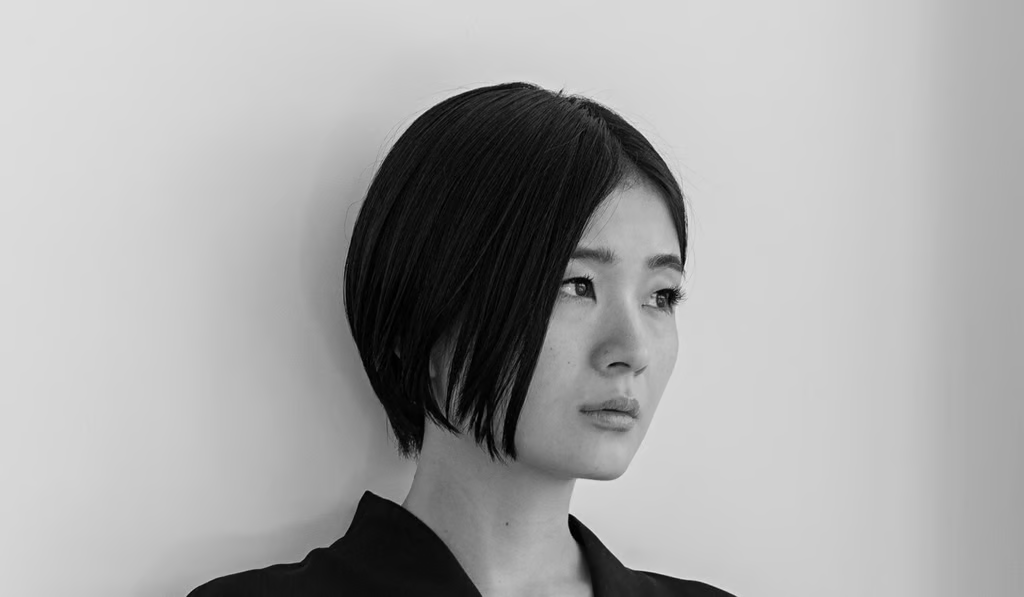
Over the past decade, the global haute couture landscape has undergone a profound intellectual evolution, moving away from superficial decorative borrowings toward a deep, structural reverence for authentic cultural heritage. At the absolute forefront of this paradigm shift stands Zhao Huizhou, the visionary founder and creative force behind the Chinese luxury house HUI. As the founder of the Eachway Fashion Group and a tireless advocate for the preservation of China’s Intangible Cultural Heritage, Zhao Huizhou has established HUI as a staple on the official Camera Nazionale della Moda Italiana calendar during Milan Fashion Week. What sets HUI apart from its contemporaries is not merely its technical proficiency, but its radical commitment to treating ancient, endangered ethnic needlework not as a costume museum piece, but as the living, breathing canvas of contemporary European luxury tailoring.
Zhao Huizhou’s creative journey is rooted in years of field research across the remote mountainous provinces of Southwest China, most notably Guizhou, home to the Miao ethnic community. For centuries, Miao women have preserved their history without a written alphabet, instead stitching their ancestral myths, cosmological beliefs, and genealogical records directly into fabric using silk thread—a phenomenon fashion historians refer to as the “wearable Miao epic.” Rather than outsourcing or imitating these sacred techniques, Zhao Huizhou created a sustainable artistic bridge between Guizhou’s master embroiderers and her Milanese design atelier. She systematically translates traditional motifs, such as the sacred Mother Butterfly (Mamu), the mythic ancestor born from butterfly eggs, and the intricate Five-Color Square geometries of the Four Seals Miao, into sharp, architectural Italian silhouettes.
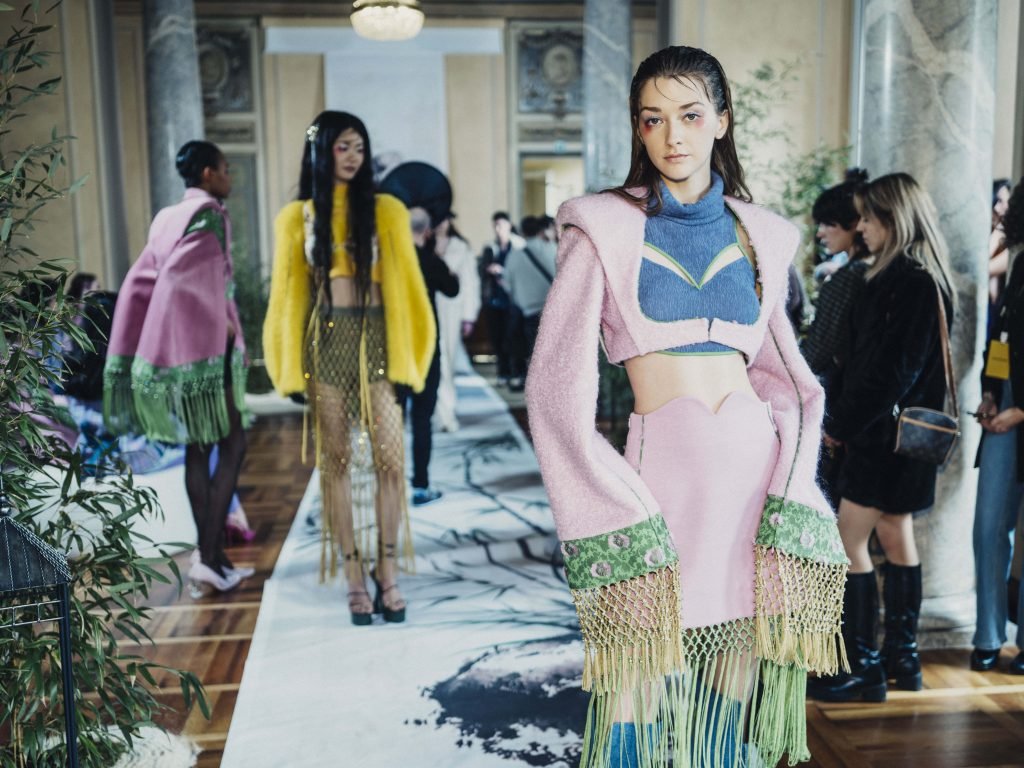
HUI’s runway history is defined by a series of landmark cultural moments that have captivated the international fashion press. One of the house’s most celebrated milestones occurred during Milan Fashion Week for the Spring/Summer 2024 season, when Zhao Huizhou partnered with the Chinese Consulate in Milan and the Guizhou Provincial Government to transform the historic Palazzo Clerici into a living museum titled Miao Yin (The Song of the Miao). The baroque frescoes of the palace provided a dramatic contrast to HUI’s models gliding down the runway in structured wool blazers and flowing silk dusters adorned with hand-stitched depictions of dragons, phoenixes, and the Mother Butterfly pattern. This was followed by the Spring/Summer 2026 collection, titled The Song of Silver, where Zhao Huizhou explored the sacred silver ornamentation of the Siyin Miao, integrating hand-hammered silver collar plates, silver thread tassels, and metallic embroidery directly into the structural necklines of sleek European overcoats.
Among HUI’s most recognized iconic garments is the Miao Embroidered Silk Duster Coat, an architectural masterpiece featuring an oversized, collarless silhouette in raw indigo-dyed silk, layered with hand-embroidered back panels that require over two hundred hours of artisan labor. Equally celebrated is the Silver-Accented Indigo Blazer, a tailoring tour-de-force where traditional hand-hammered Miao silver chest plates are engineered into the lapel structure of a sharp Italian wool jacket. Another signature piece is the “Mother Butterfly” Lurex Jacquard Gown, a floor-length evening dress that translates five-color square Miao patterns into shimmering, weightless metallic jacquard.
This artistic evolution reached its latest zenith on September 27, 2026, during Milan Fashion Week, when HUI presented its Spring/Summer 2027 collection. The runway was a masterclass in East-West balance, opening with fluid, translucent silk organza dusters layered over sharp, collarless tailoring adorned with Miao calligraphy-inspired threadwork. The color palette transitioned gracefully from deep ink-blacks and indigo dyes to porcelain whites, celadon greens, and muted gold jacquards. By uniting the ancestral needlework of Southwest China with the rigorous geometry of Italian design, Zhao Huizhou has redefined “Made in China” for the global elite, proving that true high fashion is an enduring dialogue between past and present.
All images featured in this article are credited to owners . They are used for editorial and illustrative purposes only, with no commercial intent. All rights remain with their respective owners.