 111
111 2
2 3
3 4
4 5
5 6
6 7
7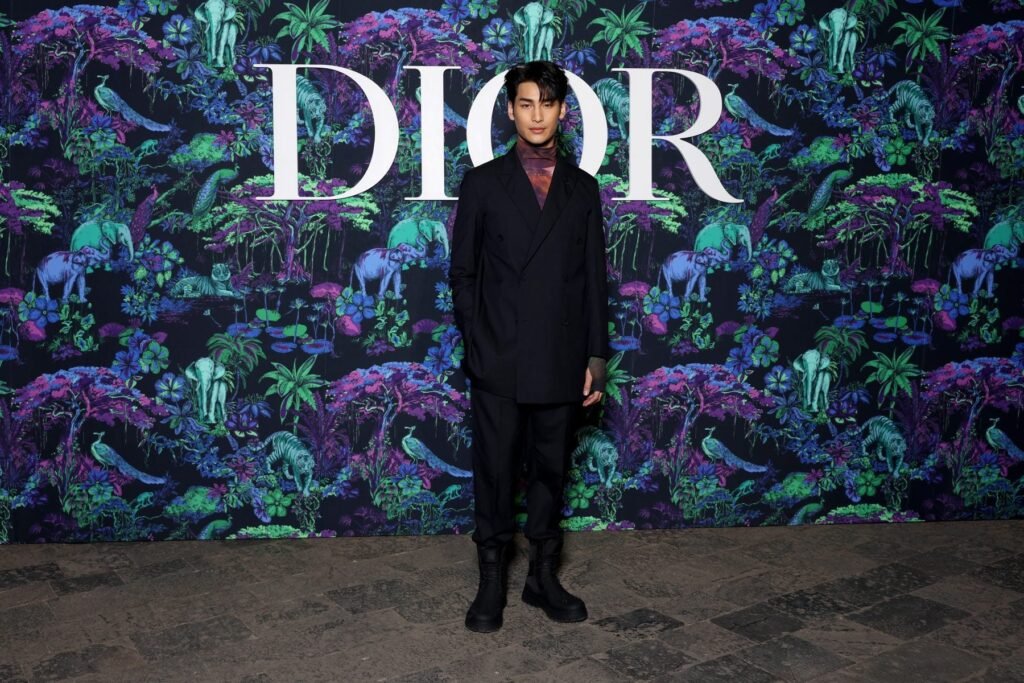 8
8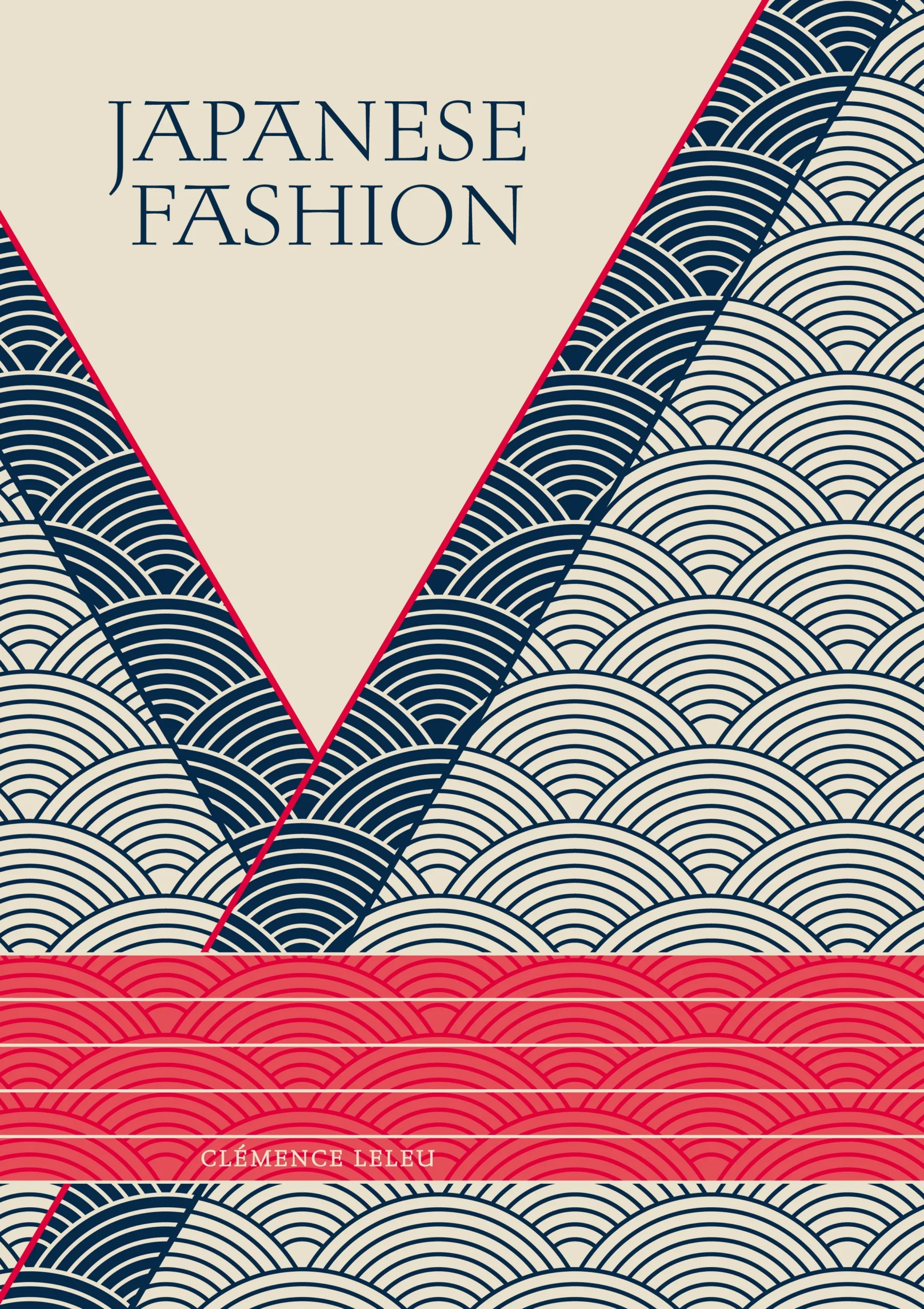
To understand where luxury is going, you first have to understand where it comes from , and that means reading beyond Paris
There is a question that keeps surfacing in every serious conversation about luxury fashion right now, and it is one that the industry has been slower to answer than it should be: why does it work?
Not the mechanics of it , not the ambassador deals and the earned media value and the front row strategies. Those are visible and documented and increasingly well understood. The deeper question is cultural. Why does Felix wearing Louis Vuitton on a runway generate the response it generates? Why does BamBam in a Vuitton campaign reach an audience that a Hollywood actor of equivalent fame cannot? Why did it take the Japanese avant-garde of the 1980s to remind Paris that clothing could be something other than a vehicle for aspiration? Why is the entire luxury market now making a version of the same pivot toward Asian creativity, Asian audiences and Asian talent , not as a trend but as a structural reorientation that looks increasingly permanent?
The answer to all of those questions is not found in a press release or a quarterly earnings report. It is found in history, philosophy and culture. And the books on this list are where that history, philosophy and culture live.
None of them are easy reads in the sense of being comfortable. They will change things , the way you watch a runway, the way you read a brand announcement, the way you understand why a Japanese designer’s deconstruction of a suit carries different meaning than an Italian designer doing the same thing. But they will also make you genuinely better at understanding the industry you are trying to follow.
Start anywhere. But start.
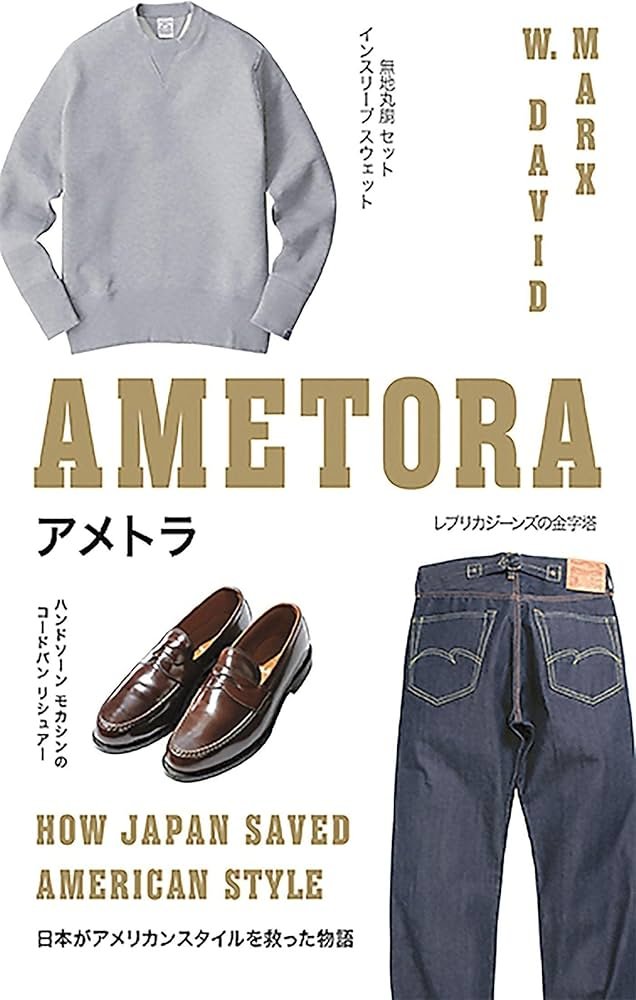
1. Ametora: How Japan Saved American Style — W. David Marx (updated edition 2023)
Here is a fact that sounds like a paradox: the most authentic American clothing in the world is currently being made in Japan. Not as a novelty or an irony, but as a market reality so well-established that it reshaped the global menswear industry. The Oxford button-down shirt. The selvedge denim jean. The Ivy League blazer. All of them were preserved, ritualised, perfected and eventually re-exported to America by Japanese consumers who cared about them more than their originators did.
W. David Marx — a cultural historian who has lived in Tokyo for two decades , traces this unlikely story across 150 years, from Commodore Perry opening Japan’s ports in 1854 through to the rise of Uniqlo, Kapital, Beams and Kamakura Shirts as the global standard-setters of classic casual menswear.
What Ametora actually teaches you is something that every luxury house operating in Asia needs to understand: that Japanese consumers do not simply absorb cultural influences , they study them, dissect them, elevate them and eventually transform them into something entirely new. The same cultural intelligence that took American prep and turned it into a global phenomenon is the same intelligence that built the Japanese avant-garde, that produced Kawakubo and Miyake and Yamamoto, and that has made Japanese fashion literacy one of the most formidable forces in global creative culture.
The updated 2023 edition adds a new afterword covering the last decade. Available in paperback and hardcover from Basic Books at around $28.
2. The Birth of Korean Cool: How One Nation Is Conquering the World Through Pop Culture — Euny Hong (2014)
Published in 2014 , which, in the timeline of K-pop’s global expansion, feels like it was written just before everything changed , this book remains the most readable, most intellectually honest account of how South Korea engineered the most successful cultural export strategy of the twenty-first century.
Euny Hong is a Korean-American journalist who moved to Seoul as a child in the 1980s, when the country was still a military dictatorship that banned miniskirts, long hair on men and rock music. She watched from the inside the government-backed transformation of South Korea into a global creative powerhouse , the deliberate investment in music, film, television, gaming and pop culture as instruments of national soft power that produced, among many other things, the Hallyu wave.
For anyone trying to understand why a K-pop group can walk into a Louis Vuitton campaign and immediately generate tens of millions in earned media value, this book is where the answer begins. The infrastructure of fandom , the training systems, the idol factories, the deliberate cultivation of emotional connection between artists and audiences , did not happen by accident. It was built, deliberately and systematically, over decades.
Available in paperback from Picador at around $16 and as a Kindle edition.
3. Rei Kawakubo / Comme des Garçons: Art of the In-Between — Andrew Bolton (2017)
In 2017, The Metropolitan Museum of Art’s Costume Institute dedicated its annual exhibition to a living fashion designer for only the second time in its history. The first had been Yves Saint Laurent in 1983. The second was Rei Kawakubo. The gap between those two choices tells you something about how the museum views the history of fashion. The catalogue that Andrew Bolton, the Costume Institute’s curator in charge, wrote for that exhibition is one of the most important fashion texts produced in the last decade.
Kawakubo arrived in Paris from Tokyo in 1981 with a collection that fashion critics struggled to process. They called the clothes “Hiroshima chic” , a phrase that says more about the limitations of Parisian critical vocabulary than it does about the work. What Kawakubo had produced was something the Western fashion tradition had no framework for: clothing that rejected the assumption that clothes should flatter the body, that beauty should be easy to recognise, that fashion should make its audience comfortable. She had come from a culture with a fundamentally different relationship to aesthetics , one shaped by Zen Buddhism, by wabi-sabi, by the concept of ma, by a tradition of beauty that finds its fullest expression in impermanence, asymmetry and incompletion.
The book examines her work through nine thematic pairs , Absence/Presence, Design/Not Design, Fashion/Anti-Fashion , and uses those pairings to show how her work consistently exists in the space between established categories. It is a 240-page argument for the idea that fashion can be genuinely radical. And that the radical tradition in fashion does not begin in Paris. It begins in Tokyo.
Available from the Metropolitan Museum of Art shop and Amazon at around $40–50.
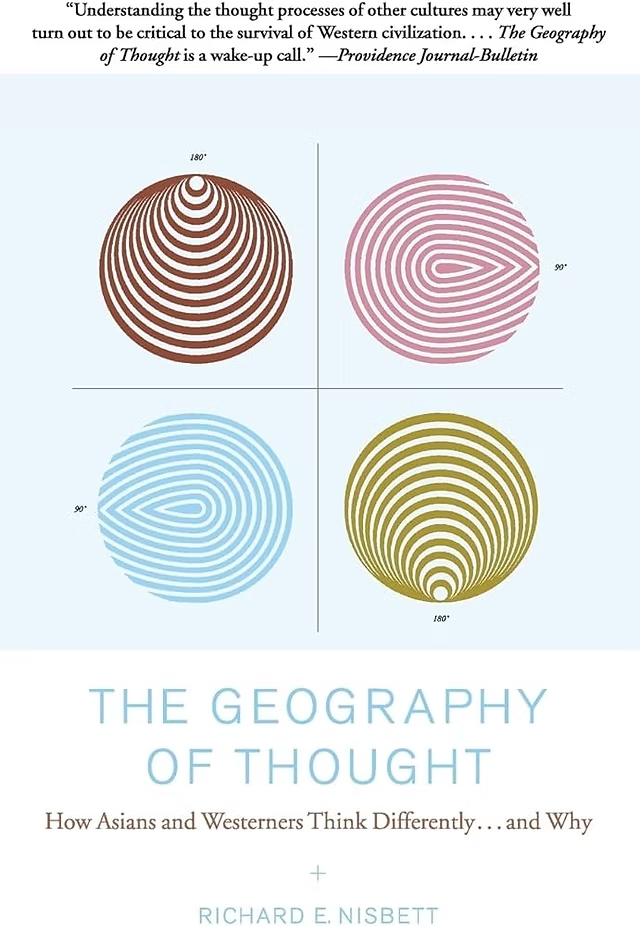
4. The Geography of Thought: How Asians and Westerners Think Differently… and Why — Richard E. Nisbett (2003)
This is the book on this list that is not about fashion at all. It is about cognition , about what happens when you show an animated underwater scene to American students and Japanese students and ask both groups to describe what they saw. The Americans focused on the large fish , the dominant object in the foreground. The Japanese described the background: the water, the bubbles, the smaller creatures, the whole environment in which the fish existed.
Nisbett argues that this difference in perception is not incidental but systematic , rooted in deep philosophical traditions going back to ancient Greece, which privileged the individual object and the rule, and ancient China, which privileged the field, the relationship and the context. The applications to fashion are not ones Nisbett makes himself, but they follow directly. The reason a Kawakubo collection focuses on the body in space rather than on the garment as object. The reason the relationship between a K-pop idol and their fandom is structurally different from the relationship between a Western celebrity and their audience , and therefore generates different, more intense and more commercially significant results when engaged by a luxury brand.
Malcolm Gladwell calls Nisbett “the most influential thinker in my life.” Available in paperback at around $18 and widely in stock.
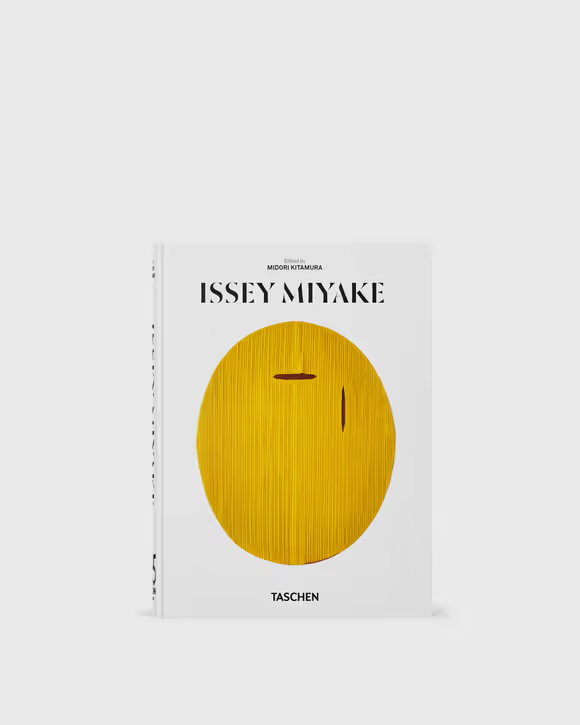
5. Issey Miyake — Midori Kitamura (TASCHEN, 2024)
The revised and updated 2024 TASCHEN monograph on Issey Miyake is, in physical terms, one of the most extraordinary books you can own about fashion. It weighs over three kilograms. Its 448 pages cover Miyake’s work from 1960 , when he was still a student at Tama Art University in Tokyo , through to his death in 2022, overseen by Midori Kitamura, who worked alongside him for nearly fifty years.
But the reason it belongs on this list is not the photographs, extraordinary as they are. It is the argument that the full sweep of Miyake’s career makes when you see it assembled in chronological order. Miyake is the designer who most completely dissolved the boundary between Japanese craft tradition and Western fashion structure. He was fascinated, from the beginning, with the relationship between cloth and body , not in the Western couture sense of shaping fabric to conform to an idealised body, but in the Japanese sense of exploring what happens when fabric is given its own freedom and the body inhabits it rather than being contained by it.
Every luxury house currently trying to sell “effortless luxury” to Asian consumers is working in the territory that Miyake mapped. This book shows you the map.
Available from TASCHEN at $100. A compact 45th anniversary edition is also available at a significantly
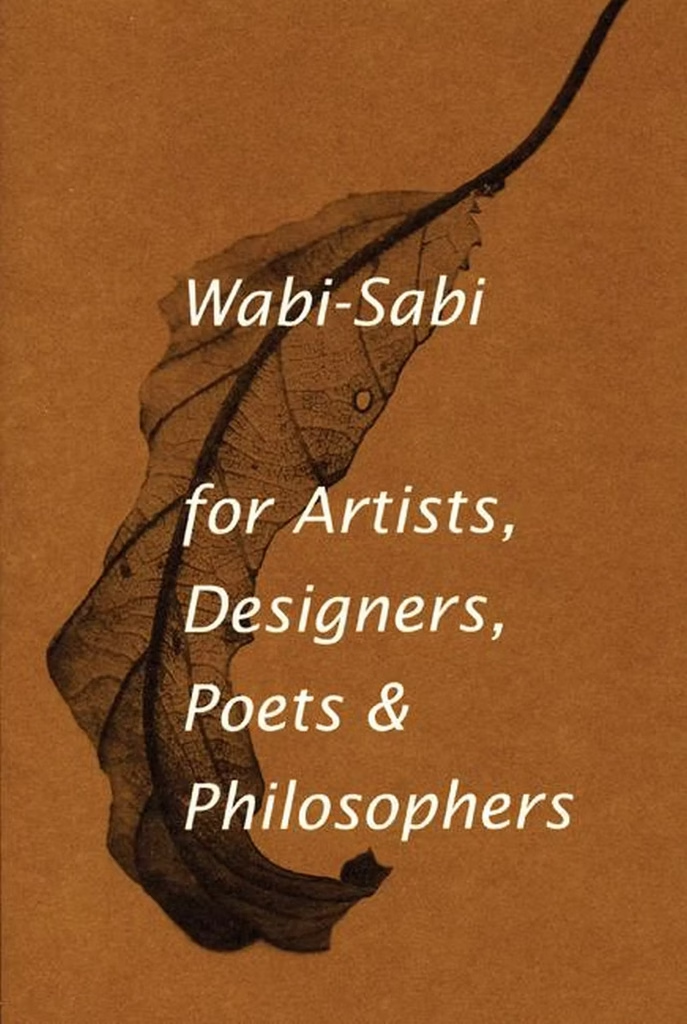
6. Wabi-Sabi for Artists, Designers, Poets & Philosophers — Leonard Koren (1994)
The smallest book on the list , barely a hundred pages, palm-sized, almost deliberately modest in its physical presence , and it contains an idea that will change the way you look at everything.
Wabi-sabi is the Japanese aesthetic philosophy that finds beauty in imperfection, impermanence and incompletion. Its origins are in the tea ceremony of fifteenth-century Japan , in the deliberate choice of rough, handmade, asymmetrical vessels over the smooth and symmetrical. Its philosophical foundations come from Zen Buddhism and from the Taoist concept of the unfinished as the more authentic. And its influence on the most significant fashion coming out of Japan , and increasingly out of Korea , is total.
After reading it, you understand why a Comme des Garçons dress with a deliberately fraying hem is not a quality failure. You understand why Loewe’s Craft Prize celebrates precisely the kind of imperfect, handmade, singular objects that wabi-sabi describes. You understand why Hermès, whose entire identity is built on the idea that the most beautiful thing bears the visible mark of human hands, resonates so deeply with Japanese consumers who have been thinking about that idea for six centuries.
Available from Stone Bridge Press at around $20 and consistently in print since 1994. Read it in an afternoon. Think about it for a decade.
7. Made in Korea: Awe-Inspiring Graphics from Korea Today — Victionary (2024)
South Korea’s creative industries did not develop in isolation from its pop culture industries. The same national investment in soft power that produced BTS and BLACKPINK and the global K-drama phenomenon also produced one of the most dynamic and technically sophisticated graphic design communities in the world , and the visual language of K-pop, from album artwork to music video direction to brand identity, draws directly from that community.
Published by Hong Kong design publishers Victionary in August 2024, Made in Korea documents that creative landscape across 304 pages of visual identities, brand designs, packaging, posters, graphics, fashion and spatial design from across the Korean creative industry. For anyone trying to understand why K-pop’s visual world is so consistently extraordinary , and why the luxury brands that align themselves with K-pop artists are getting access to an aesthetic intelligence that goes far deeper than celebrity faces — this is where the visual education begins.
Available from Gingko Press and major retailers at around $50. Published 2024, widely in stock.
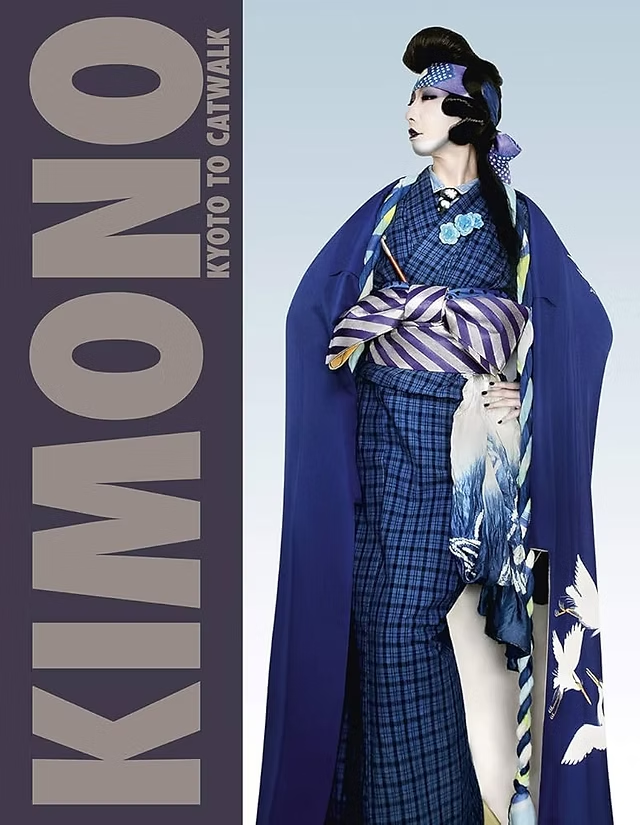
8. Kimono: Kyoto to Catwalk — Anna Jackson (V&A, 2020)
The kimono is the garment that connects Japanese craft tradition to the Western fashion imagination most directly , and it has been doing so since the seventeenth century, when Japanese textiles first arrived in European markets. Anna Jackson, Senior Curator of Asian Art and Design at the V&A, documented the full arc of that influence in this companion to the museum’s 2020 exhibition, which subsequently toured to V&A Dundee in 2024.
What the book makes clear , and what is essential context for understanding Japanese fashion’s relationship with its own traditions , is that the kimono was never a static, traditional object. It has always been fashionable in the most literal sense: constantly changing, constantly responding to social and cultural pressures, constantly being reinterpreted. The idea that Japanese fashion is “traditional” in a fixed or unchanging sense is a Western projection. The kimono, as Jackson documents with 250 extraordinary illustrations, has always moved.
Available from the V&A Shop and Amazon at around £35–45. Hardcover edition in print and widely available.
9. Luxury Brand Management: A World of Privilege — Michel Chevalier and Gérald Mazzalovo (third edition, 2012)
This is the practical book on the list , the one that explains the business infrastructure within which everything else operates. Chevalier and Mazzalovo’s textbook has been the standard academic reference in luxury brand management for over a decade, used in business schools from HEC Paris to IMD Lausanne to FIT.
The third edition is particularly useful for Asian market context, covering the specific dynamics of luxury consumption in Japan, China and emerging Asian markets with a rigour that more general business books do not approach. It explains why the Japanese luxury market operates so differently from the Chinese one, why Korean luxury consumers behave differently again, and why the same brand strategy that works in Paris can fail completely in Seoul.
For anyone who wants to understand not just why the cultural shifts described by the other books matter, but how the industry is actually structured to respond to them, this is the essential complement.
Available in hardcover and paperback from Wiley at around $50–65.

These two didn’t make the main list not because they’re less valuable , they’re extraordinary. They didn’t make it because finding them at a reasonable price requires some dedication. Consider this a treasure map.
My Dear Bomb — Yohji Yamamoto (Ludion, 2010)
There are fashion books that explain a designer. And then there is this one, which lets a designer explain himself , in fragments, in contradictions, in the specific way that a man who has spent fifty years thinking about how cloth speaks would choose to speak.
My Dear Bomb is Yohji Yamamoto’s autobiography, co-written with Ai Mitsuda and published by Ludion in 2010 in English, French, Japanese and Chinese. It is not a conventional memoir. It combines philosophical essays, memories, fiction, drawings by Yamamoto himself, and interpolations by friends and collaborators including Nick Knight, Wim Wenders and Alice Springs. It seamlessly combines extended meditations on clothing and life with Yamamoto’s memories and anecdotes, in short, concise paragraphs. In its pages, you encounter Yamamoto as a tough realist who says of himself: “I am, in fact, a man who may turn heartless in an instant; I desire only to settle each and every score immediately.” And as a designer with an unerring instinct for his materials: “How does the cloth want to drape, to sway, to fall? If one keeps these things in mind and looks very carefully, the fabric itself begins to speak.”
That last sentence might be the most important thing any designer has ever written about fashion. And it is buried in a book that is increasingly hard to find and, when found, rarely cheap. The English first edition from Ludion is the one to look for. ThriftBooks occasionally has copies from $35. Specialist fashion booksellers carry it sporadically. If you find one at a reasonable price , buy it immediately!!!!
Japan Style — Gian Carlo Calza (Phaidon, original 2007 — new edition 2024)
Gian Carlo Calza was Professor of Asian Art History at Ca’ Foscari University of Venice and director of the International Hokusai Research Centre in Milan. He is, by most accounts, one of the most authoritative Western scholars of Japanese art and aesthetics alive. Japan Style is his attempt to define in a single volume what Japanese aesthetic culture actually is , not through a survey of famous objects or well-known names, but through an analysis of the underlying principles that make Japanese visual culture recognisably itself across centuries and across disciplines.
The book is divided into three sections. The first “Irregular Beauty” examines the philosophical and religious foundations of Japanese aesthetics: the relationship to impermanence, the role of Buddhism and Shinto, the concept of ma. The second looks at how those foundations manifest in specific art forms, from ukiyo-e to architecture to garden design. The third examines the contemporary expression of those traditions in everything from product design to cinema.
For fashion readers, what Japan Style offers is the deep background , the understanding of why Japanese designers make the choices they make, why Japanese consumers respond to certain kinds of beauty with a depth of feeling that Western audiences sometimes find hard to fully understand, and why the aesthetic traditions that Calza documents with such care are not historical curiosities but living forces that shape the fashion industry right now, in every collection and every collaboration and every front row.
The good news: Phaidon reissued Japan Style with a new cover design in 2024, making it available again at around $40–50 from major retailers. The original hardcover first edition from 2007 remains harder to find and commands higher prices on the secondary market. Either version is worth owning.
THE CONCLUSION: WHY THIS MATTERS NOW
In June 2026, Felix of Stray Kids sat front row at Louis Vuitton’s Paris Fashion Week show and generated coverage that no traditional ambassador arrangement could have replicated. BamBam walked the Vuitton runway. J-Hope arrived and the photographs circulated in seventeen languages before the show ended. Chen Xingxu and Deng Wei at Dior reached Chinese audiences of hundreds of millions. Wang Yibo made a short film for Loewe that was more creative document than campaign.
None of this happened in a vacuum. None of it is explained by star power alone, or by follower counts, or by earned media metrics. It is explained by culture. By the creative intelligence Japan exported to global fashion over four decades. By the deliberate national strategy that South Korea executed to produce the Hallyu wave. By the Chinese luxury consumer who has become the most culturally sophisticated and commercially demanding audience any luxury house has ever had to engage.
Understanding that context — really understanding it, in the depth that these books provide — is not a supplementary interest for someone who works in fashion. It is the prerequisite for understanding where fashion is going.
Read them. All of them. The runway will look completely different when you do.