 111
111 2
2 3
3 4
4 5
5 6
6 7
7 8
8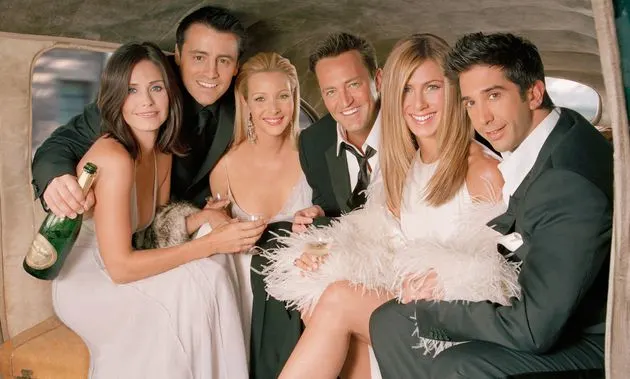
Fashion has always found inspiration in unexpected places. Sometimes it begins on a Paris runway, sometimes inside the walls of a Florentine atelier, and sometimes through the imagination of a visionary designer determined to challenge convention. Yet every so often, the industry’s most enduring influence emerges somewhere far less obvious.
A television sitcom.
When Friends premiered in September 1994, nobody imagined that six young New Yorkers sharing coffee, apartments and complicated relationships would go on to shape not only television history but also the wardrobes of generations to come. The series became a cultural phenomenon almost immediately, but its influence extended well beyond ratings and quotable dialogue. Quietly, episode after episode, Friends created one of the most recognisable visual identities in modern popular culture, one that continues to inspire designers, luxury brands, stylists and millions of women nearly three decades later.
Fashion rarely survives unchanged. Trends disappear, silhouettes evolve and aesthetics are constantly reinterpreted. Yet the wardrobe of Rachel Green, Monica Geller and Phoebe Buffay remains remarkably contemporary. Their clothes have outlived countless fashion cycles, resurfacing every few years under different names: quiet luxury, minimalist dressing, vintage revival, bohemian chic or the now ubiquitous “90s aesthetic” dominating social media.
What makes this remarkable is that Friends never intended to become a fashion manifesto.
Unlike Sex and the City, whose relationship with luxury labels became part of its narrative, Friends approached clothing differently. The wardrobe existed to serve the characters rather than overshadow them. Every knit sweater, leather blazer, bias-cut skirt or perfectly fitted pair of jeans was chosen not because it reflected the latest runway trend, but because it reflected the personality of the woman wearing it.
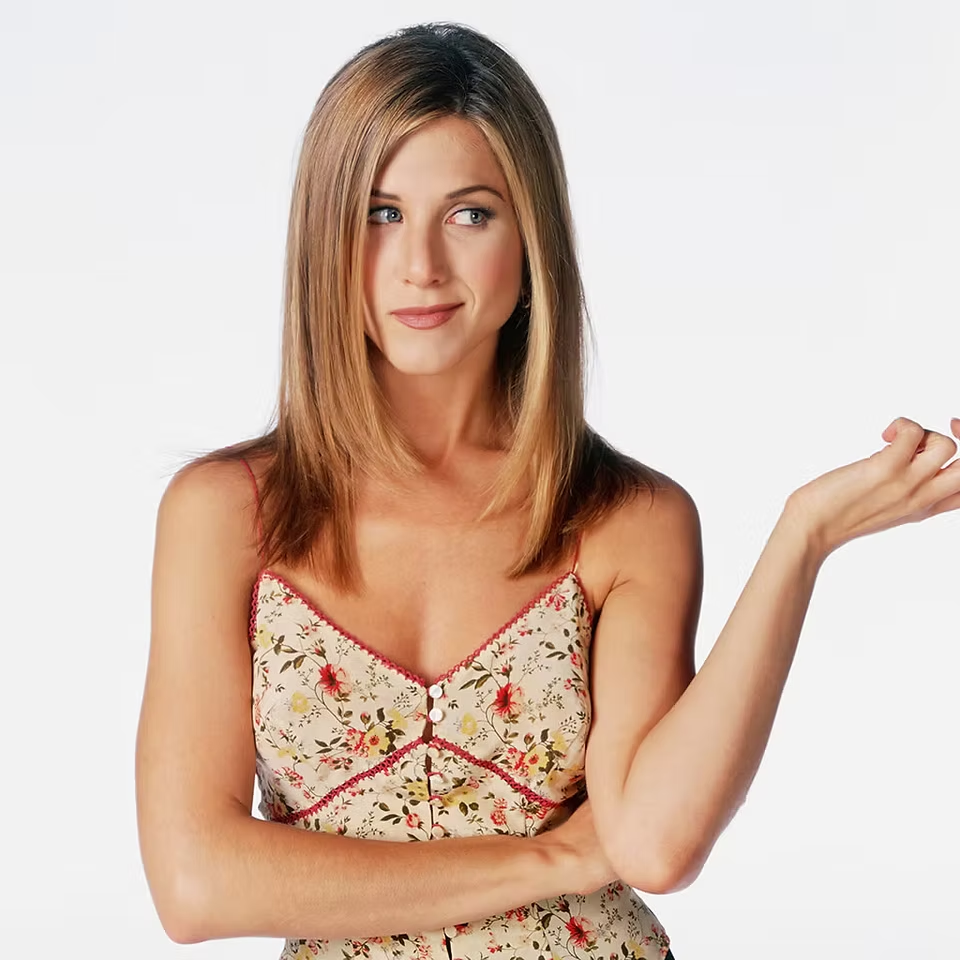
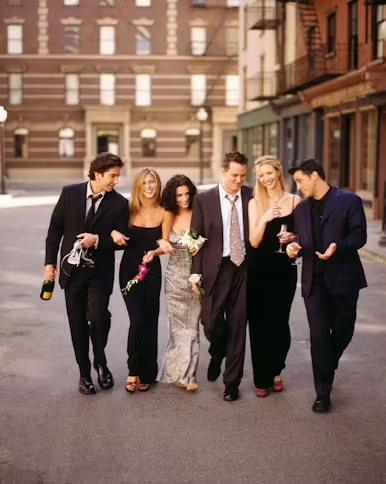
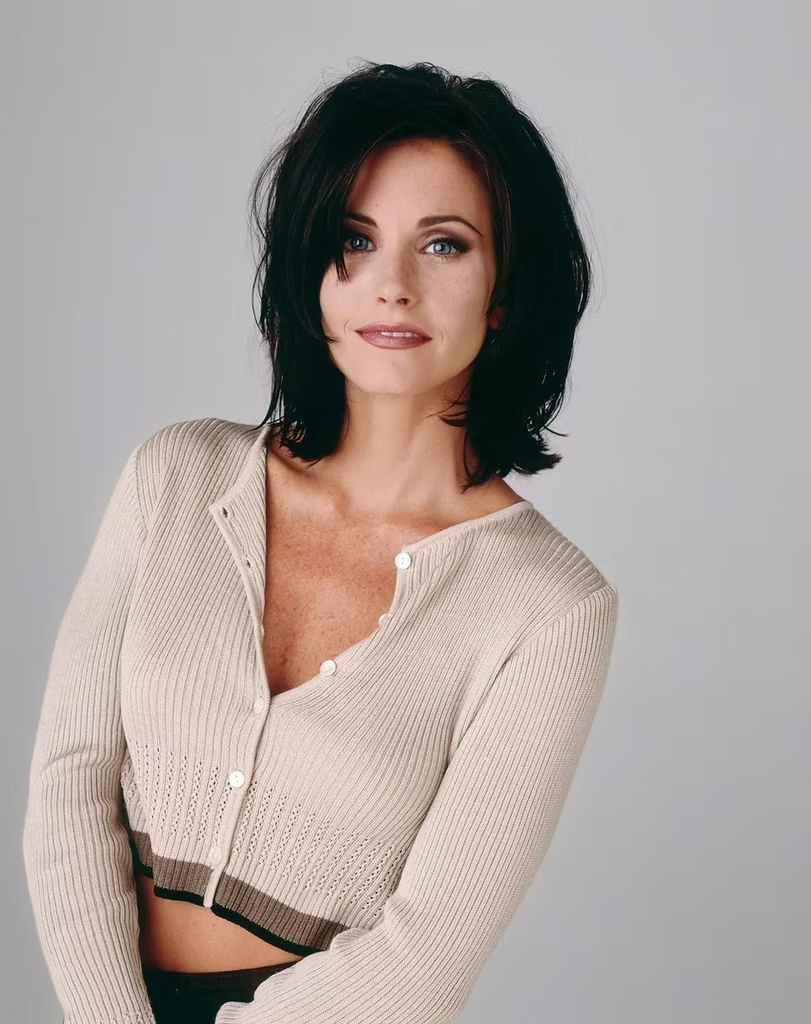
That subtle authenticity is precisely what has allowed the series to transcend nostalgia.
Today, scroll through Pinterest, TikTok or Instagram and the influence is impossible to ignore. Thousands of mood boards recreate Rachel Green’s office tailoring. Vintage stores label slip dresses as “Friends inspired.” Minimalist wardrobes filled with straight-leg denim, loafers, crisp white shirts and camel knitwear are routinely compared to Monica Geller’s effortless style. Meanwhile, Phoebe Buffay’s eclectic layering and handcrafted jewellery have found an entirely new audience among younger generations embracing individuality over perfection.
The remarkable part is that none of these aesthetics feel like costumes from another era.
They feel current.
Perhaps even more current than they did in the late 1990s.
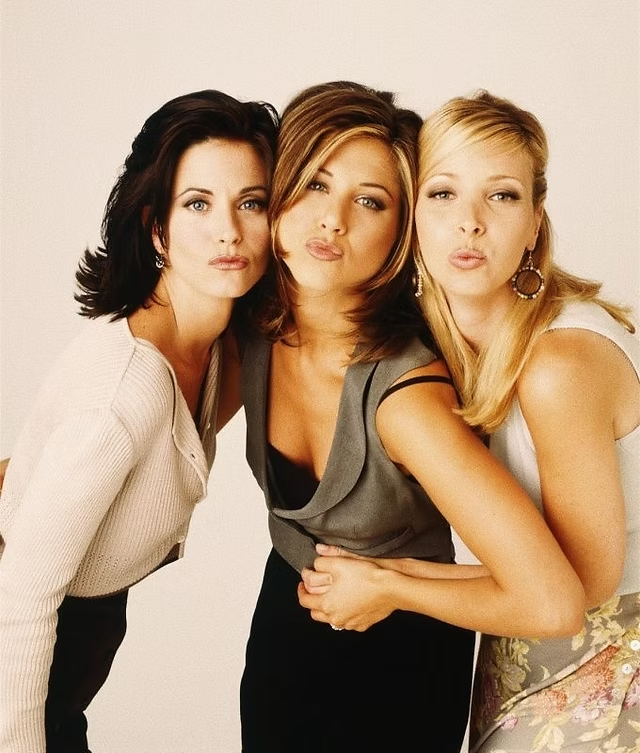
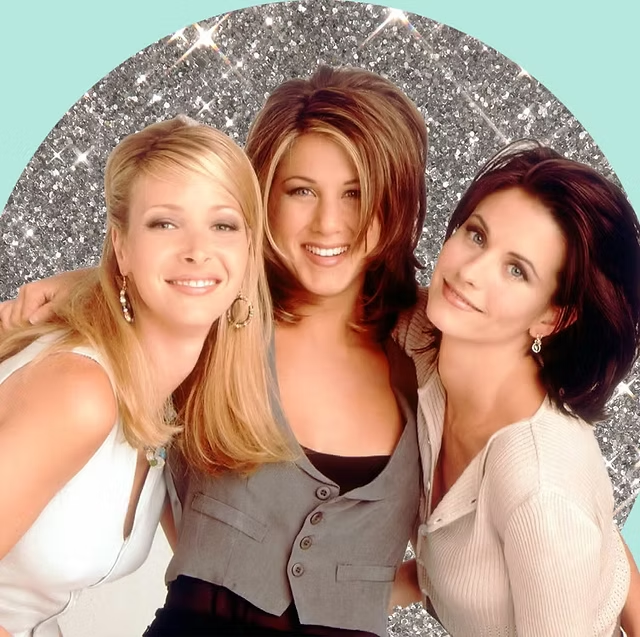
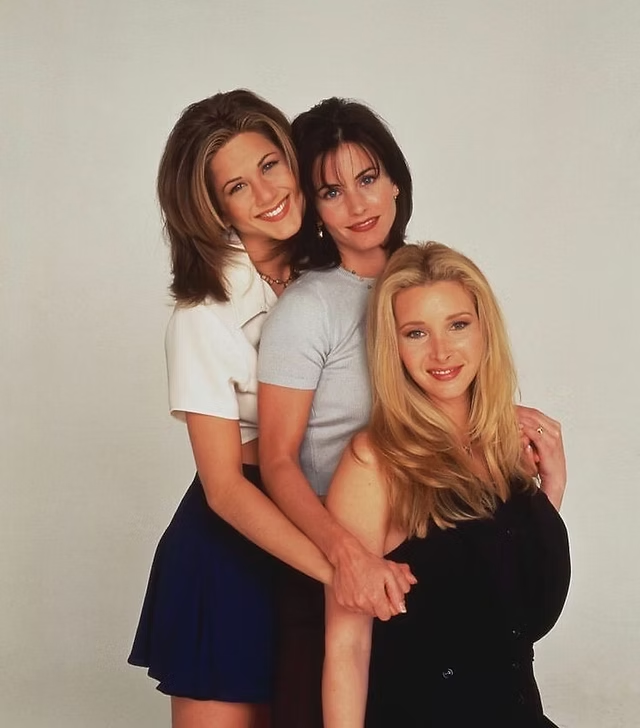
Fashion history often remembers the faces that wore the clothes, yet far less frequently the minds that imagined them. Behind every iconic cinematic wardrobe, every unforgettable silhouette and every cultural fashion phenomenon stands someone whose work is rarely discussed outside the industry. In the case of Friends, that creative force was costume designer Debra McGuire, whose understated approach to dressing six fictional New Yorkers would ultimately leave an enduring mark on fashion itself.
Unlike many television productions of the 1990s, Friends never relied on extravagant costumes to define its identity. There were no elaborate designer showcases, no wardrobes built around conspicuous luxury, and no attempt to transform its characters into unattainable fashion icons. Instead, McGuire approached costume design with remarkable restraint, understanding that the clothes should never overpower the personalities of the people wearing them.
That philosophy would become one of the series’ greatest strengths.
Rather than creating six wardrobes that reflected the trends of a particular season, she built six believable lives through clothing. Every knit sweater, denim jacket, slip dress or tailored blazer felt as though it had been chosen by the characters themselves rather than by a costume department. Viewers did not see “television fashion”; they saw wardrobes they could imagine hanging inside real Manhattan apartments.
It was precisely this authenticity that transformed Friends into an unexpected style reference.
Rachel Green‘s gradual evolution from an inexperienced waitress to a confident fashion executive never depended on dramatic makeovers. Instead, her clothing matured alongside her career. As her ambitions grew, so did the sophistication of her wardrobe. Structured tailoring replaced youthful experimentation, neutral palettes became more prominent, and luxurious simplicity slowly emerged as the defining characteristic of her style. The transformation felt almost invisible while watching the series, yet in retrospect it became one of television’s most convincing examples of fashion as character development.
Monica Geller offered an entirely different lesson.
Her wardrobe rarely chased novelty. Instead, it celebrated timelessness. Clean denim, monochromatic knitwear, leather jackets and impeccably cut basics reflected a personality built upon discipline, precision and quiet confidence. Long before editors began discussing capsule wardrobes or “quiet luxury,” Monica’s closet demonstrated that true elegance often lies in consistency rather than constant reinvention.
Then there was Phoebe Buffay, whose eclectic wardrobe rejected every conventional styling rule. Through layered vintage garments, handcrafted jewellery and unexpected combinations of texture and colour, McGuire created a character whose individuality felt entirely genuine. Rather than appearing eccentric for the sake of visual impact, Phoebe dressed according to her own internal logic, a creative freedom that resonates strongly in today’s fashion landscape, where personal expression has become increasingly valued over trend conformity.
Perhaps Debra McGuire’s greatest achievement was recognising that audiences rarely fall in love with clothes alone.
They fall in love with people.
The wardrobes succeeded because they never existed independently of the characters. Fashion became another form of storytelling, quietly revealing emotional growth, professional ambition, vulnerability and self-confidence without ever needing to explain itself through dialogue.
Looking back from today’s perspective, it becomes clear that the influence of Friends extended far beyond television. Contemporary designers continue to revisit the clean tailoring, relaxed minimalism and effortless layering that characterised its costumes, while younger generations repeatedly rediscover the series through mood boards, vintage styling and social media inspiration. Whether consciously or not, much of what is celebrated today as modern timeless dressing echoes choices first made inside a television costume department more than three decades ago.
The most remarkable aspect of Debra McGuire’s legacy is that it was never designed to become one.
She simply dressed six characters honestly enough that audiences believed them.
Fashion history has produced countless spectacular wardrobes, yet very few continue to influence the way people dress thirty years later. Friends remains one of those rare exceptions—not because it tried to dictate fashion, but because it understood something far more enduring: style becomes timeless when it feels authentically lived rather than deliberately created.
No television character has influenced everyday fashion quite like Rachel Green.
Her impact has often been reduced to one hairstyle, the famous layered cut requested in salons across the world during the mid-1990s, but focusing solely on “The Rachel” overlooks something far more significant.
Rachel’s wardrobe told the story of modern womanhood.
When audiences first met her, she was a runaway bride learning how to navigate independence. Her clothing reflected that uncertainty: plaid skirts, oversized sweaters, white socks paired with loafers, floral dresses and youthful silhouettes that balanced innocence with quiet confidence.
As Rachel matured professionally, so did her wardrobe.
Her transition from waitress at Central Perk to buyer at Bloomingdale’s and later merchandising executive at Ralph Lauren was reflected not through dramatic costume changes but through increasingly refined tailoring. Slip dresses replaced floral prints. Structured blazers softened youthful silhouettes. Crisp white shirts, camel coats, leather trousers and impeccably cut black dresses began to dominate her closet. It was an evolution that felt entirely believable because it mirrored the aspirations of an entire generation of young professional women entering corporate America during the late 1990s.
Unlike the power dressing of the 1980s, Rachel’s style suggested confidence without excess.
Elegant, modern and approachable.
Looking back from today’s perspective, it is difficult not to recognise the similarities between Rachel Green’s wardrobe and the aesthetic currently described as quiet luxury. Neutral palettes, premium basics, timeless tailoring and understated accessories have become the defining language of luxury fashion once again. Long before social media coined the term, Rachel Green was already dressing according to its principles.
Her greatest contribution to fashion was never a single outfit.
It was proving that simplicity, when executed with precision, could become timeless.
If Rachel Green represented aspiration, Monica Geller embodied something far more enduring: consistency.
Unlike Rachel’s visible transformation throughout the series, Monica’s wardrobe evolved with remarkable subtlety. Her style never sought attention, yet it quietly became one of the most influential examples of understated dressing on television. Looking back today, it feels almost prophetic. Years before “capsule wardrobes,” “investment pieces” and “quiet luxury” became part of fashion’s everyday vocabulary, Monica was already building a wardrobe around those very principles.
Her clothes reflected discipline rather than trend.
Tailored black trousers, perfectly fitted denim, cashmere sweaters, ribbed knit tops, crisp white T-shirts, simple slip dresses and impeccably cut leather jackets formed the foundation of her wardrobe. Colour rarely dominated. Instead, earthy neutrals, charcoal greys, burgundy, navy and ivory allowed silhouettes and proportions to take centre stage.
There was nothing accidental about it.
Monica’s clothing mirrored her personality with extraordinary precision. As a chef obsessed with organisation, precision and balance, her wardrobe naturally rejected unnecessary decoration. Every piece served a purpose. Every outfit felt wearable. Unlike many television characters whose style changes dramatically from one season to the next, Monica’s closet remained believable because it reflected how real women gradually build their wardrobes over time.
Perhaps that is why her influence has aged so gracefully.
Scroll through today’s collections from The Row, Toteme, Jil Sander, Loro Piana or even the quieter moments of Prada, and Monica’s aesthetic suddenly feels strikingly familiar. Clean tailoring, luxurious fabrics, timeless denim and elegant restraint have become the defining language of contemporary luxury. What once appeared refreshingly simple in the late 1990s now represents one of fashion’s most desirable ideals.
The industry often celebrates reinvention. Monica reminds us that refinement can be just as revolutionary.
If Rachel introduced polished femininity and Monica mastered effortless minimalism, Phoebe Buffay occupied an entirely different universe.
She refused categorisation.
Long before “eclectic dressing” became a runway trend, Phoebe instinctively embraced fashion as an extension of personality rather than convention. Her wardrobe ignored the unwritten rules that governed late twentieth-century fashion. Vintage lace mixed with velvet. Embroidered coats appeared alongside faux fur. Layered necklaces, handmade jewellery, oversized rings, colourful scarves and flowing skirts transformed each outfit into something deeply individual.
At first glance, Phoebe’s style seemed almost chaotic.
Look closer, however, and another narrative begins to emerge.
Her clothing reflected freedom.
Unlike Rachel or Monica, Phoebe never dressed for professional ambition or social expectation. She dressed entirely for herself. Every unusual texture, unexpected colour combination and vintage find communicated an independence that feels remarkably contemporary today. In an era increasingly dominated by algorithm-driven aesthetics and carefully curated social media feeds, Phoebe’s refusal to conform appears more relevant than ever.
Modern fashion has gradually caught up with her.
Designers such as Alessandro Michele during his years at Gucci celebrated maximalism, vintage references and joyful eccentricity in ways that would have felt perfectly at home inside Phoebe’s closet. Layering became sophisticated. Handmade details became luxurious. Imperfection became desirable.
Phoebe had been there all along.
Her wardrobe also anticipated another movement now shaping contemporary fashion: sustainability.
Long before vintage shopping became a conscious environmental choice, Phoebe naturally mixed second-hand pieces with handcrafted accessories, creating wardrobes built on individuality rather than consumption. Today, as younger generations increasingly embrace resale platforms and archive fashion, her approach feels not nostalgic but surprisingly forward-thinking.
She never chased fashion.
Fashion eventually caught up with Phoebe.
One of Friends’ greatest achievements lies in something viewers rarely noticed while watching.
The series almost never relied on clothing to create spectacle.
Instead, fashion became invisible in the most sophisticated sense of the word.
Debra McGuire understood that the audience should remember the characters before remembering their outfits. Ironically, that very philosophy is what made the wardrobe unforgettable. Because the clothing never felt forced, it became deeply authentic. Viewers believed Rachel would own those loafers. They believed Monica would wear that black turtleneck for years. They believed Phoebe would discover an embroidered velvet coat in a vintage shop somewhere in Manhattan.
Authenticity, rather than novelty, became the series’ greatest stylistic achievement.
It is a lesson that many contemporary productions continue to overlook.
In today’s television landscape, costume design often seeks immediate viral attention. Outfits are created to dominate social media before the episode has even finished streaming. While visually spectacular, those wardrobes frequently become inseparable from the trend cycle that produced them.
Friends chose another path.
Its clothing was never designed to dominate a single season.
It was designed to survive decades.
Looking back from 2026, that decision may have been one of the most intelligent forms of fashion storytelling ever seen on television.
Fashion rarely moves in straight lines.
Designers often speak of “new beginnings,” yet the industry’s most successful collections are frequently built upon familiar ideas, reinterpreted through a contemporary lens. Trends disappear only to return under different names, while silhouettes once considered ordinary suddenly become the defining aesthetic of an entirely new generation.
Few cultural phenomena illustrate this cycle better than Friends.
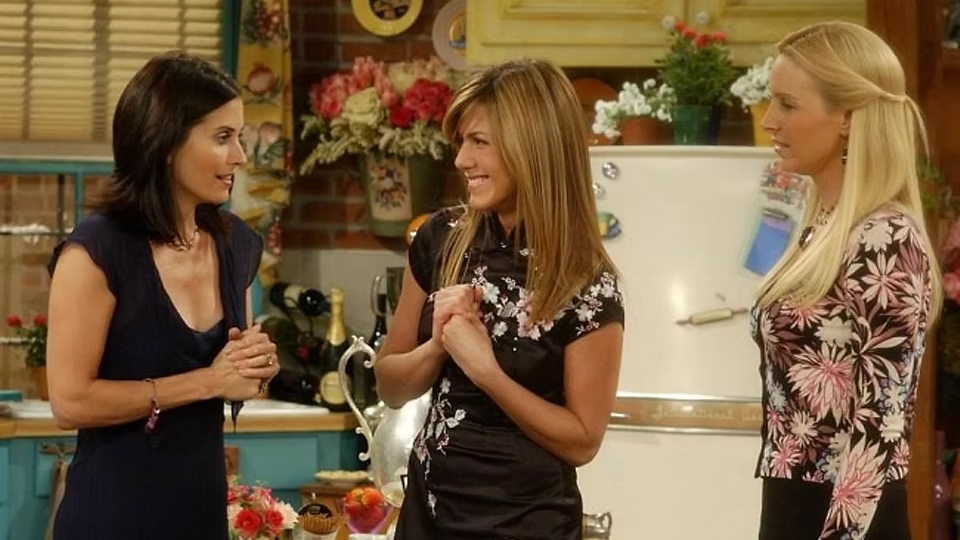
Although the series never positioned itself as a fashion authority, its visual language has quietly become one of the richest archives of contemporary style. Today, what audiences once recognised simply as Rachel’s office wardrobe or Monica’s effortless basics can be found throughout the collections of some of luxury’s most influential houses.
The minimalist tailoring that dominated Rachel Green’s later seasons echoes through the refined proportions of The Row, where immaculate shirting, fluid trousers and understated knitwear celebrate simplicity as the ultimate expression of luxury. Prada continues to revisit clean silhouettes softened by unexpected femininity, while Miu Miu has transformed pleated skirts, fine-knit cardigans and collegiate dressing into one of fashion’s most influential aesthetics of the past decade.
Monica’s wardrobe has perhaps experienced an even more remarkable revival.
The quiet confidence of perfectly fitted denim, oversized white shirts, leather jackets and monochromatic knitwear has become the visual foundation of what the industry now describes as quiet luxury. Long before the phrase dominated fashion headlines, Monica demonstrated that elegance did not require logos or extravagance. Instead, quality, proportion and restraint spoke for themselves.
Meanwhile, Phoebe Buffay’s influence has resurfaced through an entirely different movement.
As younger generations increasingly embrace vintage shopping, archive fashion and sustainable consumption, Phoebe’s instinctive approach to dressing suddenly feels extraordinarily relevant. Her layered jewellery, handcrafted accessories and refusal to follow conventional styling rules anticipated a cultural shift towards individuality that continues to shape fashion today. What once appeared eccentric has become aspirational.
Luxury itself has begun to embrace precisely the authenticity that Friends celebrated decades ago.
Perhaps the greatest testament to the series’ influence is that its audience no longer consists solely of those who watched it during the 1990s.
Generation Z has rediscovered Friends through streaming platforms, social media and thousands of fashion mood boards shared daily across Pinterest, TikTok and Instagram. Entire accounts are dedicated to recreating Rachel Green’s outfits, analysing Monica’s minimalist wardrobe or identifying Phoebe’s vintage-inspired layering.
The phenomenon extends far beyond nostalgia.
For younger audiences raised in an era of rapidly changing microtrends, the wardrobe of Friends offers something increasingly rare: permanence.
Its clothes feel believable because they were never designed to chase the next season. Instead, they were built around timeless silhouettes capable of adapting to changing cultural landscapes. Straight-leg denim remains relevant. Slip dresses continue to define eveningwear. Fine knitwear, loafers, leather blazers, simple white T-shirts and tailored trousers have become permanent fixtures within modern wardrobes rather than temporary trends.
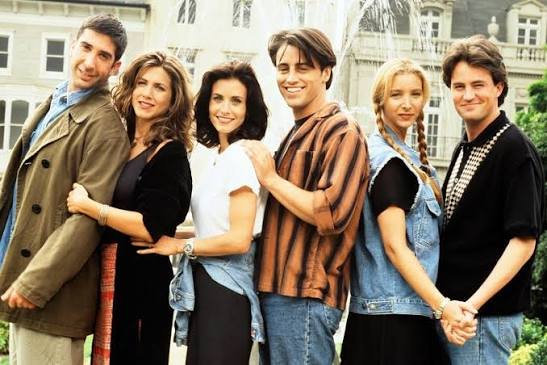
Fashion’s relationship with the series has therefore evolved beyond inspiration.
It has become validation.
When contemporary designers return to minimalist dressing or reinterpret vintage bohemian references, audiences immediately recognise echoes of Rachel, Monica or Phoebe—not because the collections intentionally imitate the series, but because Friends distilled many of the same visual codes that continue to define contemporary fashion.
In many ways, the sitcom did what the greatest fashion editorials aspire to achieve.
It captured an aesthetic that refused to become dated.
Looking back, it becomes clear that the enduring power of Friends has never resided solely in its clothing.
Its wardrobe mattered because the women wearing it evolved.
Rachel’s growing confidence was reflected through increasingly sophisticated tailoring. Monica’s emotional stability found expression in timeless simplicity. Phoebe’s unwavering individuality rejected every expectation society attempted to impose upon her.
Fashion became character development.
Without ever announcing itself, costume design quietly narrated personal growth, ambition, vulnerability and independence.
That subtle storytelling explains why audiences continue returning to the series decades later. The clothing does not simply remind viewers of the late 1990s.
It reminds them of women discovering who they wanted to become.
Perhaps that is why its influence continues to resonate within luxury fashion today.
Modern consumers increasingly seek authenticity rather than spectacle. They invest in garments capable of surviving trends instead of chasing them. They value craftsmanship, longevity and emotional connection over seasonal novelty.
In many respects, those values were already hanging inside Monica’s closet.
Or folded neatly in Rachel’s wardrobe.
Or layered fearlessly across Phoebe’s vintage dresses.
Fashion often celebrates the extraordinary.
Runway shows lasting fifteen minutes generate headlines across the globe. Celebrity appearances dominate social media before the first guest has even left the venue. Luxury thrives on moments designed to capture immediate attention.
Yet the greatest style influences are not always born beneath the bright lights of Fashion Week.
Sometimes they emerge quietly.
Inside an apartment overlooking New York.
Across a worn-out orange sofa inside a neighbourhood coffee shop.
Between conversations about careers, heartbreak, friendship and growing up.
Thirty years after its debut, Friends remains far more than one of television’s most beloved sitcoms. It has become an unexpected fashion archive—a visual record of timeless dressing, authentic character building and understated elegance that continues to inspire designers, stylists and audiences around the world.
Perhaps that is the series’ greatest achievement.
It never tried to predict the future of fashion.
It simply dressed six ordinary people honestly enough that, decades later, the future decided to dress like them.
All images featured in this article are credited to owners . They are used for editorial and illustrative purposes only, with no commercial intent. All rights remain with their respective owners.