 111
111 2
2 3
3 4
4 5
5 6
6 7
7 8
8
Fashion has always loved a good contrast , old and new, East and West, luxury and streetwear, polished and undone. Usually, the industry treats these as opposites: pick a side, build a brand around it, and let the contradiction do the marketing for you. Andersson Bell never really seemed interested in picking.
A SHOCK IN STOCKHOLM THAT BECAME A BRAND
The label’s origin story is almost embarrassingly simple for how far it’s travelled since. Creative director Dohun Kim took a trip to Stockholm years before the brand existed, and the experience genuinely rattled him , Korea dense, fast, relentlessly busy; Stockholm sparse, quiet, built around space he’d never really experienced at home. He came back to Seoul wanting to build something out of that specific jolt, met the person who’d become his co-founder and current CEO, and Andersson Bell launched in Seoul in 2014, built entirely around holding two cultures in tension rather than picking one.
Even the name carries the contradiction on its surface. “Andersson” reads as an ordinary Swedish surname. “Bell” refers to the bells found at traditional Korean temples. Kim has been direct about the intent , not a Scandinavian aesthetic simply translated into Korean clothing, but two genuinely opposing cultural instincts reinterpreted through each other, deliberately, without either one dominating.
A DESIGN LANGUAGE BUILT ON PLANNED MISMATCH
That sounds tidy enough on paper. It doesn’t look remotely tidy on the runway, and that’s precisely why the brand has held attention for over a decade. A familiar silhouette gets interrupted by an unexpected texture. A meticulously composed look can read as though it was thrown together five minutes before someone left the house. Something traditionally feminine sits next to something distinctly utilitarian; a polished piece pairs with something deliberately rough. Kim has described the brand’s own identity, half-joking, as “Weird, Unique, and Sandwich” , a combination of tastes that shouldn’t sit on the same plate but somehow does.
Andersson Bell understands something a lot of brands still resist: modern wardrobes rarely belong to a single aesthetic anymore. People mix. People borrow. People contradict themselves constantly — expensive next to ordinary, sharp tailoring next to sneakers, Korean streetwear next to European classics. The brand doesn’t just reflect that reality back. It’s built its entire design language directly out of it.
A CITY THAT NEVER RESOLVES ITS OWN CONTRASTS
It’s not a coincidence that the label feels so naturally at home in Seoul specifically. The city is full of exactly this kind of visual contradiction , centuries-old architecture standing beside glass towers, traditional markets a few streets from some of Asia’s most ambitious contemporary retail, a quiet temple sharing a neighbourhood with concept stores and some of the most experimental street style anywhere in the world. Seoul doesn’t resolve those contrasts. It just lives inside them, and Andersson Bell does the same thing with clothing — not forcing everything to match, but making the mismatch feel deliberate rather than accidental.
THE NIGHT SEOUL FASHION WEEK LEFT ITS OWN VENUE
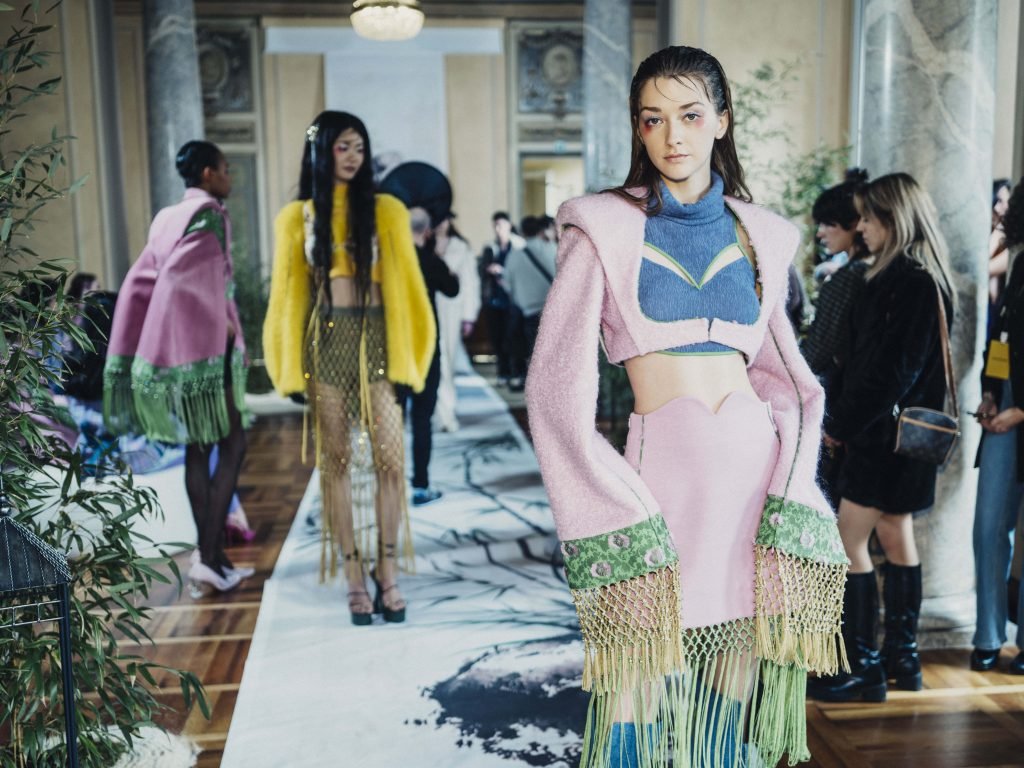
That philosophy got its most public stage yet in September 2025, when Andersson Bell’s Spring/Summer 2026 collection, titled “Soft Clash,” opened Seoul Fashion Week’s 25th-anniversary edition , and did it somewhere the event had never staged an opening show before. Instead of Dongdaemun Design Plaza, the futuristic venue that had hosted Seoul Fashion Week for its entire history, the show ran along Deoksugung-gil, the tree-lined promenade running beside the stone walls of Deoksugung, a Joseon-era royal palace dating back to the dynasty’s earliest centuries. It was the first time an independent label had staged an official opening runway anywhere outside DDP , city organisers framed the move explicitly as a way to showcase, in their words, K-fashion’s youth, energy, technology and art against the backdrop of Seoul’s own historic character, rather than inside a single futuristic building.
Despite a thirty-minute rain delay, the show pulled a full house, with a crowd that doubled as a genuine cross-section of Korea’s current cultural moment: IVE’s Gaeul, Tomorrow X Together’s Hueningkai, Hearts2Hearts’ Ian and Jiwoo, alongside actors, singers and comedians filling out the guest list. One attendee, a twenty-eight-year-old fashion design graduate, told local press it was striking to watch modern fashion settle so naturally into such a traditional setting , which is, in a sentence, close to the entire Andersson Bell thesis.
ROTHKO, PJ HARVEY AND A HOT-PINK RUNWAY
The collection’s reference points were, on paper, an unlikely pairing: Mark Rothko’s quiet, saturated colour-field paintings set against the “twisted attitudes,” as Kim described them, of 1990s musicians PJ Harvey and Jarvis Cocker. Models walked a hot-pink runway in slouchy, inventively layered silhouettes , an organised chaos of stripe, texture and print that somehow avoided reading as nostalgia for either reference point. It wasn’t a ’90s throwback and it wasn’t a Rothko tribute. It was, more precisely, the emotional friction between two things that don’t obviously belong in the same picture, held together anyway — which is the exact same mechanism the brand’s name has been running on since 2014.
KOREAN IDENTITY WITHOUT THE OBVIOUS SIGNALS
For years, the international industry tended to expect Korean designers to make their identity legible through the obvious channels , traditional silhouettes, heritage detailing, recognisable cultural symbols. Andersson Bell has never worked that way. Its Korean identity isn’t something you can point to in a single garment. It lives in the attitude , in how thoroughly different influences are allowed to collide without either one being forced to dominate the other. That’s arguably a much more accurate picture of how Seoul actually functions today: a city that absorbs music, technology, street culture, luxury, vintage, architecture and cinema, and somehow still turns the result into something that reads as unmistakably local.

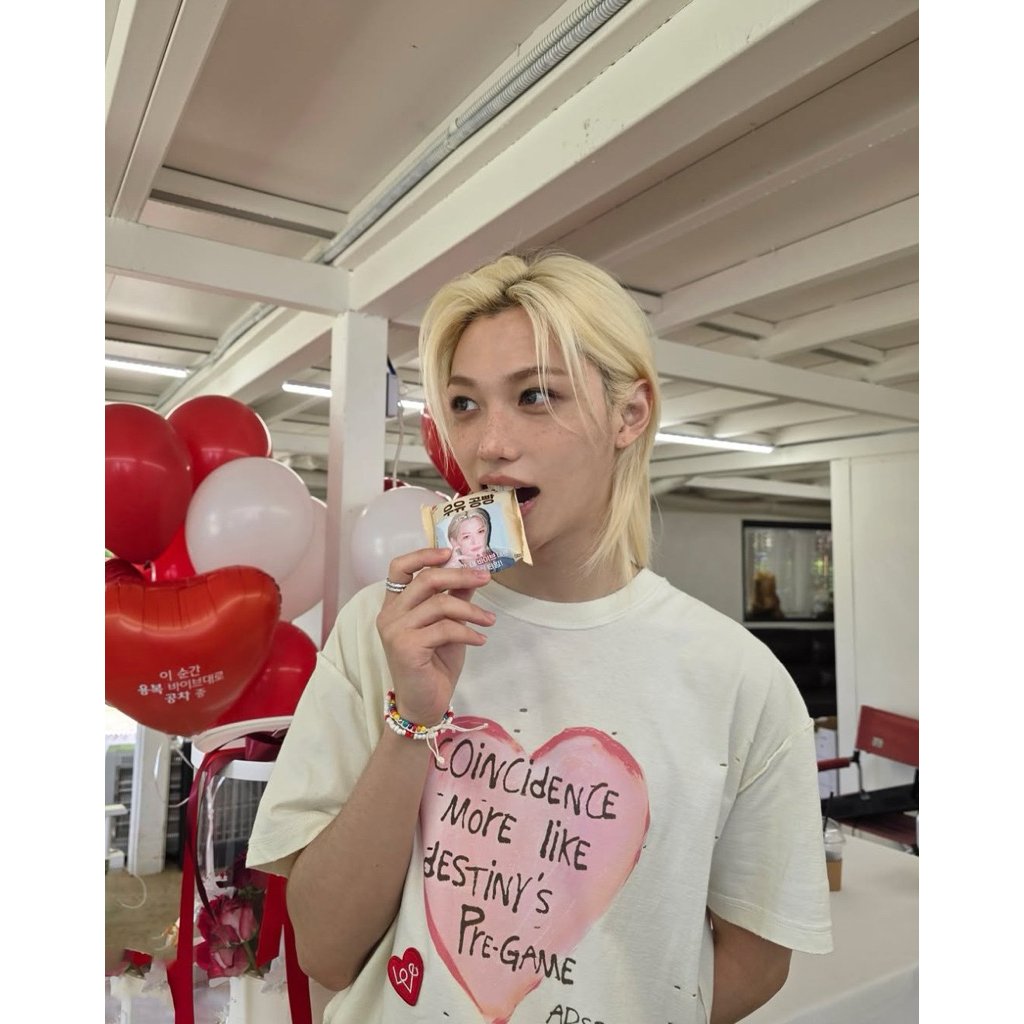
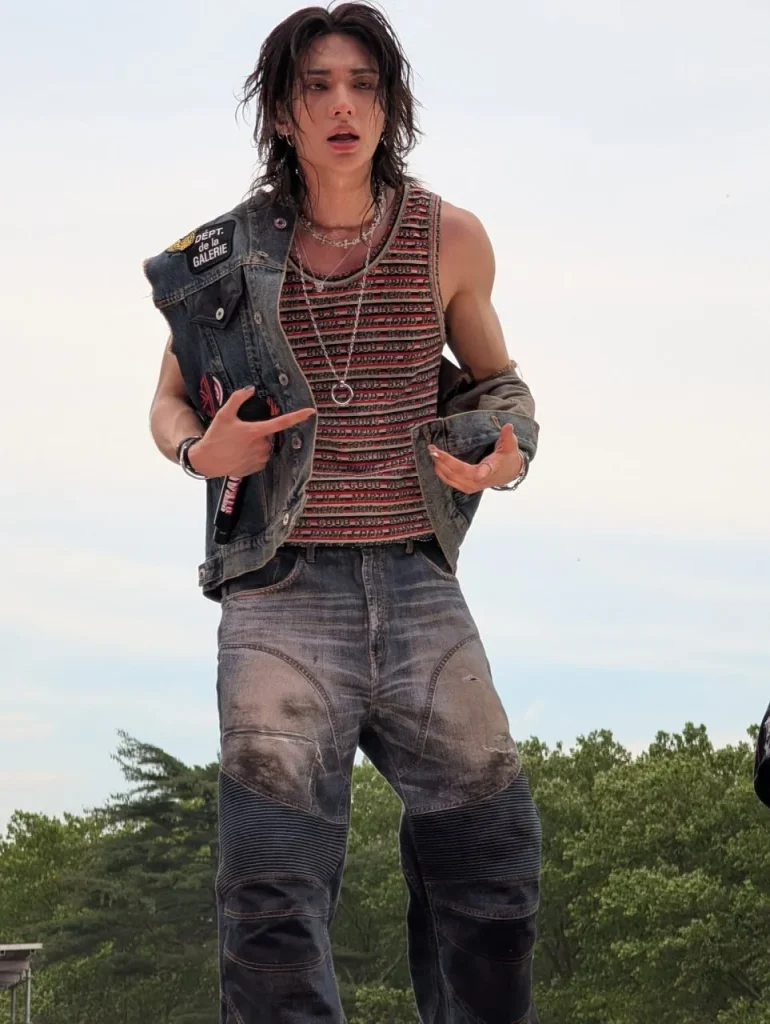
Andersson Bell has become a genuine favorite across K-pop’s biggest names — not a one-off styling choice, but a recurring pick among idols who gravitate toward the brand’s specific mix of Scandinavian minimalism and Korean streetwear edge. Stray Kids are part of that pattern themselves: Hyunjin, Felix and I.N have all been styled in the label, each pulling from it in his own way. It’s the kind of quiet, repeated endorsement that says more about a brand’s real cultural weight than any single campaign could.
That instinct is also why the brand has moved past being read as simply “a Korean label.” Its reference points travel freely , Stockholm, Rothko, British post-punk musicians , but the underlying point of view has stayed rooted in Seoul the entire time. Global fashion has a well-documented habit of flattening identity the moment a brand crosses into international success, until the work could plausibly have come from almost anywhere. Andersson Bell has largely avoided that trap, and the 25th-anniversary opening slot is as clear a piece of evidence as the industry could ask for.
NO APOLOGY, NO TRANSLATION REQUIRED
There’s a quiet confidence running underneath all of this that matters more than it might first appear. Andersson Bell doesn’t announce that Korean fashion has arrived somewhere it wasn’t before. It simply behaves as though it already belongs in the conversation , no apology, no need to translate itself into somebody else’s idea of what Korean fashion is supposed to look like. That confidence lands differently now that Seoul Fashion Week itself is deliberately expanding past its own traditional venues, staging shows at temples and historic landmarks while building formal ties to international fashion weeks abroad, Berlin among them for this same anniversary season.
Andersson. Bell. Sweden. Korea. Two things that, on paper, have no obvious reason to sit next to each other. They do anyway , and eleven years on, a brand built on that exact premise just opened the biggest anniversary in its own fashion week’s history, on a five-hundred-year-old stone path, in front of a very twenty-first-century crowd. Sometimes the most interesting fashion doesn’t come from finding the perfect match. It comes from finding the combination nobody expected to work, and then making it look completely inevitable.
All images featured in this article are credited to owners . They are used for editorial and illustrative purposes only, with no commercial intent. All rights remain with their respective owners.