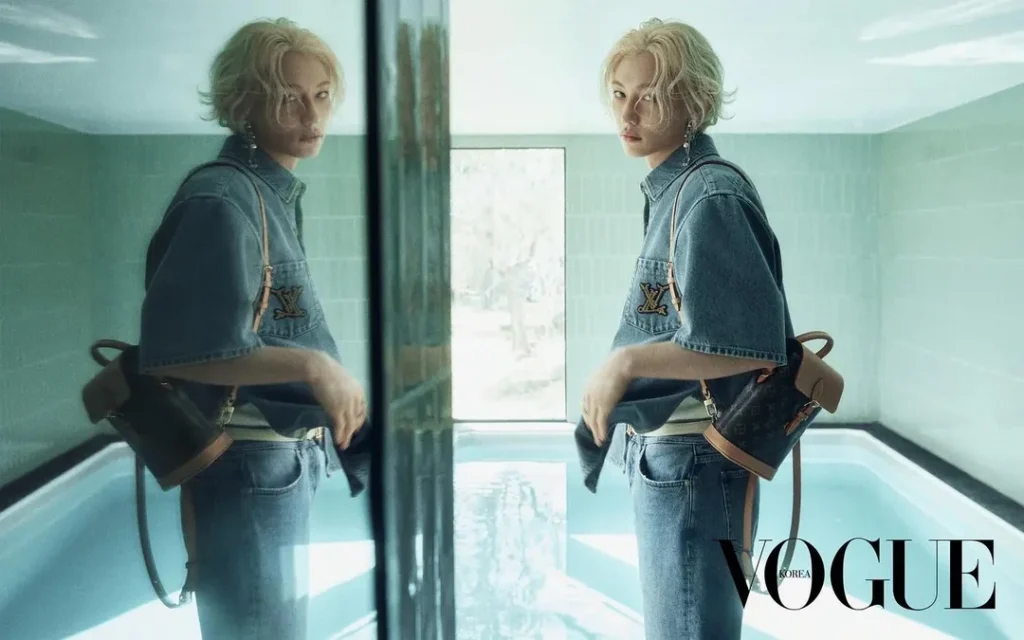
 111
111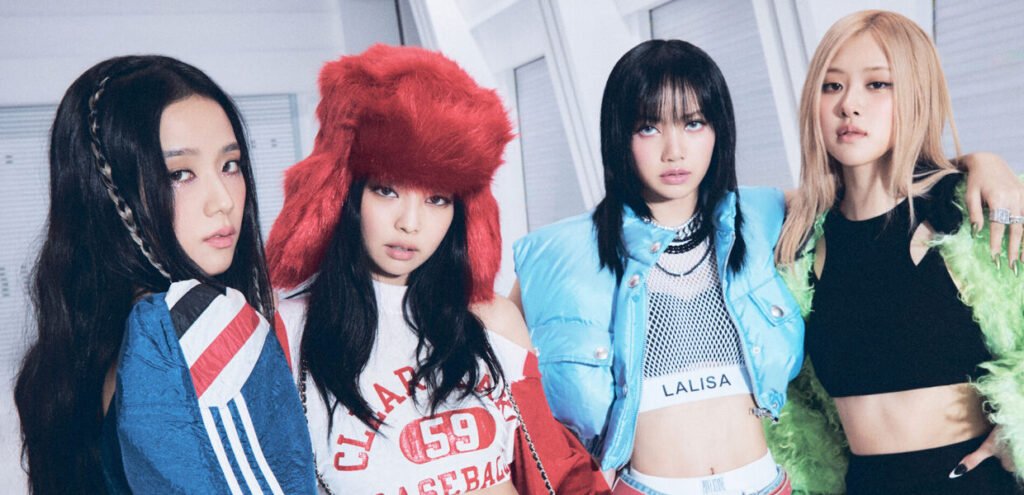 2
2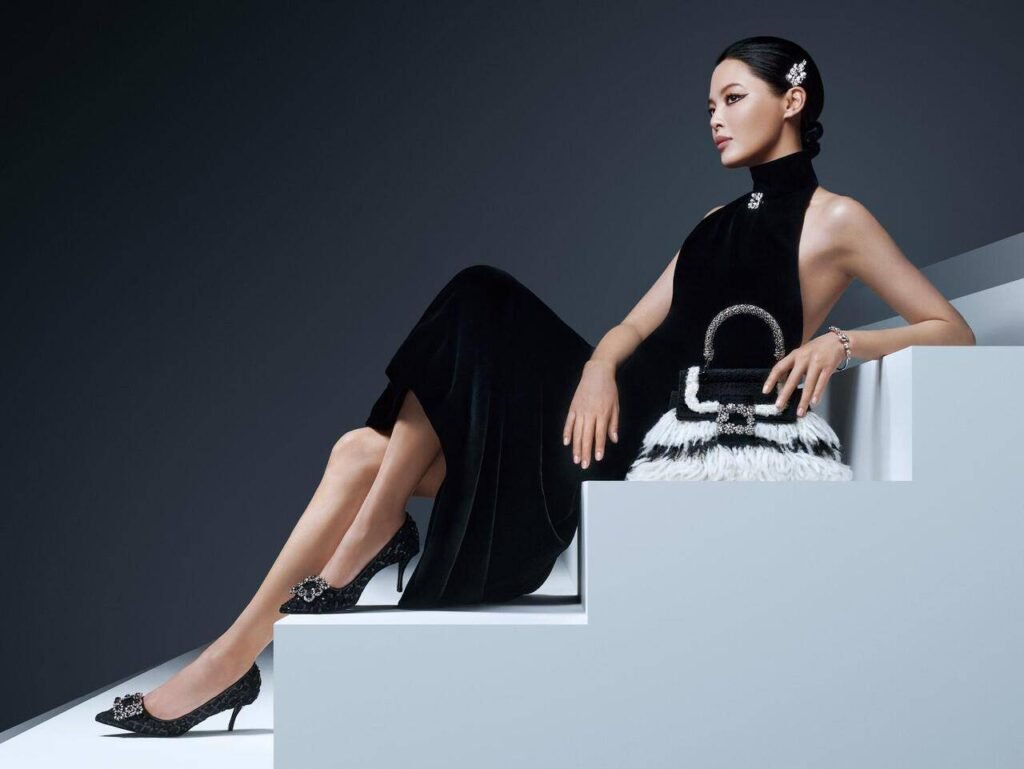 3
3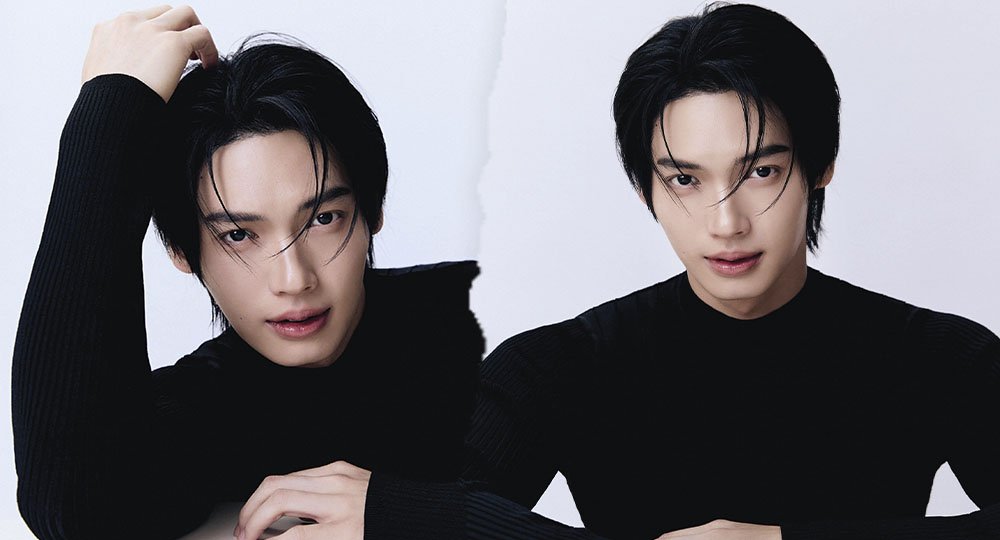 4
4 5
5 6
6 7
7 8
8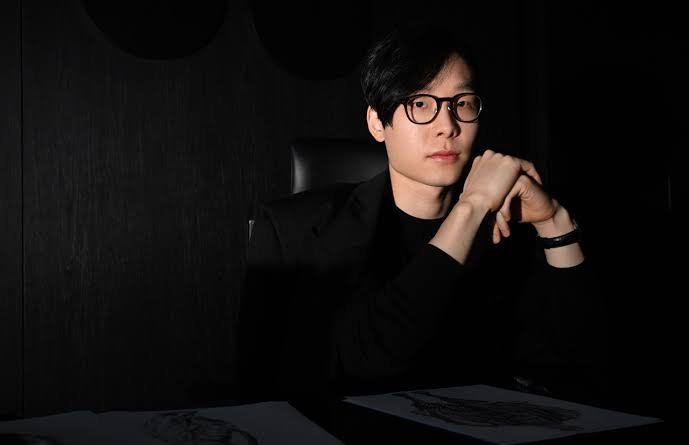
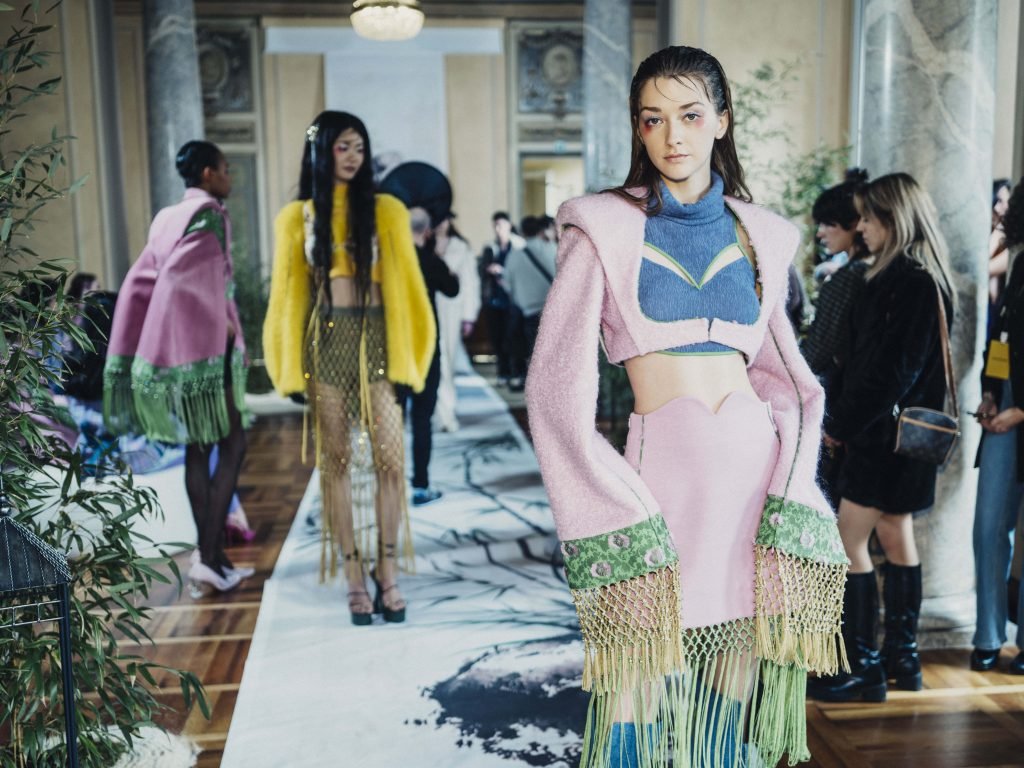
There’s a strange expectation built into how fashion gets consumed now. A collection lands, and within hours critics are hunting for references, journalists are asking about inspiration, and the whole thing has been neatly translated into headlines and trend reports before anyone’s actually sat with it. Songzio has never seemed particularly interested in making that process easy. Walk into one of the house’s runway shows and it feels less like Fashion Week and more like stepping into a gallery where, by some accident, everything happens to move.
That comparison isn’t just a nice turn of phrase. It’s closer to literal fact than most people realise.
A PAINTER WHO ACCIDENTALLY STARTED A FASHION HOUSE
Before Zio Song made a single garment, he made paintings. Songzio’s founder came up in early-1990s Seoul as an artist first, and by most accounts he still starts every collection the same way he always has , not with a mood board or a trend report, but with a hand-painted canvas, often displayed on the runway itself during the show. It’s a genuinely unusual way to build a fashion house, and it explains a lot about why the finished clothes feel less like garments responding to a season and more like paintings that happened to acquire sleeves.
He founded the label in Seoul in 1993, at a moment when South Korea’s fashion industry barely had an identity of its own to build from , most local designers were still working in the shadow of Western trends. Songzio became one of the country’s first genuinely independent designer houses, showing menswear collections at Seoul Fashion Week from 1993 to 2006, with a client list that mixed serious fashion credibility with local celebrity wattage: actor Cha Seung-won, model Lee Soo-hyuk, and Bae Jung-nam all wore the label early. It’s frequently named, alongside Wooyoungmi and Juun.J, as one of the handful of houses that dragged Korean fashion into international relevance decades before “K-fashion” was a phrase anyone outside Korea used.
THE GALLERY THAT DOUBLES AS A SHOP
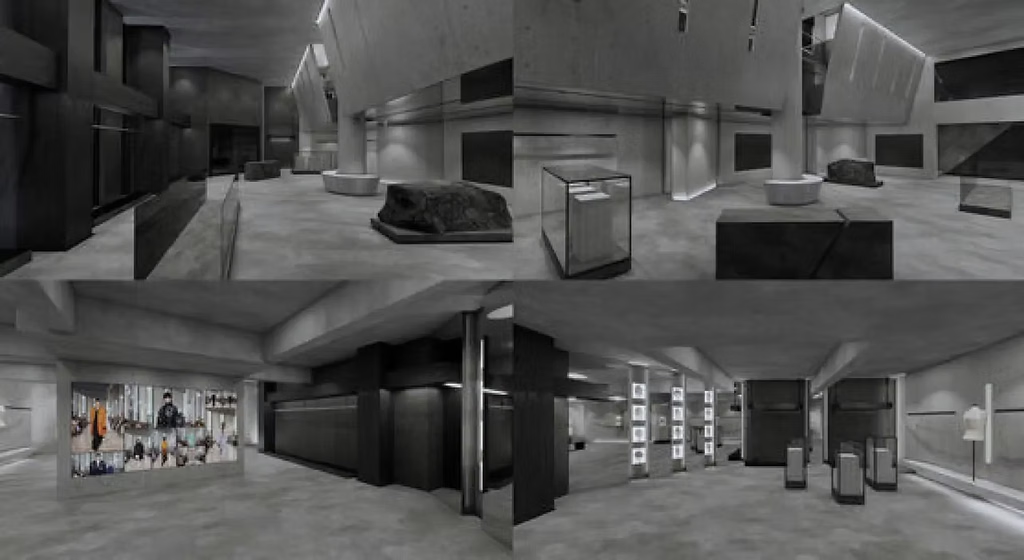
If you want proof that Songzio’s art-first identity isn’t just a nice founding myth, visit Galerie Noir, the house’s Seoul flagship — a space that functions simultaneously as a retail store and a contemporary art gallery, hosting exhibitions by emerging South Korean artists. It’s a strange, genuinely rare business decision: most fashion houses treat a flagship as a temple to the product. Songzio built one that treats the product as one exhibit among several, refusing to fully separate the clothes from the art practice they came out of.
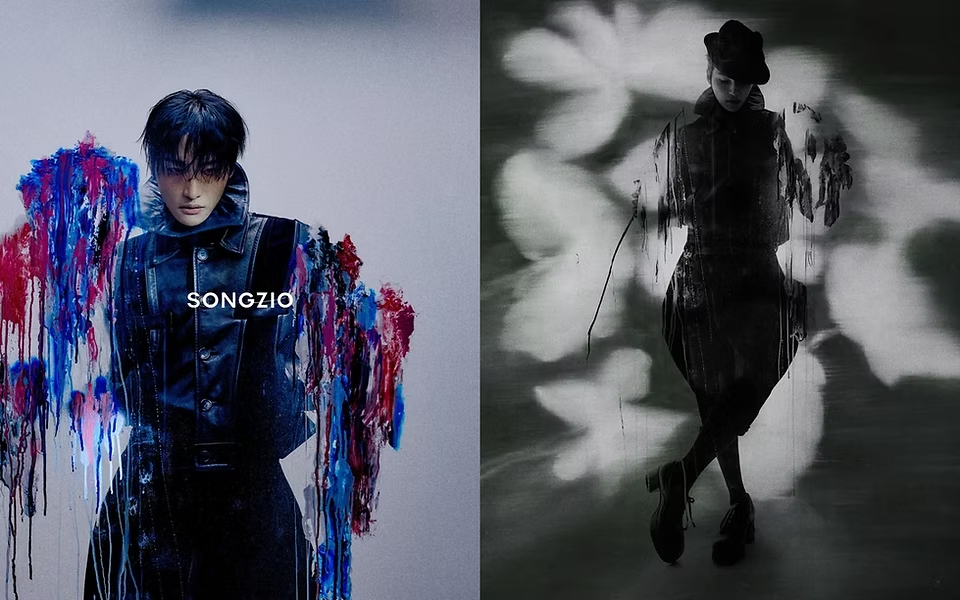
That refusal shows up in the clothes themselves. Songzio’s whole design language sits in the gap between disciplines that are usually kept apart , tailoring that behaves like sculpture, fabric that behaves like paint, precision paired with something closer to raw feeling than to trend-forecasting. Dark palettes. Long coats. Fluid, layered silhouettes. Textures that only fully reveal themselves when light hits them at a specific angle. Nothing about it reads as accidental, and nothing about it screams for attention either , which is a genuinely difficult balance for a label built around such theatrical, artistic instincts to actually pull off.
WHY BLACK MEANS SOMETHING DIFFERENT HERE
For a lot of houses, black is the safe choice , elegant, timeless, low-risk. Songzio uses it differently. Across the collections, black behaves less like a colour decision and more like an instrument: depth, movement, shadow, a surface where construction has to carry all the weight that decoration would normally do elsewhere.
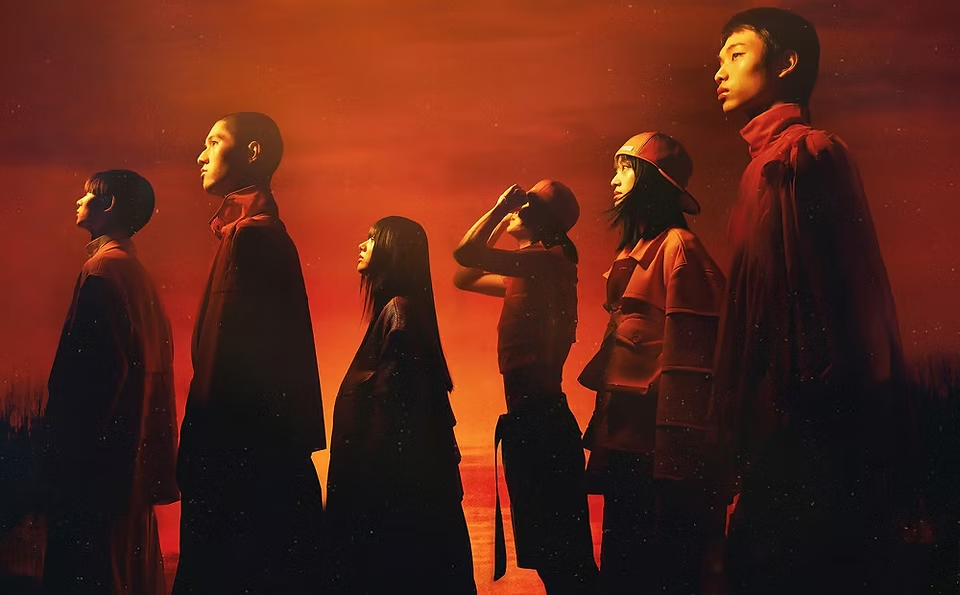
Spend enough time with one of the collections and you start to notice that colour was never really meant to be the protagonist. Shape was. The body recedes, and the silhouette does the talking instead , which tracks, given that the whole house started life as a painter’s attempt to translate a canvas into something you could wear.
FROM ONE MAN’S VISION TO A FAMILY CONGLOMERATE
The house nearly stalled out commercially before its second act began. In 2017, Jay Song , Zio Song’s son, who’d studied mathematics and art history at Columbia before returning to Korea , took over creative direction, and by 2018 had assumed the CEO role outright, working to revive a label that was struggling to expand beyond its original, more niche identity. He rejoined Paris Men’s Fashion Week’s official calendar in June 2022, and under his direction the house has grown into something closer to a small fashion group: the core Songzio line, plus Songzio Homme (a more accessible contemporary line launched in 2018), Zzero Songzio (a unisex, street-leaning line with a small panther logo, aimed partly at a younger audience), and Zio Songzio, the formal menswear line the family fully internalised in 2022 after two decades of licensing it out. By 2023, the group was operating out of roughly 80 stores, generating an estimated $80 million in annual revenue.
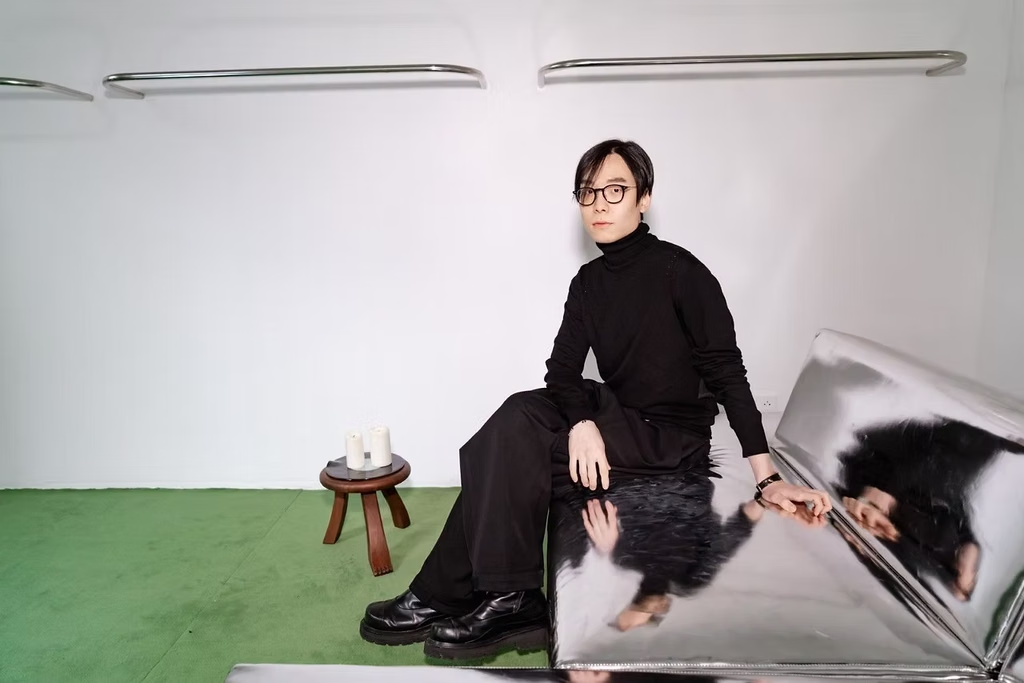
What’s notable is what didn’t change in the handover. Jay Song has been candid about how surprised he was by how much of the audience’s interest traces back to Korean culture’s broader global rise crowds at recent shows have included far more celebrities and influencers than would have shown up at a Songzio presentation back in 2006, when the house first moved toward Paris.
But the artistic DNA his father built the label on the painting-first process, the refusal to chase logos or instantly Instagrammable pieces , has stayed remarkably intact through all of that commercial expansion, and through a family handover that could easily have flattened it into something saf
THE MOMENT THE WORLD ACTUALLY NOTICED
If there’s a single event that pushed Songzio past Korea’s fashion circles and into a genuinely global conversation, it happened on March 21, 2026, at Gwanghwamun Square in Seoul. BTS reunited on stage for the first time in nearly four years, streamed live via Netflix to more than 18 million viewers, and every look the seven members wore was custom Songzio , a collection called “Lyrical Armor,” built specifically for the moment. Hybe approached Jay Song roughly two months before the performance, explicit about wanting a genuinely Korean design partner to match an album titled “Arirang,” named after one of the country’s oldest folk songs.
The result drew on early Joseon-era armor and traditional hanbok, deconstructed into sculptural, monochrome silhouettes, with each member assigned a distinct archetype within the visual story , RM as “the hero,” Jin as “the artist,” Suga as “the architect,” J-Hope as “sorigun,” Jimin as “the poet,” V as “seonbi,” Jungkook as “vanguard.” Song has said the members were involved down to the smallest details, from fabric colours to accessories. It’s the same instinct that’s defined the house since 1993, just handed the largest stage of its career: don’t illustrate history, translate it.
DESIGNED TO BE REMEMBERED, NOT PHOTOGRAPHED
While a lot of contemporary menswear has leaned hard into louder branding, splashy collaborations, and pieces built to be immediately recognisable in a single Instagram frame, Songzio keeps moving at its own, noticeably slower pace. The collections don’t read as designed for social media. They read as designed for memory , you may not walk out able to describe every individual look, but you’ll remember exactly how the show made you feel, which is a much harder thing for any designer, in any medium, to actually engineer.
Maybe that’s the clearest way to describe what Zio Song built, and what his son has managed to carry forward without diluting it: a fashion house that never really stopped being a painter’s studio, one that just happens, thirty-odd years later, to also sell clothes.
All images featured in this article are credited to owners . They are used for editorial and illustrative purposes only, with no commercial intent. All rights remain with their respective owners.