A deep dive into the brands, the styling decisions and the cultural strategy behind the most watched fashion moments on the planet
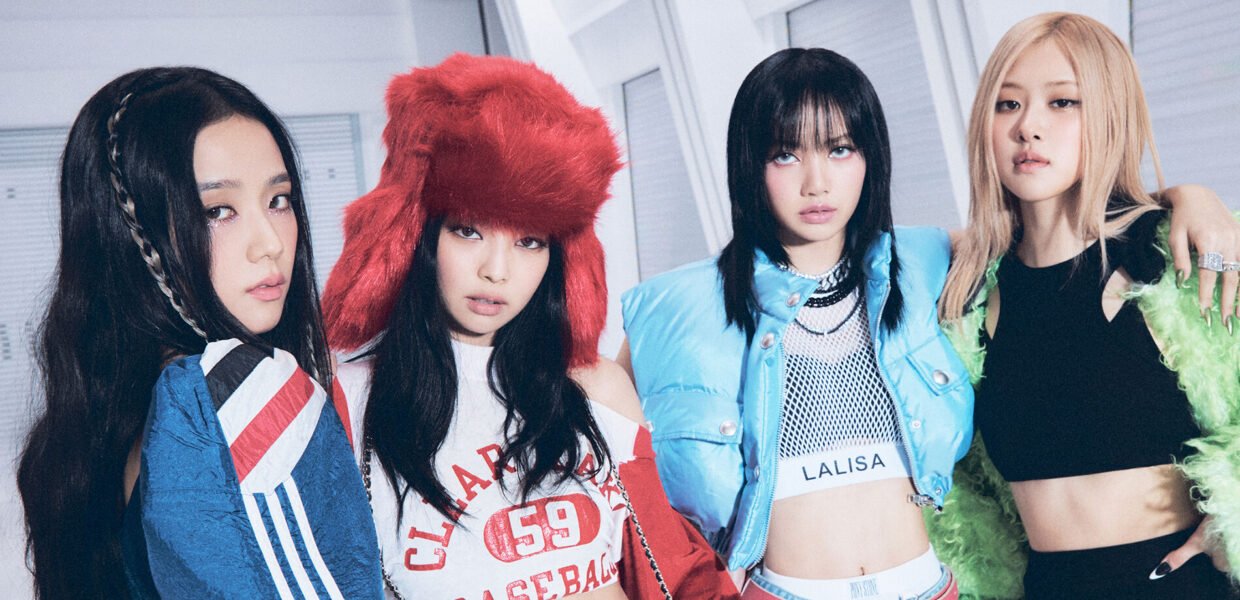
There is a moment in BLACKPINK’s Pink Venom music video , released in August 2022 and still one of the most forensically documented videos in K-pop history , where Lisa raps her Celine verse wearing a Celine cloche hat, Celine boots, and a hockey jersey from Neon Genesis Oddity. She name-checks the house in her own lyrics: “This the life of a vandal, masked up and I’m still in Celine.” The brand appears in the video three times across three different looks. Jisoo opens in a Miss Sohee gown. Jennie wears Alaïa, then Chanel. Rosé wears Saint Laurent. The final sequence is an extended showcase for Demobaza, the Bulgarian label whose oversized, architectural silhouettes dominate the video’s closing chapter.
A fashion breakdown published by W Magazine identified the following brands in that single four-minute video: Alaïa, Celine, Chanel, Saint Laurent, Dior, Demobaza, Miss Sohee, Bulgari, GCDS, Rick Owens x Dr. Martens, Alexander Wang, Jimmy Choo, Fanci, Vivienne Westwood, Neon Genesis Oddity, Sicko Cartel and Tiffany & Co. Eighteen brands. One video. Released to an audience that watched, paused, screenshotted and catalogue-checked every single frame.
This is not a fashion editorial. This is something larger.
WHY THE MUSIC VIDEO BECAME FASHION’S MOST IMPORTANT SCREEN
The fashion industry has spent decades building platforms for its work: runway shows, magazine editorials, advertising campaigns, red carpets. All of them reach audiences measured in the thousands or, at best, the tens of millions. A major K-pop music video reaches audiences measured in the hundreds of millions , and those audiences watch with a fashion literacy that most editorial readers do not possess.
This is the fundamental fact that the industry has been processing, with varying degrees of speed and clarity, for the past decade. The most watched fashion content on the planet is not on a fashion platform. It is on YouTube, where BTS’s Dynamite , a video packed with deliberate vintage fashion references — accumulated 1.77 billion views. It is on streaming platforms and social media, where BLACKPINK’s How You Like That became the most viewed YouTube video in its first 24 hours upon release in June 2020, exposing millions of viewers simultaneously to Celine, Chanel, Saint Laurent and Dior looks that had been identified and catalogued by fan fashion accounts within hours of the premiere.
The scale is simply not comparable to anything else in visual culture. And the audience watching is not passively absorbing. It is actively decoding.
BLACKPINK: WHEN EVERY MEMBER BECAME A HOUSE
To understand the strategic sophistication of how K-pop groups use music videos as fashion platforms, there is no cleaner case study than BLACKPINK , a group whose fashion identity was so systematically aligned with specific luxury houses that the brand appearance in each video was less a styling decision and more a communication strategy.
Each of the four members developed a distinct and exclusive house alignment. Lisa with Celine, Rosé with Saint Laurent, Jennie with Chanel, Jisoo with Dior. These were not incidental , they were engineered partnerships that made each music video appearance a simultaneous brand event for four different luxury houses.
In How You Like That (2020) , the video that became the most watched YouTube premiere in history at the time , Celine appeared in a sequinned gown with satin frills from its Fall/Winter collection and a sequinned embroidered cashmere bolero from Pre-Fall 2020. Jennie wore Chanel, including a double-C embroidered tank top from the Métiers d’Art 2020 collection. Jisoo wore Dior across multiple looks. Rosé wore Saint Laurent. The video was released simultaneously to an audience of tens of millions and functioned, for four different luxury houses, as a global campaign with an organic reach no advertising budget could have purchased.
By Shut Down (2022), the alignment was so established that it had become almost ceremonial. Jennie wore Chanel suspenders over a denim miniskirt, then Chanel accessories in a second look. Lisa wore lace-up Celine boots. Rosé wore Saint Laurent. Jisoo wore Dior. The houses appeared in the video the way they appeared in press coverage of the group , consistently, recognisably, as an extension of each member’s established identity rather than a styling choice made for the video.
What this model demonstrated was something the fashion industry had not fully articulated until it was happening in front of them: that a K-pop music video could function as a sustained, living brand campaign whose reach extended indefinitely. A campaign image runs for a season. A music video with hundreds of millions of views runs forever, and the fashion content within it is catalogued, archived and discussed by fashion-literate fan communities for years after the release.
THE BRAND ECONOMY OPERATING BENEATH THE SURFACE
The Shut Down and Pink Venom fashion breakdowns also revealed something else: that K-pop music videos had become the most important showcase for emerging and independent labels that could not otherwise access this scale of visibility.
Demobaza , the Bulgarian design collective founded by Demo Vasilev and Tono Stefanoff , had been working in relative obscurity within avant-garde fashion circles when BLACKPINK’s Pink Venom finale placed the label’s architectural, deconstructed silhouettes in front of an audience of hundreds of millions. The brand appeared in the video’s most visually dramatic sequence, dressing all four members for the closing chapter. The exposure was, by any reasonable measure, equivalent to a Vogue cover moment multiplied by the entire global reach of the internet’s most dedicated fashion audience.
This is the second great story of K-pop music videos and fashion: the way they function as discovery platforms for independent and emerging labels that the established fashion calendar cannot accommodate. In Pink Venom alone, the brands that received significant exposure alongside the major luxury houses included Miss Sohee , the British-Korean designer known for her elaborate, couture-referenced gownwork , and Neon Genesis Oddity, a label whose name became searchable worldwide within hours of the video’s release.
The same dynamic appears across virtually every major K-pop video from groups with established fashion identities. The mix of major luxury house pieces (signalling existing brand relationships), contemporary independent labels (creating discovery moments), and custom-designed looks (demonstrating the group’s access to bespoke fashion) is not accidental. It is a layered communication of the group’s position within the fashion ecosystem , and it is read, and processed, by audiences who understand exactly what each layer means.
BTS: THE GROUP THAT CHANGED FASHION’S RELATIONSHIP WITH MUSIC
If BLACKPINK established the house-alignment model, BTS established something more fundamental: the proof that K-pop artists attending to their own fashion identity, consistently and with genuine personal investment, would eventually attract every major luxury house in the world.
Dior was the first luxury house to formalize a relationship with BTS as a group, creating custom stage outfits for their 2019 world tour. The decision, by then Dior creative director Kim Jones, was not based on the group’s existing brand relationships , they had none at the level of major luxury houses at the time. It was based on the observation that BTS had developed, organically and over years, a fashion sensibility that was sophisticated, distinctive and reaching a global audience of extraordinary scale.
In 2021, Louis Vuitton announced BTS as the maison’s newest house ambassadors , the first full-group ambassadorship with a high fashion brand, and one that Virgil Abloh described as “adding a modern chapter to the House, merging luxury and contemporary culture.” The announcement marked a threshold moment: the world’s most commercially powerful luxury house confirming what the data had been showing for years.
What followed was the individual sweep. RM became the face of Bottega Veneta. Jin joined Gucci. Suga partnered with Valentino. J-Hope became the most visible face in Louis Vuitton’s menswear communication. Jimin joined Dior and Tiffany & Co. V aligned with Celine and Cartier. Jungkook partnered with Calvin Klein , and then went further, co-designing a limited edition capsule collection, CKJK, in 2026, making him one of the very few music artists to cross from brand face to active collaborator at a major fashion brand.
Seven members. Seven houses. And before all of it, music videos. Hundreds of them, across years, in which each member developed the personal fashion identity that eventually made the luxury partnerships feel not just commercially logical but aesthetically correct.
STRAY KIDS: THE FASHION INTELLIGENCE BUILT INTO THE MUSIC
Stray Kids’ relationship with fashion in their music videos operates differently from the house-alignment model that BLACKPINK and BTS established , and in some ways is more interesting precisely because of that difference.
From their earliest videos, the group , which self-produces virtually all of its music and has a significant degree of creative input into its visual output , incorporated fashion choices that reflected genuine personal taste rather than strategic brand placement. In Miroh (2019), HAN was wearing an Alexander McQueen Brush Strokes Zip Jacket. Hyunjin had on Fendi FF Jacquard Shorts. Chris ( Bang Chan ) wore a Maison Kitsuné bomber. These were not pieces sourced through brand relationships , they were pieces the members chose, and wore, because they genuinely connected with them.
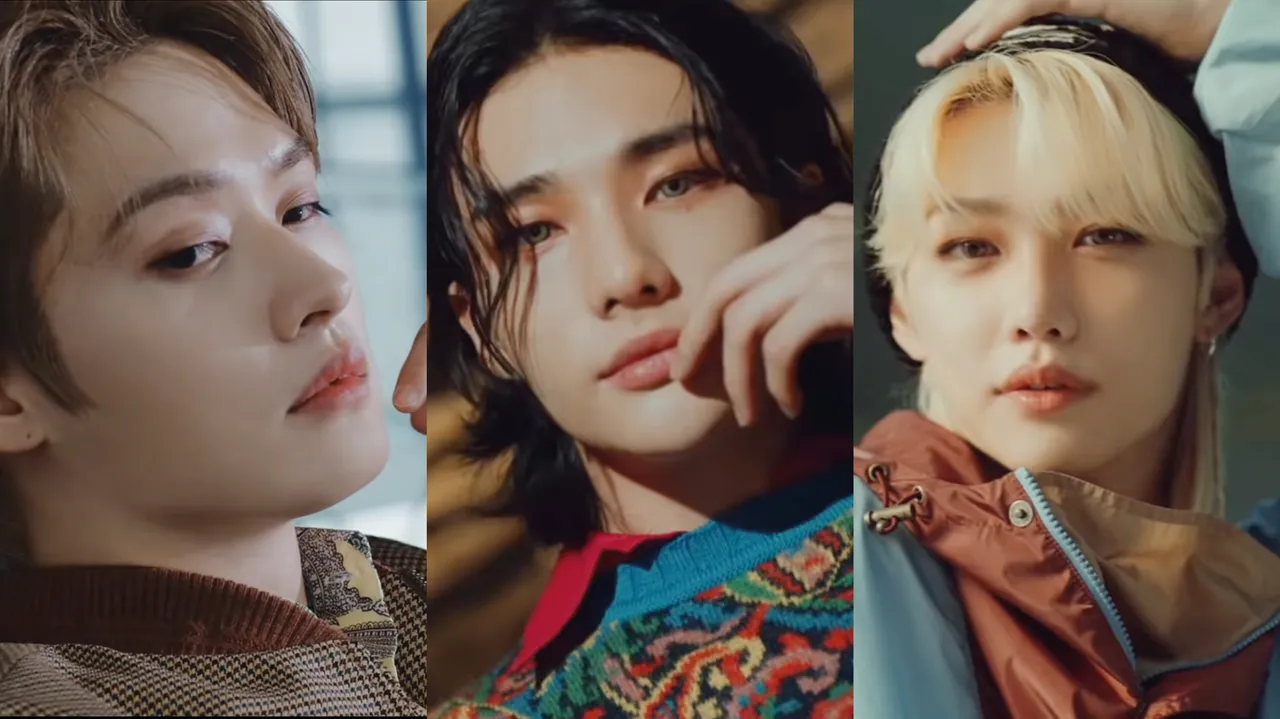
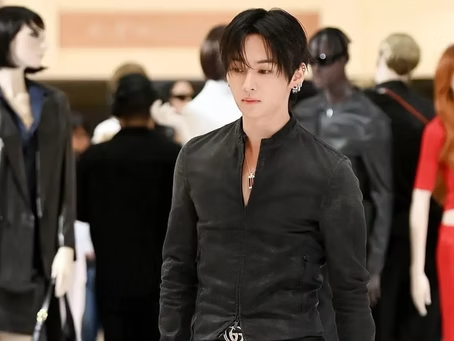
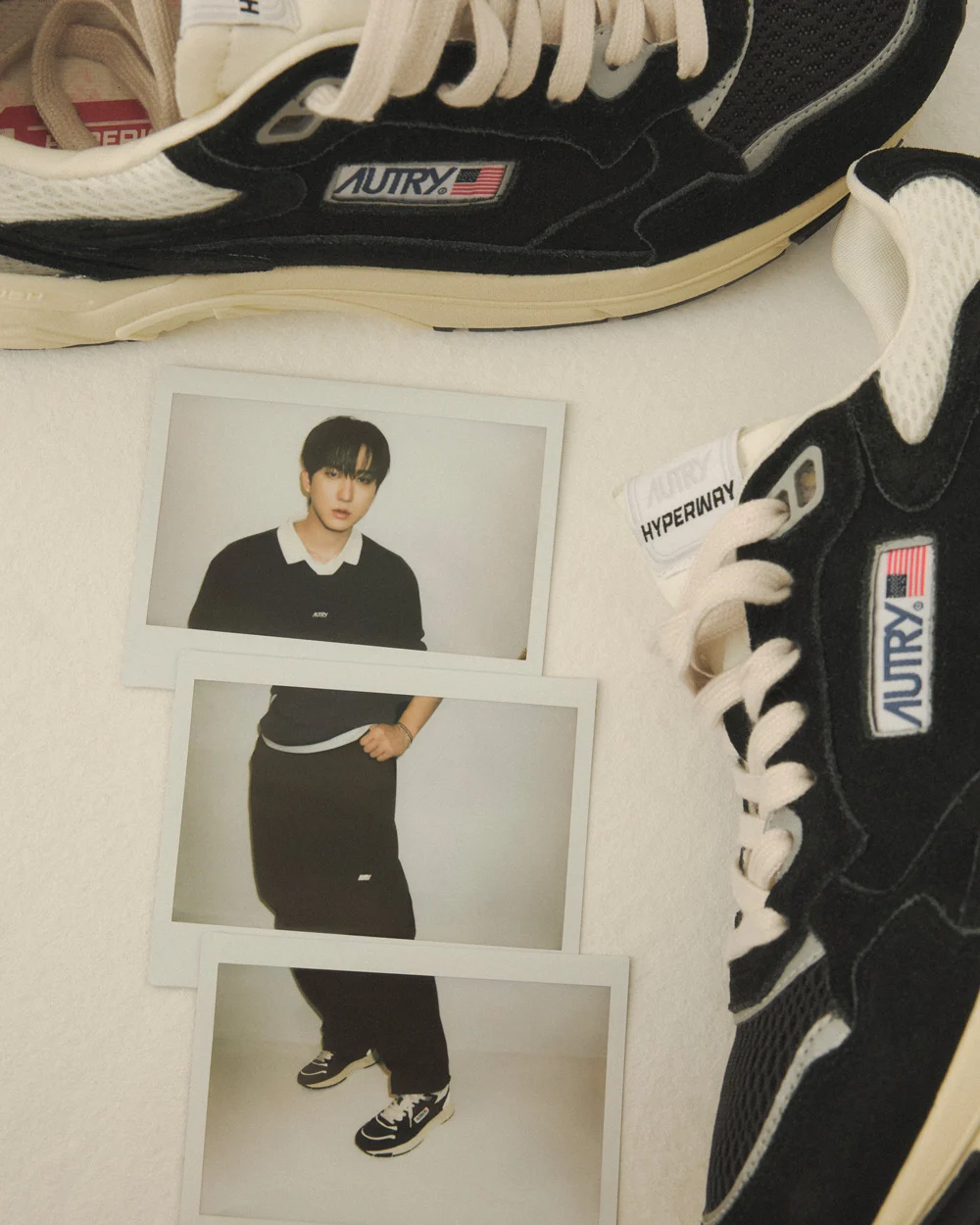
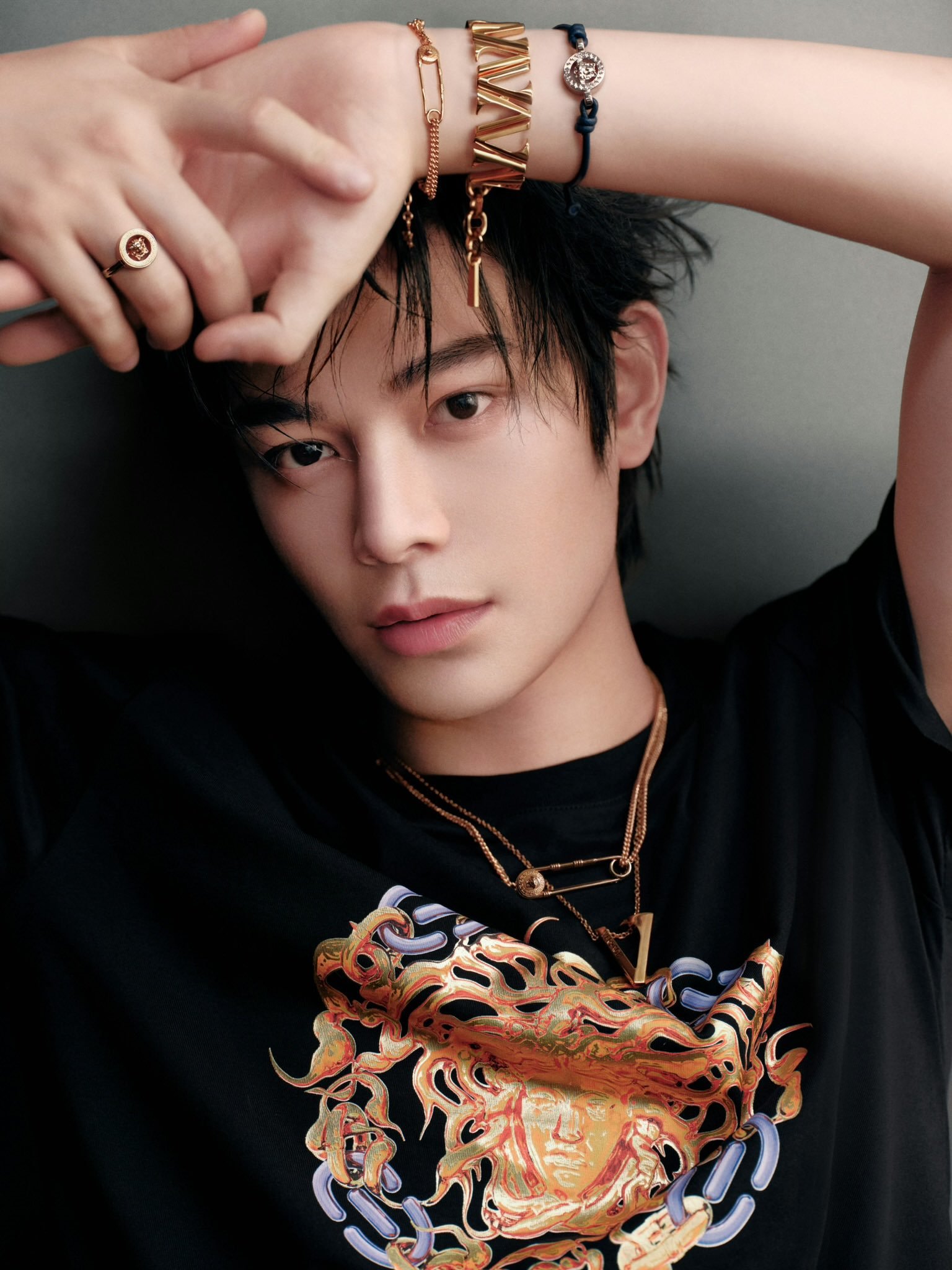
By Thunderous (2021), the choices had escalated. Changbin appeared in a Celine bowling shirt. HAN wore a Givenchy flocked logo tee. Two Parisian houses, worn by a K-pop group that had not yet formalised relationships with either, in a video that accumulated hundreds of millions of views. The stylings read, in hindsight, as a preview of where the members’ tastes would eventually lead their formal brand partnerships , to Fendi for Chris ( Bang Chan ), to Gucci for Lee Know, to Versace, Cartier and GUESS Jeans for Hyunjin, to Louis Vuitton and Adidas for Felix, to Burberry for Seungmin, to Bottega Veneta for I.N, to Autry for Changbin, and to Tod’s for HAN.
By the time Run It dropped on June 24, 2026 , the pre-release single for their tenth mini album This & That , the wardrobe for the video was handled by Ben Costume, a Korean costume studio that has become one of the most in-demand names in K-pop visual production. The video, directed by Sam Son and set in a warehouse and sun-bleached desert, accumulated 4.1 million views in its first seven hours. Every frame was documented by STAY within minutes of release.
NEWJEANS AND THE FOURTH GENERATION’S DIFFERENT FASHION LANGUAGE
The fourth generation of K-pop groups has introduced a fashion sensibility that diverges significantly from the luxury-forward approach of their predecessors , and the divergence is itself a statement.
NewJeans, the group whose members include Hyein as a Louis Vuitton ambassador, Hanni as a Gucci ambassador, Minji for Chanel Korea, Haerin for Dior and Danielle for Burberry , built their visual identity on a very different kind of fashion intelligence. Their music videos and promotional content prioritised a Y2K-inflected, casual-cool aesthetic that mixed Nike sneakers with emerging Korean labels, vintage pieces with contemporary indie brands and, crucially, the kind of clothes that looked like real people actually owned them.
The Acubi aesthetic , the Seoul-born streetwear style characterised by oversized silhouettes, muted layers and an early-2000s sensibility , became globally visible largely through NewJeans and Aespa wearing the look during performances and fashion week appearances. A style that had been developing in Seoul streetwear culture reached a global audience through the visual vocabulary of K-pop, via channels that the Western fashion press was not covering.
NewJeans’ fashion moments in their videos introduced Supreme, Needles, Hysteric Glamour, Vandy The Pink, Moon Boots, Entire Studios, VEERT jewellery and Casablanca to millions of young global consumers who encountered these brands through the group’s visual world before they ever discovered them through any traditional fashion channel. This is not a luxury house strategy. It is something more diffuse and arguably more powerful: the K-pop music video as a cultural mapping of the complete fashion landscape, from established luxury to Seoul streetwear to global sportswear to emerging indie labels.
AESPA AND THE CONCEPTUAL FRONTIER
Aespa brought a third model to the K-pop fashion video equation: the idea that a group’s fashion identity could be inseparable from its creative concept in a way that made the visual world of each release a genuine piece of fashion worldbuilding.
The group’s four members each developed individual luxury partnerships , Karina with Louis Vuitton and Givenchy, NingNing with Fendi and Prada, Winter with Polo Ralph Lauren, Giselle with Loewe , that were chosen not just for brand prestige but for conceptual fit with Aespa’s science-fiction-inflected universe. Giselle’s Loewe partnership, announced in March 2024, placed her within a house whose Jonathan Anderson-era identity had made it the most intellectually ambitious luxury brand in the market , a fit for a member of a group whose creative concept was built around the intersection of human and digital identity.
Their videos incorporated fashion choices that reflected the group’s avatar universe, with luxury pieces and custom-designed looks existing alongside visual effects in a way that made the fashion inseparable from the science fiction. The clothes in an aespa video are not just clothing. They are costumes in a story about what it means to exist in multiple dimensions simultaneously , and the brands that appeared within that story were, by association, part of the same creative universe.
THE MECHANISM: HOW BRANDS ACTUALLY BENEFIT
The commercial logic behind brand appearances in K-pop music videos is not complicated, but it operates at a speed and scale that traditional fashion marketing cannot match.
When a brand appears in a major K-pop music video, fan communities , operating across Weibo, Xiaohongshu, X, Instagram, TikTok and YouTube simultaneously , identify the brand within hours, often within minutes. The piece is sourced, linked and discussed. If the brand has a similar item currently available, searches and purchases spike immediately. If it does not, the cultural conversation about the brand’s aesthetic and the idol wearing it generates the kind of organic earned media value that no advertising campaign of equivalent cost could produce.
The data behind this mechanism is documented and significant. K-pop’s contribution to South Korea’s economy is estimated at $5 billion annually. The brands that have built the deepest relationships with K-pop’s creative ecosystem , Celine under Hedi Slimane with BLACKPINK’s Lisa, Louis Vuitton with BTS and then with Felix of Stray Kids, Gentle Monster with Jennie of BLACKPINK across three collaborative collections , have consistently reported the strongest engagement metrics in the Asian markets where K-pop fandom is most concentrated.
But the music video moment precedes all of it. Before the ambassadorship announcement, before the campaign images, before the front row appearance , there is the video. The look. The pause. The screenshot. The fan account post that identifies the brand at 3am on the night of release and sends it to an audience of millions before the brand’s own marketing team has had time to process what just happened.
THE CONCLUSION: THE SCREEN THAT CHANGED FASHION
The music video has always been a fashion medium. Madonna understood it. Michael Jackson understood it. The 1990s MTV era understood it with a clarity that produced some of the most memorable fashion moments of the 20th century.
What K-pop did was to take that understanding and industrialise it , to build, across decades of extraordinary visual output, a fashion ecosystem embedded within a music industry, operating at a scale and with an audience intelligence that the fashion world had never previously encountered from within entertainment.
The brands that understood this earliest , the houses that sent looks to groups before they had ambassadors, the independent labels that appeared in videos before they had distribution, the emerging Korean designers who found global audiences through idol styling before they had international stockists , are the ones that built the most durable relationships with the most commercially significant fandom communities on the planet.
And it is still happening. In every comeback, in every video, in every paused frame and screenshot and fan-account post identifying the brand on a collar at 3am on a release night.
The invisible runway never closes. It just keeps running.