There was a moment when streetwear stopped surprising anyone. Luxury houses were making hoodies. Sneakers had turned into investment assets. Oversized silhouettes showed up in collection after collection, regardless of whether the house behind them had built its name on tailoring, couture, or sportswear in the first place. What had once felt genuinely rebellious slowly hardened into just another chapter in fashion’s rulebook. Streetwear hadn’t disappeared. It had simply gotten comfortable.
Hyein Seo arrived into that comfort like a deliberate interruption — not with louder logos or pricier hoodies, but with discomfort itself. And fashion, whether it knew it yet or not, needed that far more than another drop.
A DESIGNER WHO NEVER ACTUALLY WANTED HER OWN LABEL
Here’s the part of her story that tends to surprise people: Hyein Seo never planned to run her own house at all. Raised in Seoul, she studied at Antwerp’s Royal Academy of Fine Arts , the same academy that produced Martin Margiela and, a generation later, Demna Gvasalia , where she’d grown up idolising Raf Simons and Margiela, alongside a formative interest in horror director Dario Argento and skate culture. Her actual ambition, by her own account, was to graduate and go work inside an established house. Her classmates, deep in the Antwerp tradition of pure avant-garde experimentation, used to describe her more commercially-minded instincts with a specific label of their own: “street couture.”
That plan changed almost by accident. Her thesis collection was picked up by VFILES, the New York platform for emerging talent, and shown during New York Fashion Week in 2014 , and from there, things moved faster than she’d planned for. A faux fur stole from that collection, emblazoned with the word “FEAR,” ended up on Rihanna, and the attention that followed pushed Seo, at twenty-three, straight past her original plan and into launching an eponymous label she hadn’t actually set out to build. The same year, the British Fashion Council named her Best Designer in its Emerging Talents category. She’d wanted to work for someone else’s house. Instead, within a single year, she had one of her own.
CLOTHES BUILT FOR SURVIVAL, NOT SPECTACLE
What’s made a Hyein Seo collection instantly legible ever since isn’t shock value , it’s a specific, deliberate wrongness. Cargo trousers that read heavier than expected. Harnesses folded into everyday clothing rather than reserved for performance. Outerwear that behaves like protection rather than decoration. The silhouettes never look built for a runway moment so much as for surviving a world that keeps demanding adaptation. Her AW17 collection, built around an invented character named Amrita, pulled directly from Akira, Street Fighter, Tekken and other arcade-era fantasy references , a dystopia stitched together from a self-described childhood spent around dusty arcades and a serious amount of anime.
You don’t walk away from her work thinking about trends. You walk away thinking about atmosphere. She’s never really dressed people for occasions. She dresses them for realities that haven’t fully arrived yet , which is a large part of why the clothes read as functional even at their most conceptually strange.
THE CELEBRITIES WHO FOUND HER BEFORE THE INDUSTRY DID
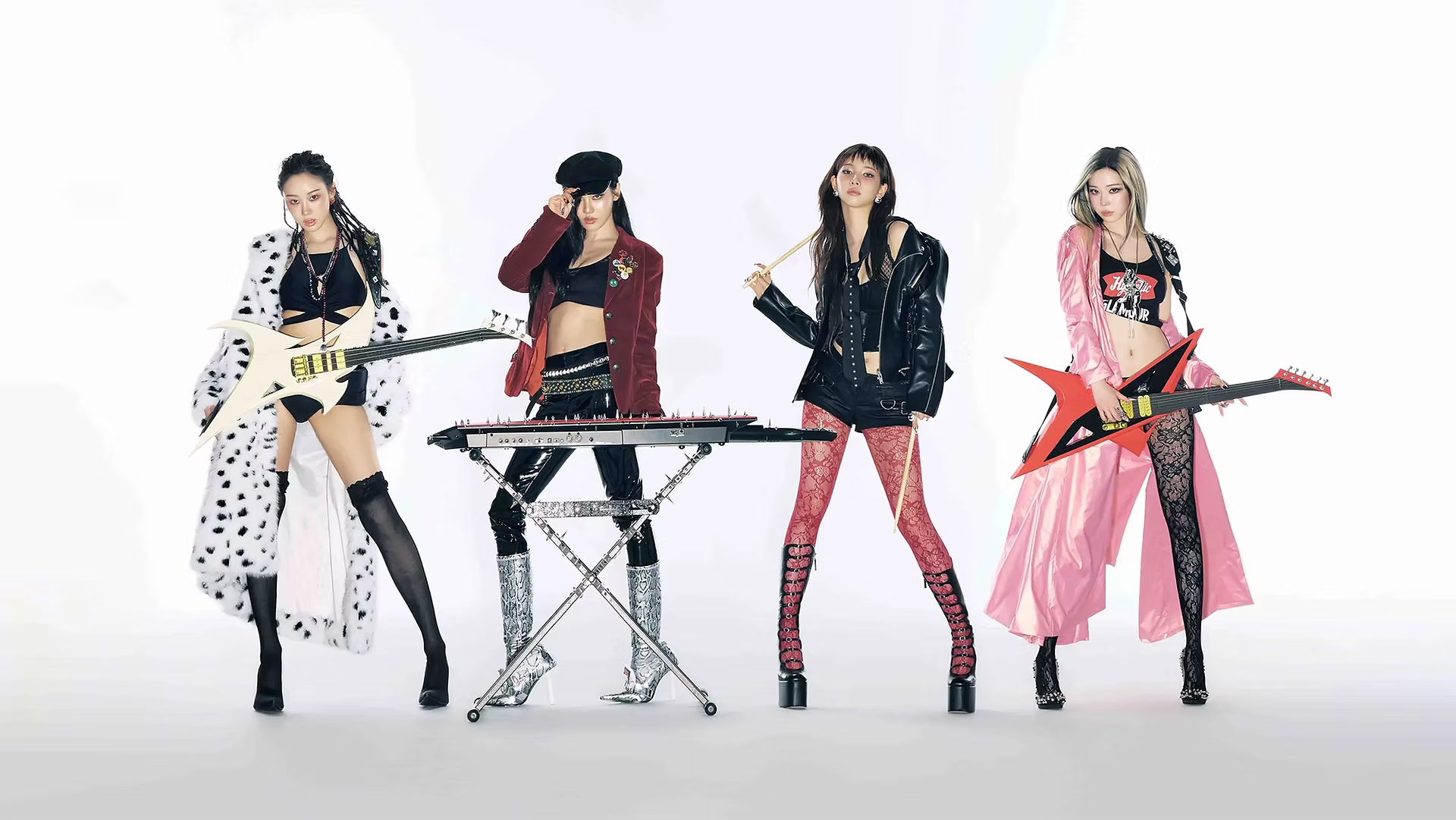
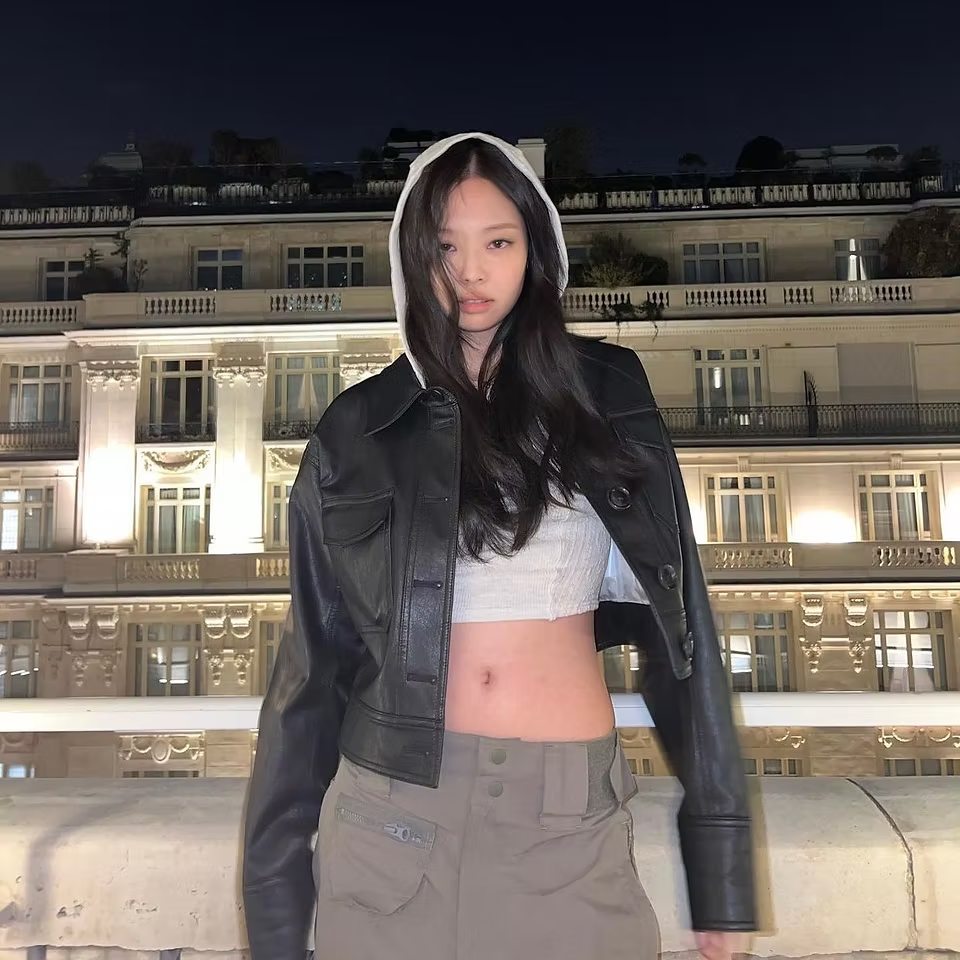
That independence is precisely why artists gravitated toward her work well before most of the fashion press had caught up. Rihanna wore the label early and repeatedly. Kendrick Lamar, Grimes, CL and G-Dragon followed, and more recently NewJeans has become closely associated with the brand’s current era. None of that reads as a styling coincidence or a paid placement strategy , it reads like people who found clothing that already looked like it belonged to them, rather than clothing they had to be convinced into. That’s a genuinely different kind of endorsement than a red-carpet loan, and it’s much harder to manufacture.
A HOUSE BUILT AS A GENUINE PARTNERSHIP
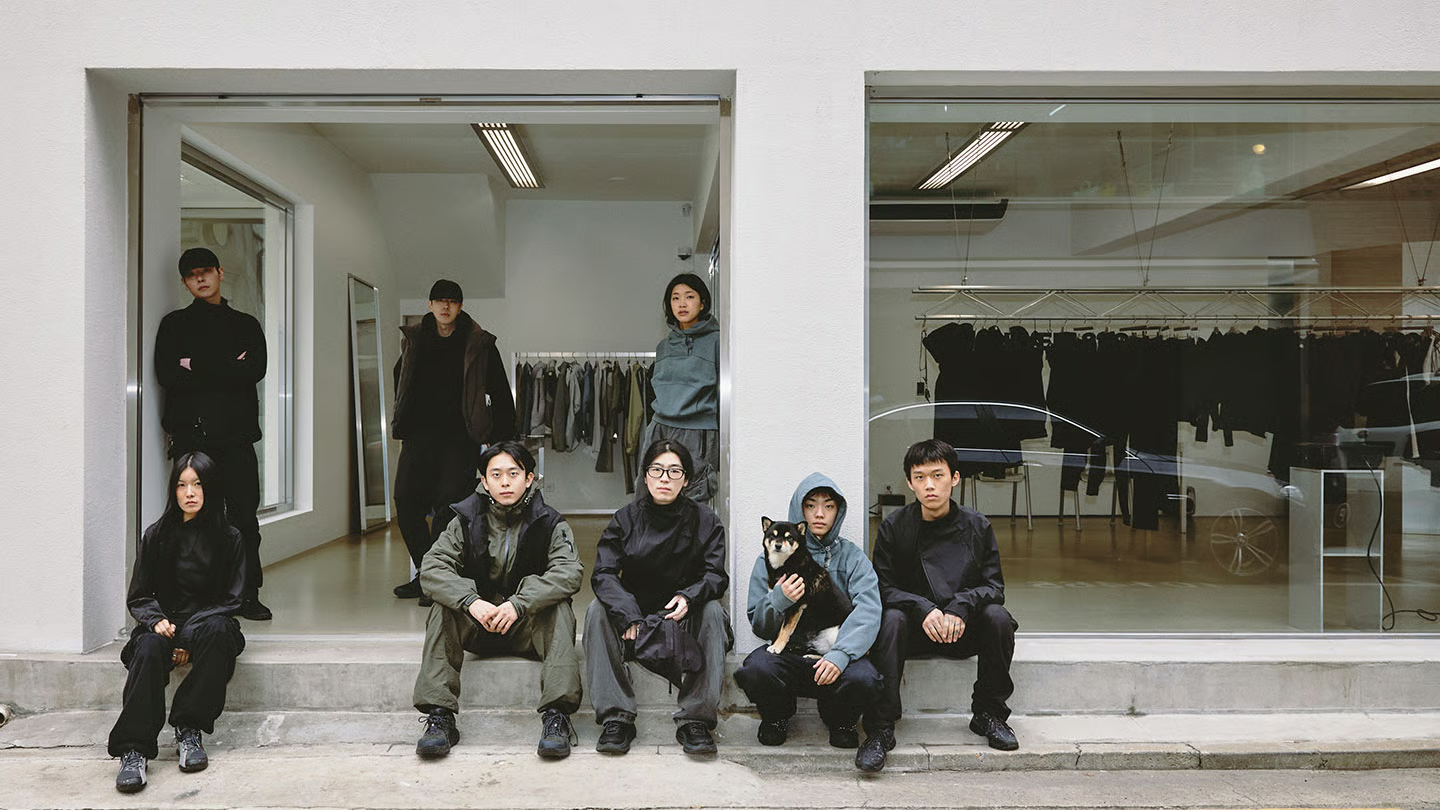
The brand has never really been a solo act, either, whatever the eponymous label might suggest. Seo runs it alongside CEO Jinho Lee, a fellow Antwerp graduate she studied alongside years before either of them had a company to run. For years the two split their time between Seoul and Antwerp before eventually settling the whole operation permanently in Seoul’s Gangnam district, where , a decade after that first VFILES showcase , they opened the brand’s first physical store, in early 2023, on the eve of the label’s tenth anniversary. Alongside the shop, they published an 800-page black-and-white photo book documenting the brand’s first decade, part retrospective, part archive. Since SS23, Lee has also pushed the label to expand beyond its original streetwear-forward identity, adding more classical, handmade construction techniques and a growing menswear line to what had started as an almost entirely womenswear proposition.
STRENGTH THAT DOESN’T PERFORM
Look closely at a decade of her collections and one thing becomes hard to miss: Hyein Seo has never treated femininity as something fragile. There’s real strength running through nearly every silhouette she’s built, but it’s rarely the exaggerated, power-suit version fashion tends to reach for when it wants to signal strength. It’s quieter than that. More instinctive. Her garments don’t seem especially interested in flattering the body they’re on — they seem interested in protecting it, in giving it room to move through whatever the imagined scenario actually requires. There’s an almost cinematic logic to the construction: every jacket, every strap, every oversized pocket behaves as though the person wearing it might genuinely need it for something, not just photograph well in it.
WHY IT NEVER READS AS NOSTALGIA
Fashion has an enduring weakness for looking backward — entire collections built around the ’90s, the ’70s, someone’s archive. Seo’s work rarely indulges that instinct. It looks forward instead, though not toward some polished, optimistic vision of the future. Her world reads as uncertain, urban, restless — but never hopeless, which might be exactly why younger audiences keep connecting with it. It doesn’t pretend everything is fine. It just accepts that something worth wearing can still exist inside that uncertainty.
There’s also a Korean sensibility running underneath all of it, though not the kind most people go looking for. She doesn’t lean on traditional cultural references or obvious symbols. It shows up instead in restrain, in precision, in knowing exactly when to stop layering. Even her most complex looks never tip into chaos. Every proportion has clearly been considered; nothing is there purely because it photographs well. That’s a specific kind of design discipline, and the industry tends to notice it, even when it can’t quite articulate why.
AUTHENTICITY THAT WAS NEVER ABOUT BEING ANTI-FASHION
Streetwear now sits fully inside the luxury establishment it once stood outside of, and that shift has left a lot of designers scrambling for a new vocabulary , how do you stay authentic once the entire system has already absorbed everything you once represented? Seo never really had to answer that question, because her authenticity was never built on being anti-fashion in the first place. It was built on staying honest to a specific, consistent point of view. Trends have moved around her for over a decade now. Her perspective hasn’t had to move with them.
Walk through Seoul today and fashion doesn’t feel like performance , it feels like just another language people speak without thinking about it. That’s probably why a designer like Hyein Seo matters more than her relatively low public profile might suggest. She isn’t only making clothes. She’s documenting an attitude, a generation, a city permanently negotiating between where it came from and where it’s headed next. Fashion tends to celebrate whoever makes the loudest entrance in the moment. History, more often, remembers whoever quietly changed the conversation instead , and a decade in, that’s still the more accurate description of what Hyein Seo has actually done.