From a squat in New York to the front row of Paris , how Hannah Rose Dalton and Steven Raj Bhaskaran built the most subversive house on the calendar without compromising a single stitch
There is a dress that changed everything. It debuted as the finale look of a Paris Fashion Week show in March 2025 , ivory, winged, its train deliberately unravelling at the hem, its bodice sculpted and swirling in a way that suggested a body caught mid-transformation. Hannah Rose Dalton wore it herself to close the show, moving down the runway at Hôtel Le Marois like something between an apparition and a declaration. The name of the piece was Ange Arc. The name of the brand was Matières Fécales. And the name of the collection , the house’s official Paris debut after a decade of underground existence — was The Other.
Sixteen months later, Zendaya wore that same dress to the New York premiere of The Odyssey. Styled by Law Roach, accessorised with more than thirty carats of Chopard diamonds, standing at AMC Lincoln Square on the night of July 14, 2026, the most fashion-forward actress of her generation chose a gown by a brand whose name translates, from French, as Fecal Matter. It was the moment that a decade of radical, uncompromising, frequently misunderstood creative work became impossible to ignore.
The story of how it got there is one of the most interesting in contemporary fashion. And it begins not in Paris, but in a pattern-making classroom in Montreal, in 2014, where two people who initially could not stand each other discovered that they were, in fact, looking for the same thing.
THE BEGINNING: MONTREAL, 2014
Hannah Rose Dalton grew up in a comfortable suburb of Montreal, attending private school, dressing in a way that Steven Raj Bhaskaran would later describe, with characteristic candour, as “very Burberry, very conservative and very preppy.” At around ten years old, she read about the Rana Plaza factory collapse in Bangladesh , the disaster that killed more than 1,100 garment workers in April 2013 , and made a decision that would shape everything that followed. “I thought, well I have to learn to make my own clothing because I can’t support this industry,” she said in an interview with AnOther Magazine. She taught herself to sew and drape as what she has called “a protest against the non-glamorous side of fashion.”
Steven Raj Bhaskaran came from somewhere entirely different. He grew up in low-income housing in Montreal, in circumstances he has described as “scary and sketchy,” of Guyanese and Sri Lankan heritage, navigating a world that had narrow and specific ideas about what a person who looked like him was supposed to do and be. He discovered fashion not through the industry but through drawing , first manga, then, after watching a Fashion Television episode about Jean Paul Gaultier, through clothes. “Clothes entered my drawings,” he said. He is still the person who draws every sketch for the brand today.
They met at LaSalle College in Montreal , specifically in pattern-making class , and their first response to each other was mutual disinterest. Bhaskaran has spoken about finding Dalton’s aesthetic alienating; Dalton has described a similar distance. What brought them together was something more fundamental than aesthetics: a shared feeling that the fashion industry, as it existed, was built on a set of values and an image of beauty that had no room for either of them. “We really connected on our desire to express something from within that we were so scared to express,” Bhaskaran said. “Hannah was scared to explore a different side of femininity. For me, I was interested in exploring femininity but I couldn’t because I was trapped within my cultural limits. We helped each other personally to understand that no matter where you’re from, it’s about where you want to go.”
What followed was both a creative collaboration and a relationship. They shaved their heads. They shaved their eyebrows. They painted their faces in an alien-like makeup that bore no relationship to anything the beauty industry was selling at the time. And in 2016, they launched a brand under a name that was, by design, the least commercially appealing name imaginable: Fecal Matter.
THE NAME: WHY FECAL MATTER
The name is the first thing anyone asks about, and the answer is more considered than it might appear.
The brand’s full French name , Matières Fécales , captures what the duo has always been doing: translating something deliberately repellent into something that demands to be taken seriously. The Spanish Wikipedia entry for the brand describes the name as “an ingenious irony that, by referencing faeces, seeks to criticise the toxic excesses of fashion while sarcastically highlighting the great durability of their garments.” They told journalists early on that a deliberately off-putting name would ensure that customers chose their product for its quality, not for the label — that the name itself would function as a filter, separating the people who genuinely connected with the work from those who were simply following a brand.
There is also a more philosophical dimension. The brand’s positioning has always been about challenging the glossy facade of luxury-driven culture , about finding the beautiful in what society considers grotesque, about insisting that the full human experience, including its darkness and discomfort, is more worthy of fashion’s attention than the sanitised aspirationalism that dominates most of the industry. A brand that names itself after faecal matter is making a very specific argument about what fashion is for, and who it is for.
THE UNDERGROUND YEARS: NEW YORK, DEPOP, AND THE RICK OWENS CONNECTION
The years between the brand’s launch in 2016 and its Paris debut in 2025 are, in the fashion industry’s conventional terms, almost impossible to categorise. Dalton and Bhaskaran did not pursue traditional routes. They did not seek press or industry validation. They built their audience on Instagram and Depop, selling designs directly to a growing community of people drawn to their vision , which included, from early on, an outsized proportion of drag performers who found in the brand’s radical approach to femininity something that the mainstream fashion industry was not providing.
They squatted in a New York club. They DJed. They made clothes and sold them through Depop. They accumulated, organically and without institutional support, an Instagram following that grew to over 700,000 people , built entirely on the strength of their visual identity, which was unlike anything else being produced anywhere in fashion. Their aesthetic involved their own bodies as much as their clothes: shaved heads, shaved eyebrows, elaborate prosthetic makeup, contact lenses, the complete visual deconstruction of conventional beauty as a kind of daily practice.
The Rick Owens connection arrived in 2017, through a New York Times article. Owens read it, reached out, and invited them to dinner at his home with his partner Michèle Lamy. “He just said he’d love to meet us,” Dalton recalled. They brought their work. Owens was enthusiastic. What followed was a collaboration centred on the piece that had first generated serious attention for the duo: what became known as the skin shoes.
The skin shoes , also referred to as skin boots or skin heels , are hyperrealistic, flesh-coloured footwear that appear, at first glance, to be made from human skin. They were originally produced in collaboration with artist Sarah Sitkin in 2018, who specialises in hyper-realistic human replicas made from silicone. The effect is deliberately unsettling: the shoe looks as though a foot has been extended into a heel, as though the body itself has been distorted into architectural form. Owens was fascinated by them and wanted to incorporate them into his own work. The two houses collaborated on Owens’ Fall/Winter 2019 “Larry” collection — the duo creating prosthetic alien-inspired makeup for the models in the show, a contribution that cemented their place in the orbit of the most important radical designer working in Paris.
The relationship with Owens and Lamy became, over the following years, something closer to family than a professional alliance. Michèle Lamy, who is widely described as the spiritual mother of Paris’s avant-garde underground, became a mentor figure , one who would later help them with specific technical challenges on their debut collection, including a curved fur coat whose innovative darting technique was developed with the assistance of her Parisian ateliers. Owens and Lamy are, in the words of one observer writing about the brand, “Godparents to many beautiful outsiders,” and Dalton and Bhaskaran were among the most clearly welcomed into that fold.
The other significant early industry relationship came through Adrian Joffe, the president of Comme des Garçons and the architect of Dover Street Market. They met backstage at a Madonna concert where Dalton and Bhaskaran were DJing. Madonna herself had been wearing their custom-cut jeans in multiple colours, and the conversation that followed opened a door to the Comme des Garçons universe that would eventually lead to the most significant structural development in the brand’s history.
THE DEBUT: “THE OTHER,” PARIS, MARCH 2025
In 2024, Comme des Garçons’ Dover Street Market Paris signed Dalton and Bhaskaran, reintroducing them as Matières Fécales within its independent designer incubator , the same structure that has supported figures like Simone Rocha and Marine Serre in their early Paris years. The formal relaunch as Matières Fécales came with the announcement of their debut at Paris Fashion Week Fall/Winter 2025, scheduled for March 2025.
The venue was Hôtel Le Marois on Avenue Franklin Roosevelt in Paris’s 8th arrondissement , a gilded, Beaux-Arts space of mirrored walls and elaborate plasterwork, chosen for reasons that were anything but decorative. “Since moving to Paris, it’s been a challenge to find our sense of belonging within the bourgeois society that inhabits the city of lights,” Bhaskaran said in the campaign notes. The campaign, titled Vendôme, had been shot by Bhaskaran himself on one of their habitual late-night walks through Place Vendôme , the epicentre of Parisian luxury, the square surrounded by the most exclusive jewellers and hotels in the world. “Suddenly, seeing all the most luxurious and sophisticated entities surrounding the Vendôme Column, we felt an indescribable urgency to be part of it. We don’t fit in at all, but somehow we feel at home there.” Choosing a prestigious hôtel particulier in the 8th as their debut venue was not aspiration. It was subversion.
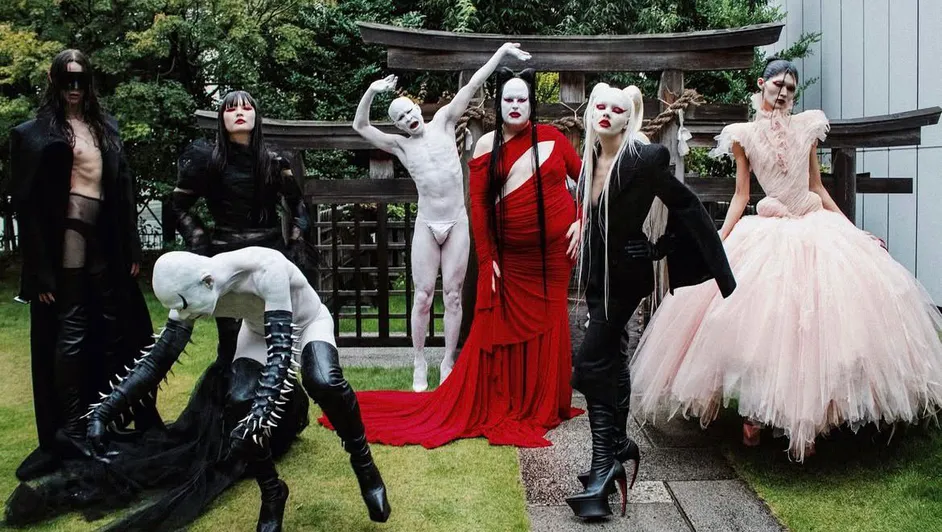
The collection itself, titled The Other, was structured around an idea the duo had spent a decade living: the experience of being othered, of existing outside what society expects, of finding identity precisely in the space between acceptance and exclusion. “This collection is about being fearless in your identity,” they wrote in the show notes. “It’s about walking into a room with your head held high, even if nobody wants you there.”
What appeared on that runway was a sustained argument that subversion and craftsmanship are not opposites. Sharp tailoring with cross seams , a motif that runs through the brand’s work as a symbolic reference to their journey away from their respective religious upbringings toward creative liberation — coexisted with handmade haute couture gowns that had required hundreds of hours of stitching. Welt-like slashes across the chests of dresses suggested wounds, openings. One gown was wrapped like a body in the process of transformation, half restrained and half emerging. Accessories were built in collaboration with Christian Louboutin , platform shoes that transformed feet into sculptural objects, described by the brand as “a perfect alliance between heaven and hell,” curved and distorted, “like pieces that stepped directly out of a sketch.” The skin heels, those flesh-coloured silicone constructions that had first generated international attention in 2018, were revived for the occasion.
Angel-winged garments appeared throughout, described by the duo as a tribute to “friends and family who protected us during our battle to get here.” Dalton herself closed the show in the Ange Arc dress , ivory, winged, deliberately unravelling , and the room received it with the specific kind of silence that precedes genuine recognition.
Michèle Lamy, watching from the audience, said afterwards that she was “still crying, because it was beautiful and moving. They are a little bit my children.” Christian Louboutin attended. Daphné Guinness attended. The show had been staged twice back-to-back — a rare logistical decision that reflected the intensity of demand from a community that had been waiting for this moment for a decade.
THE ANGE ARC DRESS AND LAW ROACH’S LONG GAME
Law Roach saw the Ange Arc dress on the Matières Fécales runway in March 2025. He put it on hold for Zendaya. He kept it on hold for sixteen months.
That fact, revealed by Zendaya herself at the New York premiere of The Odyssey on July 14, 2026, is perhaps the most elegant encapsulation of how the most significant fashion moments actually happen: not through last-minute scrambles or opportunistic placement, but through years of accumulated taste, sustained attention and precise creative timing.
“Law put this on hold a long time ago,” Zendaya told a journalist at the premiere. “Like, two years ago.” She paused. “We’re usually on the same page. We have gone back and forth a few times. It’s family, so that’s how we do it.”
The Odyssey , the Christopher Nolan film in which Zendaya plays Athena alongside Matt Damon as Odysseus and Tom Holland , had generated one of the most extensively documented press tours of 2026, with Roach constructing a wardrobe that leaned deliberately into mythological reference. An archival Trussardi gown from 2005 for London. A custom Jacquemus in white for a Paris photocall. A Valentino Fall 2026 look with a sculptural leaf-shaped bodice. A Schiaparelli Haute Couture piece flown directly from the runway in Paris to London, reaching Zendaya hours after its debut. A 1997 Givenchy Haute Couture design by Alexander McQueen for another Paris appearance. Each look was a chapter in a sustained narrative about femininity, mythology and the particular kind of power that belongs to a goddess.
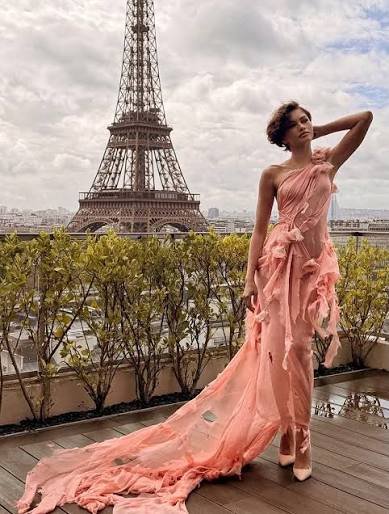
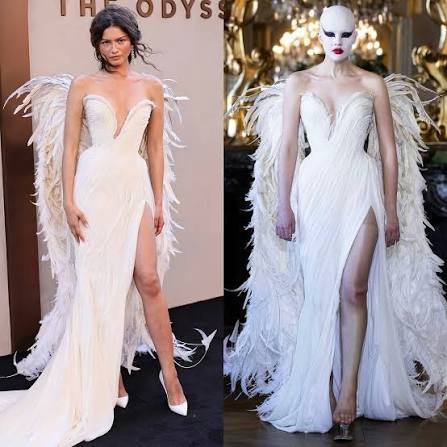
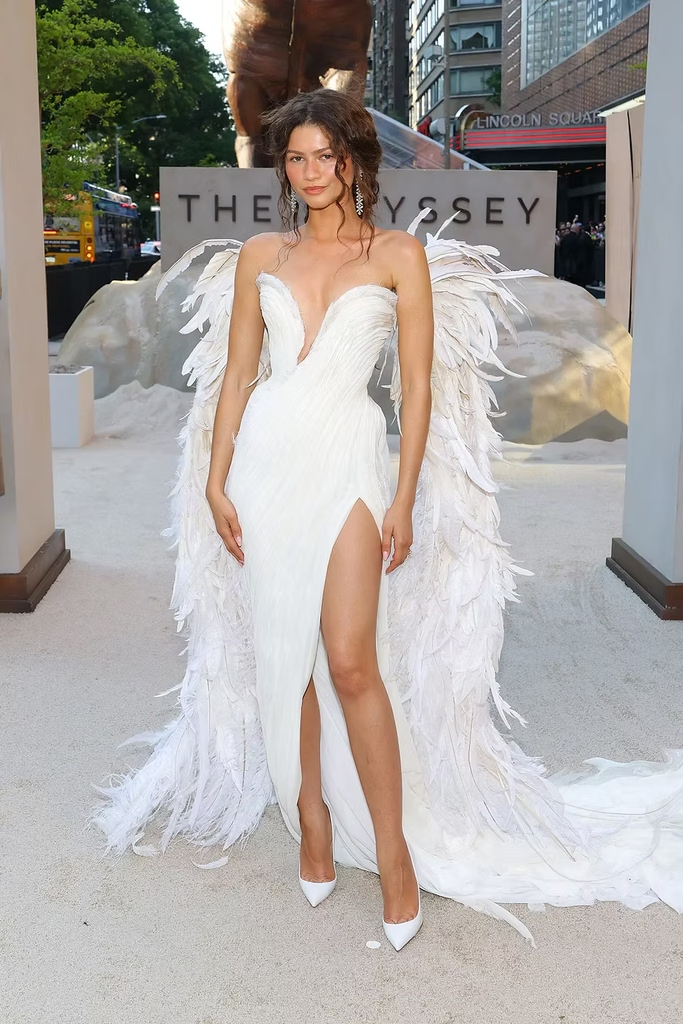
The Matières Fécales finale was the most complete expression of that narrative. The Ange Arc dress , its ivory feathered wings spanning wide behind her, its bodice sculpted and its train tattered , placed Zendaya within the symbolic universe of The Odyssey while also completing a story about Matières Fécales: the story of two outsiders who built something extraordinary in the margins of the fashion industry and eventually found themselves dressing the most watched woman on any red carpet in the world.
The dress had been made for Dalton to wear as an apparition closing a debut show. It ended up on Zendaya at the premiere of a Christopher Nolan film. The distance between those two moments is not measured in miles. It is measured in the persistence of a vision that never adjusted itself to what was expected of it.
LADY GAGA AND THE 2026 GRAMMYS: THE OTHER ICON
Three months before Zendaya wore the Ange Arc dress, a different kind of icon had already confirmed the brand’s place in fashion’s most exalted company.
Lady Gaga , whose relationship with avant-garde fashion is one of the most sustained and sophisticated of any artist working at her level — wore Matières Fécales to the 2026 Grammy Awards. The piece was a dark, feathered creation, and its appearance on one of the world’s most watched red carpets placed the brand in a very specific context: that same evening, Gaga changed into a vintage Alexander McQueen design from the Fall/Winter 2009 The Horn of Plenty collection , one of the most celebrated pieces of clothing ever produced by fashion’s great poet of darkness and transformation.
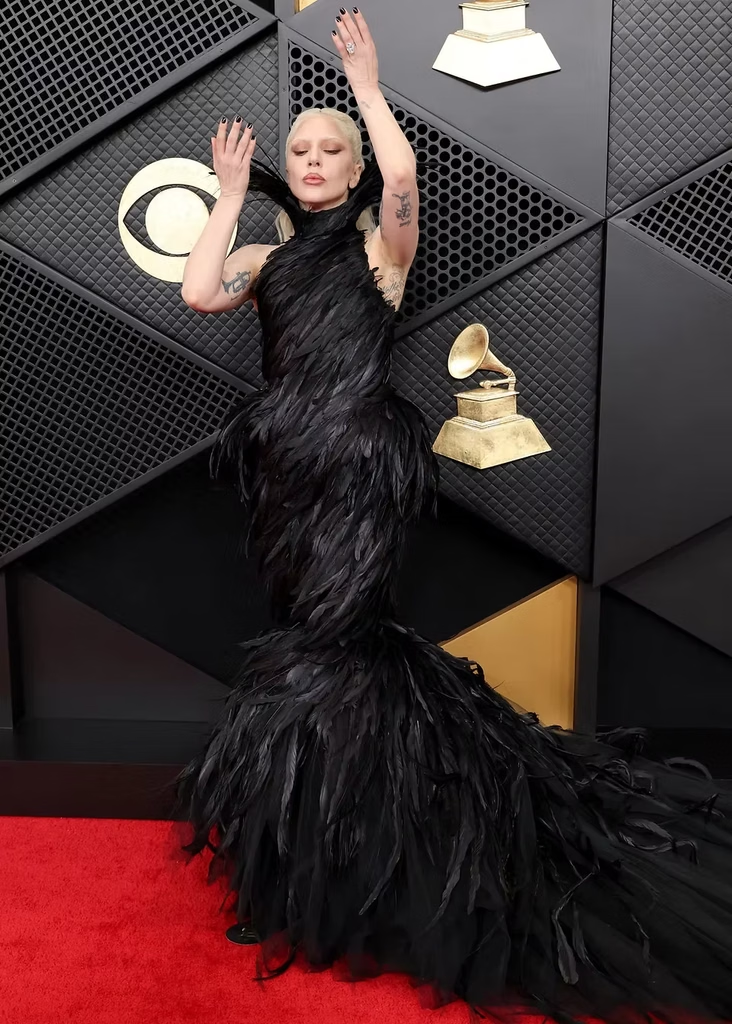
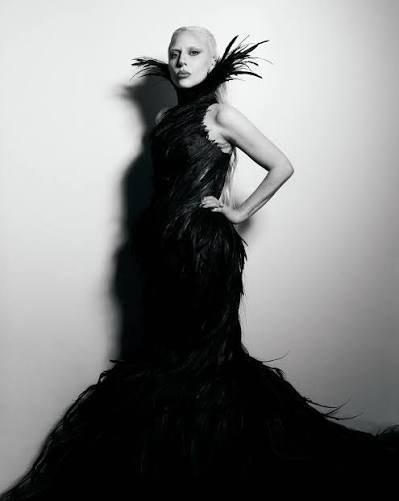
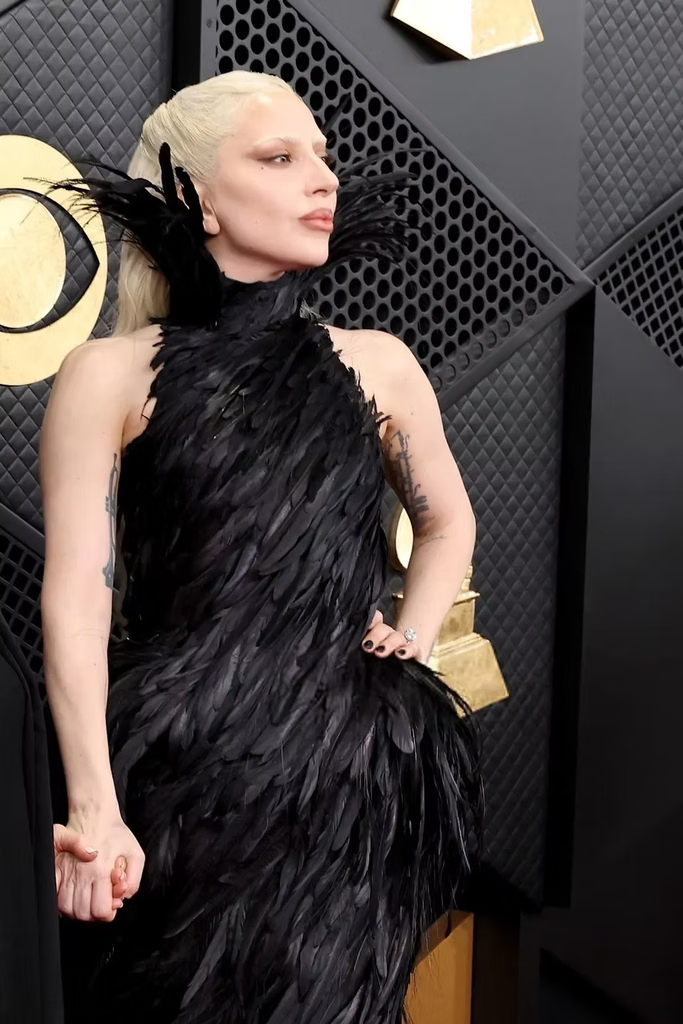
That juxtaposition , Matières Fécales alongside archival McQueen, on the same body, on the same evening , was not incidental. Dalton and Bhaskaran have cited McQueen consistently as one of their most significant references, and their SS26 collection Hannah contained multiple deliberate McQueen nods, from unsettling masks that recalled his Fall/Winter 2026 work to a winged hat that referenced his Fall/Winter 2006 collection. The SS26 reviewer for Substack writer Shannon Whiteway noted these references directly: “As they say, imitation is the sincerest form of flattery and Matières Fécales perfectly encapsulates his legacy while still putting their own spin on it.”
Gaga choosing their work for the Grammys, and then changing into McQueen, was a statement that required no explanation for anyone who understood the genealogy. The brand that names itself after human waste and the designer who sent women down runways on surgical crutches are, in the most fundamental sense, making the same argument: that fashion at its most powerful is not about beauty as comfort, but about beauty as confrontation.
THE SECOND COLLECTION: “HANNAH,” PARIS, SEPTEMBER 2025
If The Other was a manifesto, Hannah , the brand’s second collection, presented at Paris Fashion Week SS26 in September 2025 , was something considerably more vulnerable. It was Bhaskaran’s love letter to Dalton, staged at Place Vendôme, attended by FKA twigs, Gunna and Michèle Lamy, and built around a piece of biographical detail that gave the entire collection its emotional weight.
“I loved her, I drew her, long before I even met her,” Bhaskaran said in the show notes. He had been drawing his imagined muse , a figure of fierce, unconventional femininity , for years before he encountered Dalton in that Montreal classroom. When they finally met, his sketch came to life. The collection was his acknowledgement of that convergence.
The clothes reflected a deliberate expansion of register. Alongside the brand’s signature subversive tailoring and deconstructed pieces, Hannah included rough-hemmed riffs on Dior’s Bar jacket and frayed tweeds that recalled Chanel in a state of productive disrepair ,Dalton herself has described how couture codes interest her precisely as things to be taken apart and reassembled with different intentions. American blue denim stamped with the cross seam symbol appeared alongside corseted tulle gowns that walked the line between romantic and confrontational. The casting was among the most diverse of the entire SS26 season: people of all genders, races, body types and abilities walked the runway, including Nikki Lilly, an advocate who had worn the brand at Cannes earlier that year.
“For us, it’s less about a story, it’s more a reality,” Bhaskaran said after the show. “We’re trying to show that these are our friends, people that we hang out with every day, that we’re inspired by them. It’s also us. We see ourselves in them. It’s definitely confrontational in Paris.” He cited the unconventional casting of early Jean Paul Gaultier and Margiela as reference points , designers who had, in their own time, insisted on a vision of beauty that the industry around them was not ready for.
The Dazed review described the collection as offering “one of the most diverse castings of the SS26 season.” The 10 Magazine USA piece captured its tone: heavy metal music, angelic tulle gowns and some of the most unconventional models Paris had seen that season. A tribute to Hannah. A love letter. A show that insisted on the legitimacy of a beauty that the fashion world has spent most of its history ignoring.
THE THIRD COLLECTION: “THE ONE PERCENT,” PARIS, MARCH 2026
By their third collection, the duo had earned enough critical trust to go somewhere politically riskier: an examination of power, privilege and the corrupting logic of elite wealth.
“Power tends to corrupt, and absolute power corrupts absolutely,” they opened their show notes with, citing the Victorian politician and historian Lord Acton. For Fall/Winter 2026, Bhaskaran and Dalton turned their gaze toward the one percent , the global wealthy elite , and the tension between their own very different backgrounds that had always run beneath the surface of their collaboration.
The collection was divided into three tableaux. The Power of Archetypes examined the codes of bourgeois dressing , impeccably tailored but slightly askew, as though the tailoring itself had been corrupted. The Power of Community featured Michèle Lamy wearing ash-gray goat fur sleeves and a distorted wool knit dress , a figure who “transcends time and embraces the natural beauty of aging in the most glamorous way possible.” And The Power of the Future closed with Debra Shaw wearing the Elizabethan queen silhouette that Bhaskaran had originally designed during his years of fashion training , “one of the most powerful silhouettes of all,” he said, “that crowns and seals a speculative narrative on the nature of human power.”
The Vogue Adria piece reviewing the collection noted that Lady Gaga had worn “their dark, feathered creation on the red carpet at the 2026 Grammy Awards” , and that she had done so alongside vintage McQueen, which the review described as “a major achievement for Matières Fécales, not only because one of the world’s biggest music stars chose their design for such a prestigious occasion, but also because she wore it alongside McQueen, the visionary whose influence and dark romanticism clearly resonate in their work.”
The WWD review noted that the collection represented “a commentary on the elite wrapped in terrific tailoring.” The NSS Magazine piece described a brand that was now operating “with a more conscious gaze, at times ruthless, yet deeply human.”
THE PHILOSOPHY: WHAT THEY ACTUALLY BELIEVE
Across every interview, every show note and every public statement Dalton and Bhaskaran have made, a consistent philosophy emerges that is worth stating plainly, because it explains why the brand has maintained its identity across a decade of radical change in its circumstances.
They believe that beauty is not a fixed category but an argument , one that the fashion industry has historically made too narrowly, at the expense of the enormous majority of people who do not fit its parameters. “Society treats us as if we are not human, simply because we are different,” they said in an early Dazed interview. “We wanted each model to experience beauty through our perspective.” That perspective has remained consistent: in the underground years selling on Depop, in the Rick Owens collaboration, in the Paris debut, in the Grammys and The Odyssey red carpets.
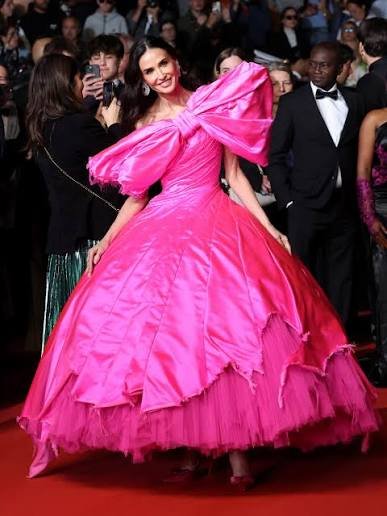
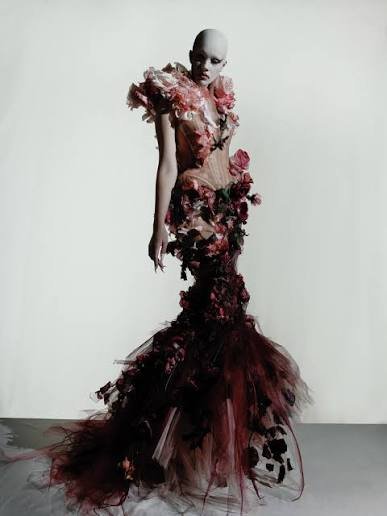
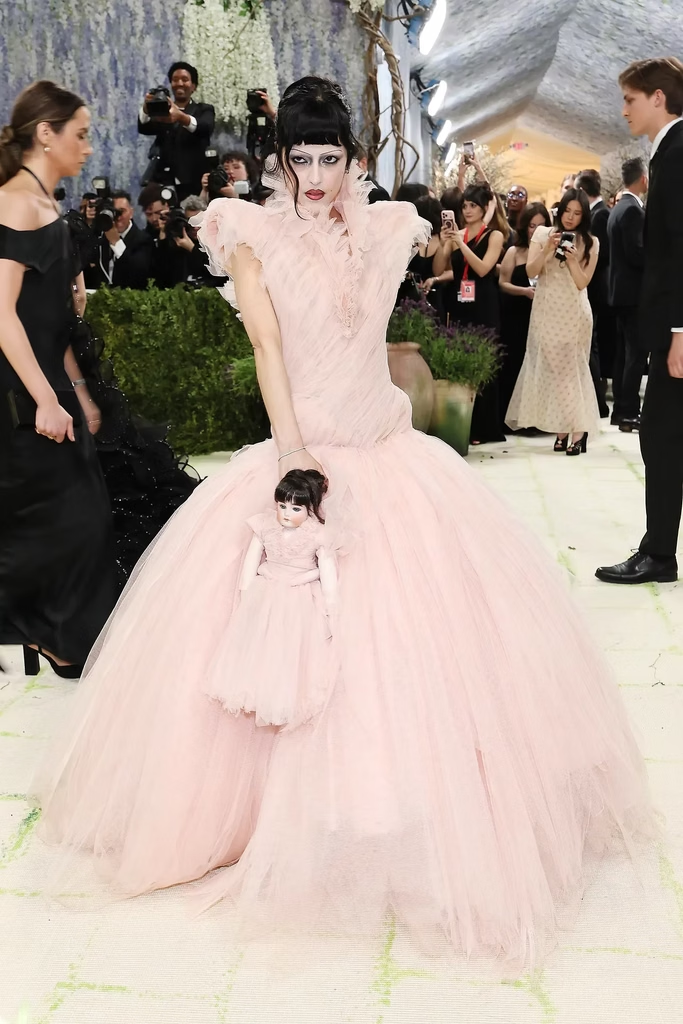
They also believe that craftsmanship and provocation are not opposites. The Ange Arc dress . the piece that Zendaya wore to The Odyssey premiere , required hundreds of hours of stitching. The skin heels demand extraordinary technical precision to produce. The curved fur coat from The Other collection was built using innovative darting techniques that most traditional ateliers would not attempt. The brand that names itself after fecal matter makes things with the care of a maison that has been at it for a century.
And they believe in their community. The people who walk their runways, who buy their designs, who have followed them since the Depop years , they appear in the shows, they are thanked in the notes, they are described as the reason the work exists. The cross seam motif that appears throughout the collections , a simple seam that crosses at the centre of a garment , is not just a technical detail. It is a mark of belonging to something that runs against the grain of every system that told its founders they did not belong.
THE CONCLUSION: WHAT HAPPENS AFTER THE ODYSSEY
On the night of July 14, 2026, as Zendaya walked the red carpet for The Odyssey in the Ange Arc dress, something completed itself. The journey from a Montreal classroom in 2014, through a New York squat and a Depop account and a dinner with Rick Owens and a decade of radical, uncompromising, institutionally unsupported work, arrived at a moment so precisely right that it felt less like a commercial achievement than a vindication.
Law Roach had held that dress for two years. Two years of waiting for a film about mythology, a story about gods and transformation and the long road home, to create the perfect context for a piece of clothing that had been made, from the beginning, as an image of transformation. As a body mid-flight. As something not quite human, not quite divine, existing in the space between the two , which is, if you think about it, exactly where Matières Fécales has always lived.
Hannah Rose Dalton and Steven Raj Bhaskaran built a fashion house out of everything the fashion industry tends to exclude: unconventional beauty, radical bodies, a name that repels, a vision that refuses to accommodate itself to what is expected.
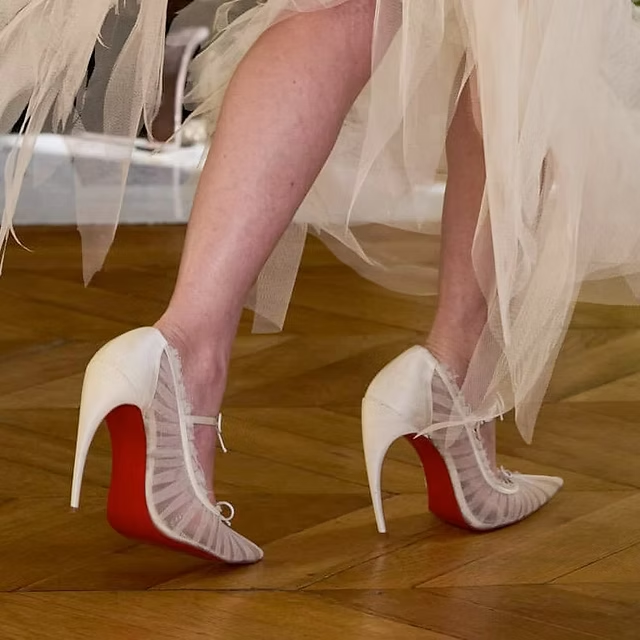
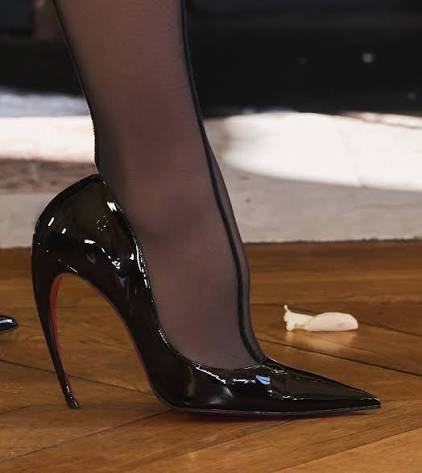
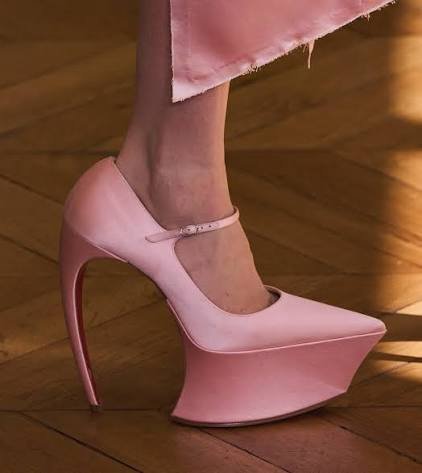
They built it slowly, deliberately and with extraordinary craft. And now the most watched women on red carpets in 2026 are wearing their clothes to the biggest premieres of the year, while Michèle Lamy cries in the front row of their shows and Christian Louboutin bends his heels to their sketches.
Fashion, as it turns out, was always large enough to contain them. It just took a decade to admit it.
All images featured in this article are credited to owners . They are used for editorial and illustrative purposes only, with no commercial intent. All rights remain with their respective owners.