 111
111 2
2 3
3 4
4 5
5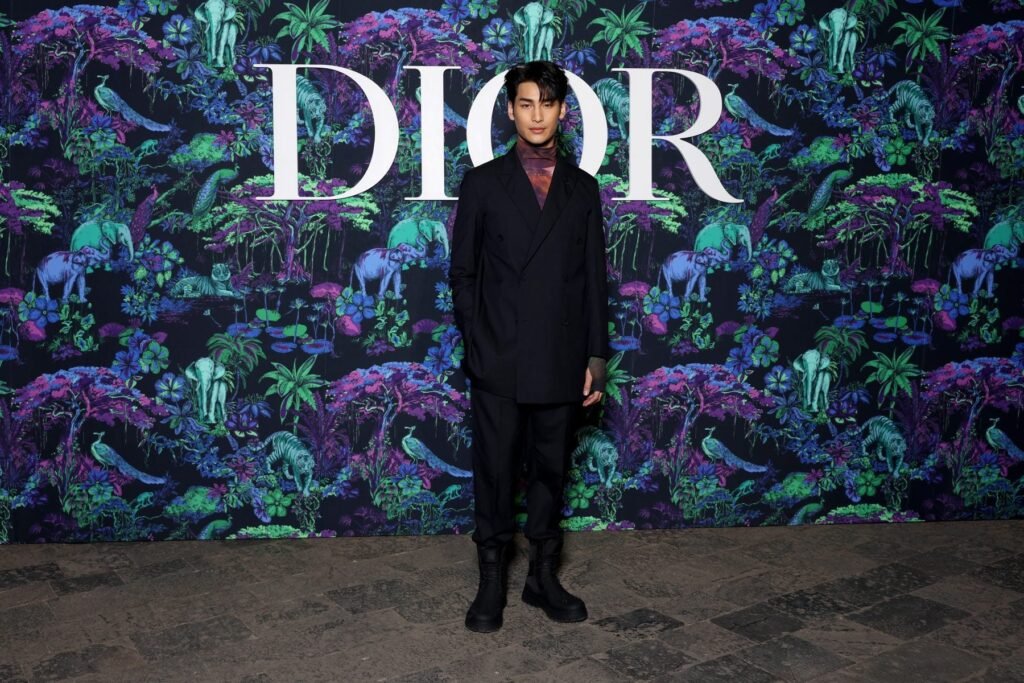 6
6 7
7 8
8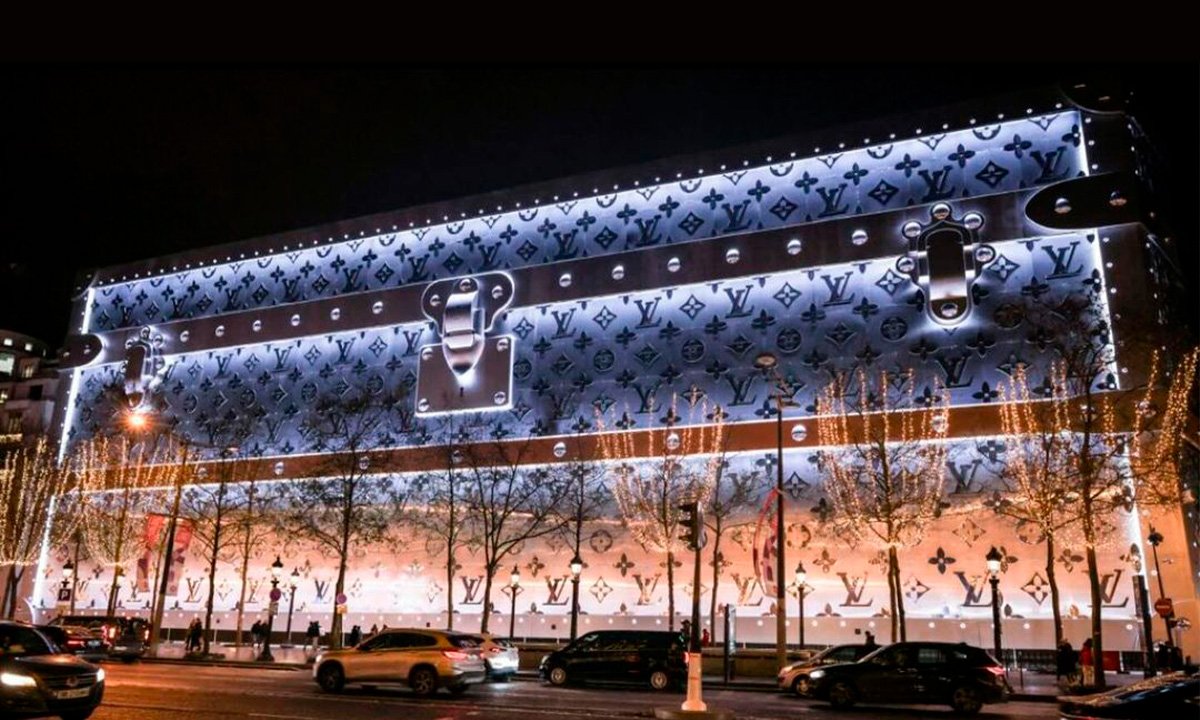
From Gucci Osteria to Louis Vuitton’s first hotel on the Champs-Élysées ; the definitive story of fashion’s most unexpected obsession
There is a table on the fourth floor of Louis Vuitton’s Manhattan flagship that costs nothing to sit at , unless, of course, you order something. You might choose a turkey club sandwich, pressed on quatrefoil-shaped bread toasted and branded with the brand’s iconic monogram pattern. Or perhaps the LV-stamped waffles. You eat them surrounded by the kind of deliberate, impeccable design that makes you feel, for the duration of a meal, as though you have been quietly admitted to a world that usually requires a six-figure wardrobe to access.
This is not an accident. None of this is an accident. And in 2026, it is no longer a novelty.
The moment you start paying attention, you see it everywhere. Dior opening Monsieur Dior inside its Rodeo Drive flagship, helmed by three-Michelin-starred chef Dominique Crenn. Gucci operating four restaurants across Florence, Beverly Hills, Seoul and Tokyo in collaboration with one of the world’s most celebrated chefs. Prada housing a café designed by Wes Anderson inside its Milan art foundation , a space so photographed and so obsessively sought out by tourists and locals alike that it has become one of the most visited spots in the city regardless of whatever exhibition is showing upstairs. Ralph Lauren’s Polo Bar in Manhattan, which has been fully booked for the better part of a decade. Tiffany & Co.’s Blue Box Café, where the ability to literally have breakfast at Tiffany’s generated more coverage than almost anything else the brand did that year.
And then the hotels. Armani Hotels in Dubai and Milan. Palazzo Versace properties in Dubai and Macao. The Vermelho Hotel by Christian Louboutin in Portugal. Bulgari Hotels operating across Tokyo, Milan, Rome, Paris, London, Bali and Dubai , with Miami Beach opening in 2025 and Los Angeles following in 2026. LVMH, the world’s most powerful luxury conglomerate, owning the Hotel Cipriani in Venice and the Copacabana Palace in Rio through its Belmond acquisition; the Courchevel, Saint-Barth, Maldives, Saint-Tropez and Paris properties through Cheval Blanc; and now planning its first Louis Vuitton hotel in a Haussmann-era building at 103 Champs-Élysées, with the exterior currently draped in a giant construction curtain printed with the brand’s LV monogram because, naturally, even the renovation is a brand moment.
The question everyone in fashion is asking right now , and not everyone is getting right , is why. Why are the houses that built their identities on handbags and silk and runway shows suddenly so obsessed with what you eat for lunch?
The answer, as it usually is in fashion, is layered. And it is much more interesting than it might first appear.
THE EXPERIENCE ECONOMY AND THE THING NOBODY WANTS TO ADMIT
Let’s start with the uncomfortable truth that the luxury goods industry spent most of 2024 and 2025 grappling with.
After the extraordinary post-pandemic surge , when consumers who had been locked indoors for two years emerged with accumulated savings and a ferocious appetite for self-reward , the market cooled. Bain & Company, which produces the most comprehensive annual analysis of the global luxury market, reported that overall luxury spending totalled €1.44 trillion in 2025, representing a marginal decline from 2024. More significantly, the industry lost approximately 20 million consumers compared to the previous year , shoppers who reduced their purchase frequency, traded down to lower price points, or redirected their spending toward something that the data made impossible to ignore.
Experiences. They redirected their spending toward experiences.
Luxury experiences , hospitality, dining, travel, wellness , continued to outpace the broader market throughout 2024 and into 2025, driven by what Bain described as “a sustained shift in spending toward wellness, rewarding oneself, and social connection.” While personal luxury goods held relatively steady after years of extraordinary growth, the experience segment kept climbing. The global luxury hotel market alone is forecast to rise from $154 billion in 2024 to $369 billion by 2032. These numbers describe a structural shift, not a blip.
The luxury houses read this data. They read it carefully, and they acted on it.
But there is a second data point layered beneath the first, and it concerns a generation that the luxury industry has been trying to understand , with varying degrees of success , for the better part of a decade.
THE GEN Z PROBLEM, AND THE CAFÉ SOLUTION
Generation Z is the luxury industry’s most discussed and most misunderstood consumer group. Research consistently shows that they prioritize experiences over products, value emotional resonance over status signalling, and are more likely to spend on a meal that makes them feel something than on a purchase that merely impresses someone else. According to research by Publicis Luxe, Gen Z currently spends 40% of their disposable income on food versus 35% on fashion , a gap that has been widening for several years.
This is not a trivial finding. It means that for the generation that will drive luxury spending for the next four decades, food has already overtaken fashion as the primary category of discretionary self-expression. A Vogue Business survey found that more than half of Gen Z respondents had purchased at least one luxury food item in the past year. McKinsey identified groceries as the number-one category where Gen Z and millennials planned to splurge , above travel, dining out and fashion.
The houses understood the implication immediately. If the consumer you most need to reach is spending more on a coffee than a keychain, you need to be in the coffee business.
But it goes deeper than pure category strategy, and the smarter brands understand this. A luxury café or restaurant is not simply a revenue stream , it is an access point.
A meal at Monsieur Dior translates the Dior universe into something tactile, sensory and , crucially , attainable at a price point that a luxury handbag is not. The experience is complete: the interior, the tableware, the plating, the scent, the sound of the room. All of it communicating the brand’s identity through every available sense simultaneously. You may never own a piece from the Dior archive, but for the duration of a two-hour dinner, you understand what that world feels like.
Christine Milan, chief strategy officer of Publicis Luxe, articulated it precisely: “With Generation Z spending more on food than categories like fashion, we’re witnessing a deeper convergence of these two worlds , each drawing inspiration from and amplifying the changes in the other, and reshaping how both industries approach craft, creativity and cultural relevance.”
The café is the entry point. The hotel is the full immersion. And the restaurant is everything in between.
HOW IT STARTED: THE HOUSES THAT GOT THERE FIRST
The idea that fashion and food belong together is not new , it just took a very long time for the industry to act on it at scale.
Giorgio Armani opened Armani/Ristorante in Paris in 1998. The decision, in hindsight, was extraordinarily prescient. Armani understood before almost anyone else in the industry that a fashion house is not selling clothes , it is selling a way of life. A restaurant is simply the logical extension of that argument into a different room. If someone eats at an Armani restaurant, sits on Armani furniture, drinks from Armani glassware and is served by staff in Armani-designed uniforms, they have not merely had lunch. They have lived, briefly and completely, inside the Armani universe. Today, the house operates 24 restaurant and café outposts worldwide.
In 2004, Chanel collaborated with Alain Ducasse to open Beige in the brand’s flagship store in Ginza, Tokyo , a two-Michelin-star restaurant that expressed the same values of precision, restraint and extraordinary craft that define the fashion house. The fact that you were eating modern French cuisine inside a Chanel building was not incidental. The architecture, the service, the calibre of the cooking , all of it was communicating something specific about what it means to be Chanel.
Prada arrived at the table differently, and more quietly. In 2015, when Miuccia Prada opened Fondazione Prada’s permanent home in a converted distillery in Milan, she invited filmmaker Wes Anderson to design the café. The result , Bar Luce , is one of the most interesting spaces in the city. Pastel Formica furniture, a ceiling that miniaturises the arched vaults of the Galleria Vittorio Emanuele, a jukebox, pinball machines, moustachioed servers.
Anderson described his intention as designing “a bar I would want to spend my own non-fictional afternoons in,” which is perhaps the most honest brief any architect has ever been given. The space functions as an exhibition in itself — a daily, lived-in expression of the Prada aesthetic that has proven more durable and more magnetic than almost any campaign the house has produced.
Then came Gucci, and everything accelerated.
THE GUCCI OSTERIA EFFECT
In 2018, Gucci opened its first Osteria in Florence, in collaboration with Massimo Bottura , the chef behind Osteria Francescana, which has held three Michelin stars for years. The combination of fashion’s most reliably provocative house and food’s most intellectually ambitious chef was either a masterpiece of alignment or the most audacious brand experiment of the decade, depending on who you asked.
It turned out to be both.
The Florence restaurant earned a Michelin star within a year. Gucci Osteria Beverly Hills opened on the rooftop of the brand’s Rodeo Drive boutique, also winning a star within twelve months. Seoul and Tokyo followed. The menu concept was consistent across all locations , Italian luxury filtered through local ingredients and cultural references , but the experience was irreproducibly specific to each city. In Beverly Hills, you sit on a terrace surrounded by palm trees and feel, absurdly and completely, as though you have been transported to an eccentric Italian palazzo on the West Coast. The Emilia Burger , a $48 invention that riffs on American fast food through the lens of Italy’s Emilia-Romagna region, served in a pink Gucci box , became one of the most photographed dishes of the decade.
Bottura described the collaboration as “a way to share the joy of Italian culture, creativity and craftsmanship through the language of food.” That sentence could have come from the brand’s creative team describing a collection. Which is, precisely, the point.
DIOR SETS THE TABLE
Of all the fashion houses currently operating in the restaurant and café space, Dior has perhaps done it most thoughtfully , and in the most different ways simultaneously.
At 30 Avenue Montaigne in Paris, when Dior redesigned its headquarters in 2022, it included Monsieur Dior , a restaurant created by Jean Imbert, the French chef who has become one of the most high-profile figures in Parisian dining. The menu draws directly from Christian Dior’s personal cookbook, La Cuisine Cousu-Main, and from archival garments and accessories from the house’s history.
The walls are papered with a pictorial work tracing the history of the designer and the house. The crockery is Dior. The waiters are dressed by Dior. Adjacent to the restaurant, Pâtisserie Dior overlooks the rose garden.
In November 2025, Dior took the concept West. Monsieur Dior Beverly Hills opened inside the brand’s four-story flagship on Rodeo Drive, led by Dominique Crenn , the only female chef in America with three Michelin stars. Where the Paris version is steeped in archival reference, Crenn’s interpretation is more personal , about finding the connection between her own creative identity and Dior’s. “It’s the color, the texture,” she said at the opening. “It’s the Dior DNA and the Crenn DNA.” The experience sells out weeks in advance.
Meanwhile, for those who cannot book Rodeo Drive, there is Café Dior , a lighter, more accessible expression that has appeared in Dallas, in Seoul and in various other locations, where safari pillows and oversized animal sculptures dressed in Dior’s iconic toile fabric create a more approachable but unmistakably branded environment.
THE HOTEL: WHERE LUXURY LIVES COMPLETELY
If the restaurant is the afternoon, the hotel is the whole life. And no single entity in fashion has understood this more completely , or invested in it more seriously , than LVMH.
Bernard Arnault made the strategic argument explicit when LVMH acquired Belmond in 2019 for $3.2 billion. “The future of luxury will not only be in luxury goods, as it’s been for many years, but also in luxury experiences, and we want to be in both segments,” he told investors at the time. The statement was not promotional. It was a declaration of direction.
Belmond gave LVMH immediate access to 45 of the world’s most recognisable luxury properties: Hotel Cipriani in Venice, Copacabana Palace in Rio, Hotel Caruso on the Amalfi Coast, La Residencia in Mallorca, the Venice Simplon-Orient-Express, the Royal Scotsman, the Eastern & Oriental Express. Properties with genuine heritage, genuine stories and, critically, the kind of irreproducible quality that no amount of money can manufacture from scratch. Since the acquisition, LVMH has invested substantially in refurbishment , Hotel Caruso was closed for full renovation in 2023–2024 and reopened with a significantly enlarged spa and rebuilt dining facilities.
Alongside Belmond, LVMH operates Cheval Blanc , its owned ultra-luxury hotel brand with properties in Courchevel, Saint-Barth, the Maldives, Saint-Tropez and Paris , and Bulgari Hotels, which operates some of the most consistently well-reviewed urban hotels in the world. Bulgari Tokyo costs upward of $3,890 per night for a standard double room. There is no loyalty programme. There are no points. The experience is the product, entirely.
What makes LVMH’s hospitality strategy genuinely interesting is the cross-brand integration. Cheval Blanc properties host catwalk shows for LVMH fashion brands. Guerlain-branded spas operate in all four Cheval Blanc hotels. Louis Vuitton, Dior, Fendi, Loro Piana and Hublot participate in a rolling calendar of events, installations and trunk shows at properties across the portfolio. The hotels are not adjacent to the fashion business. They are woven through it.
The next step in that logic is already under construction at 103 Champs-Élysées. The Louis Vuitton hotel , the first property to carry the brand’s own name , is being built in a Haussmann-era building previously used as a bank headquarters. The building’s exterior is currently covered by a construction curtain featuring the house’s LV monogram. The branding doesn’t stop at the door. It never did.
THE DEMOCRATISATION OF ENTRY
There is a tension at the heart of all of this that is worth naming directly.
Luxury fashion is, by definition, expensive. A Dior dress, a Chanel jacket, a Louis Vuitton trunk , these are not objects that most people will ever own. The fashion house, in its traditional form, is designed for a narrow customer. The restaurant and the café exist to widen the door without lowering it.
The Emilia Burger at Gucci Osteria is $48. The tasting menu is $285. The Gucci Dionysus bag is $1,500, if you can find one. For a consumer who has not yet accumulated the wardrobe or the budget of a legacy luxury client , for a Gen Z consumer who spends more on food than fashion as a matter of consistent habit , the restaurant is the way in. You spend an afternoon or an evening inside the brand’s universe. You eat from its crockery, sit on its furniture, breathe its air. You leave having had, in a very real sense, an experience of the brand that no store visit can replicate.
And then you go home and think about it. And you talk about it. And you photograph it. And you contribute to the earned media value that makes a Gucci Osteria dinner potentially worth more to the house in communication terms than its cost in revenue.
Tiffany & Co. understood this when they opened the Blue Box Café in 2017. The ability to have breakfast at Tiffany’s , to sit in that robin’s egg blue room, surrounded by gift boxes hanging from the ceiling, eating from Tiffany crockery , was not primarily a food concept. It was a cultural moment. The café went viral long before going viral was a standard metric of hospitality success. The queues began immediately and have never really stopped.
THE CHEF AS CREATIVE DIRECTOR
One detail worth pausing on, because it says something important about how seriously the fashion houses are approaching this territory: they are not cutting corners on the food.
Gucci Osteria is Massimo Bottura. Monsieur Dior Beverly Hills is Dominique Crenn. Monsieur Dior Paris is Jean Imbert. These are not names chosen for their celebrity value alone. They are among the most technically accomplished, intellectually serious and creatively ambitious chefs working anywhere in the world right now.
The decision to partner with chefs of this calibre is a signal to the industry , and to the customer , about what this project actually is. It is not a gift shop with a coffee machine. It is not a branded café whose primary purpose is to sell branded pastry tins to tourists. It is a genuine creative collaboration between two worlds that, when they are at their best, are doing the same thing in different languages: taking materials of extraordinary quality, applying extraordinary craft, and producing an experience that justifies its price entirely and in every dimension.
The Michelin stars that Gucci Osteria has accumulated are not incidental achievements. They are proof of concept. They tell the customer that what is happening here is serious, that the quality is real, that the house chose a partner capable of making something excellent and then gave that partner the freedom to do so. The collaboration only works if the food is actually good. And the food is actually good.
THE HOTEL AS TOTAL UNIVERSE
If the café is the entry point and the restaurant is the afternoon, the hotel is the fantasy made habitable. And for the guests who can access them, the fashion-house hotels represent something that no amount of retail therapy can provide: the complete suspension of ordinary life inside a world that has been designed, from the thread count of the sheets to the scent of the lobby, to express a single aesthetic vision.
Staying at the Bulgari Milan , in the brand’s home city, inside a property designed by Antonio Citterio with materials sourced from the finest Italian suppliers, where the staff ratio approaches one-to-one and the spa uses products developed in partnership with the jewellery house , is not like staying in a hotel. It is like living, briefly, inside a Bulgari vision of the world. Every surface is an argument for a particular idea of what luxury means: quiet, material, precise, utterly Italian.
The Armani Hotel in Milan, located within the Armani building on Via Manzoni, operates on the same principle. The furniture is Armani. The crockery is Armani. The bathrobes and the slippers and the scent in the air , all of it is Armani. You are not a guest in a hotel. You are a resident, temporarily, of a world that Giorgio Armani built.
This is what the fashion houses are selling when they sell hospitality. Not rooms. Not meals. Worlds. And the global luxury hotel market, forecast to nearly triple from $154 billion to $369 billion by 2032, suggests that the demand for those worlds is not declining. It is accelerating.
WHAT COMES NEXT
The question is not whether fashion will continue to invest in food, drink and hospitality. It will. The question is how far the integration goes, and how quickly.
Louis Vuitton’s hotel on the Champs-Élysées will be the clearest test yet of how completely a fashion house can translate its identity into a space defined by lived experience rather than purchased objects. If it works , and the expectation within the industry is that it will , it will set a template that other houses will follow.
Hermès already has its own restaurant, Chez Régis, in Paris. Prada continues to expand the Bar Luce concept and its Pasticceria Marchesi pastry shops , which have spread beyond Milan to London , with the quiet certainty of a house that understands the power of doing one thing beautifully and letting it speak for itself.
The direction is clear. The pace is accelerating. And the logic is airtight.
THE REAL REASON
Here is what all of this comes back to, when you strip away the data and the strategy and the chef collaborations and the Michelin stars.
Luxury fashion has spent decades selling you an object and asking you to project a world onto it. The bag as status symbol. The shoe as identity marker. The jacket as a statement about who you are and who you want to be. This has worked extraordinarily well for a very long time, and it will continue to work. But it has limits. An object sits in a wardrobe. A bag hangs on a hook. An experience, by contrast, is something you carry inside you. You eat at Gucci Osteria in Florence and you remember it.
You stay at Bulgari Tokyo and you remember it. You have breakfast at Tiffany’s and, yes, you remember it.
The luxury houses have always known this, intuitively. What they are doing now is acting on it at scale. Building the spaces. Hiring the chefs. Opening the hotels. Setting the table, literally and figuratively, for a customer who has decided that what they want from luxury in 2026 is not just a thing to own — it is a life to imagine living.
The table is set. The reservation list is long. And the houses at the front of the queue got there not by accident, but by paying attention to something that the data was trying to tell them for years: that the most powerful thing a luxury brand can give its customer is not a product.
It is a world.