 111
111 2
2 3
3 4
4 5
5 6
6 7
7 8
8
After more than twenty years in the fashion industry, I’ve seen the lines of ‘decency’ redrawn a thousand times. But while we congratulate ourselves for sanitizing the physical billboards of the past, we are turning a blind eye to a far more insidious, digital decay.
If you had walked down the streets of London or Paris in the early 2000s, you would have been hit by a sensory barrage of high-fashion propaganda designed to do one thing: shock you into paying attention.
In those days, direct creative control lay in the hands of an untouchable class of artistic giants. It was an era where the legendary Karl Lagerfeld reigned supreme , famously building a global empire ], dismissing societal critiques , and asserting that political correctness and moral hand-wringing were the ultimate enemies of creative freedom . For Lagerfeld and his contemporaries, high fashion was an elite, aesthetic playground where public morality had no invitation
Working in this industry for over two decades, I watched that “shock advertising” era peak, explode, and eventually burn to the ground. Today, we look back at those archives with a mix of fascination and horror. If launched today, those campaigns wouldn’t just be banned, they would trigger an immediate, algorithmic execution of the brand’s identity on social media.
But as I scroll through my feeds today, a deeply uncomfortable truth hits me: We have traded the physical, artistic outrage of yesterday for a silent, algorithmic decay of our children’s minds. And somehow, we are perfectly fine with it.
To understand how much our threshold for outrage has shifted, we only need to look back at the visual landmines that defined high fashion’s golden age of provocation.
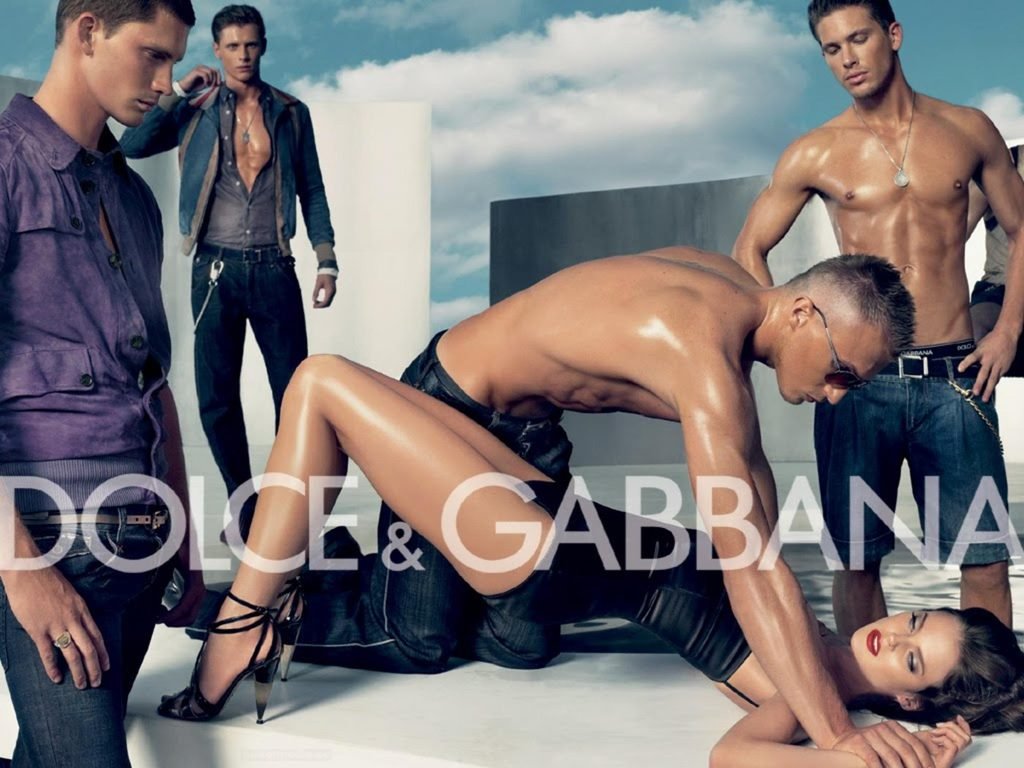
We must start with what remains one of the darkest corners of fashion marketing: the infamous 2007 Dolce & Gabbana campaign. The image,featuring Alessandra Ambrosio pinned to the ground by her wrists under a shirtless male model, while four other men stand over them in cold, impassive observation,was a shocking miscalculation.
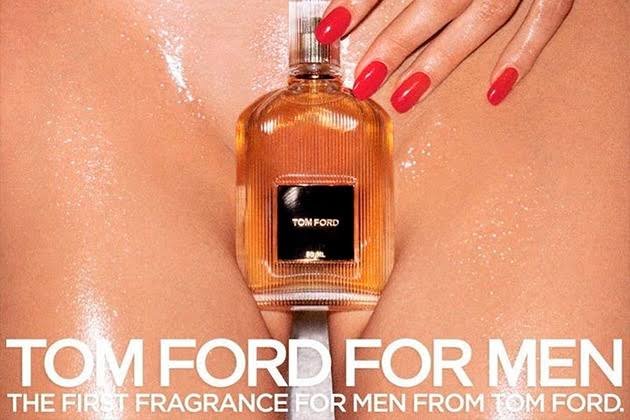
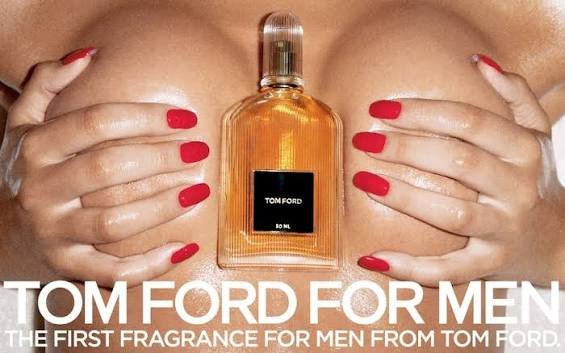
That same year, Tom Ford collaborated with photographer Terry Richardson to market a men’s fragrance. The resulting images featured completely nude women’s bodies used as literal, faceless tables to hold the perfume bottles.
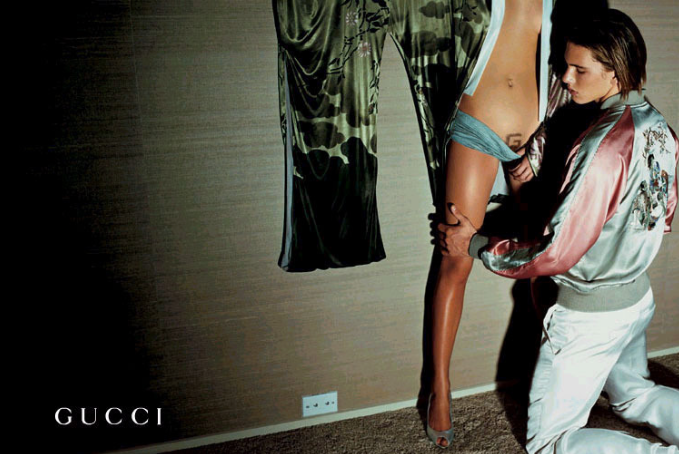
Before leaving Gucci, Tom Ford orchestrated another seismic shockwave. He had a model lower her underwear to reveal her pubic hair shaved into the precise shape of the Gucci “G” logo.
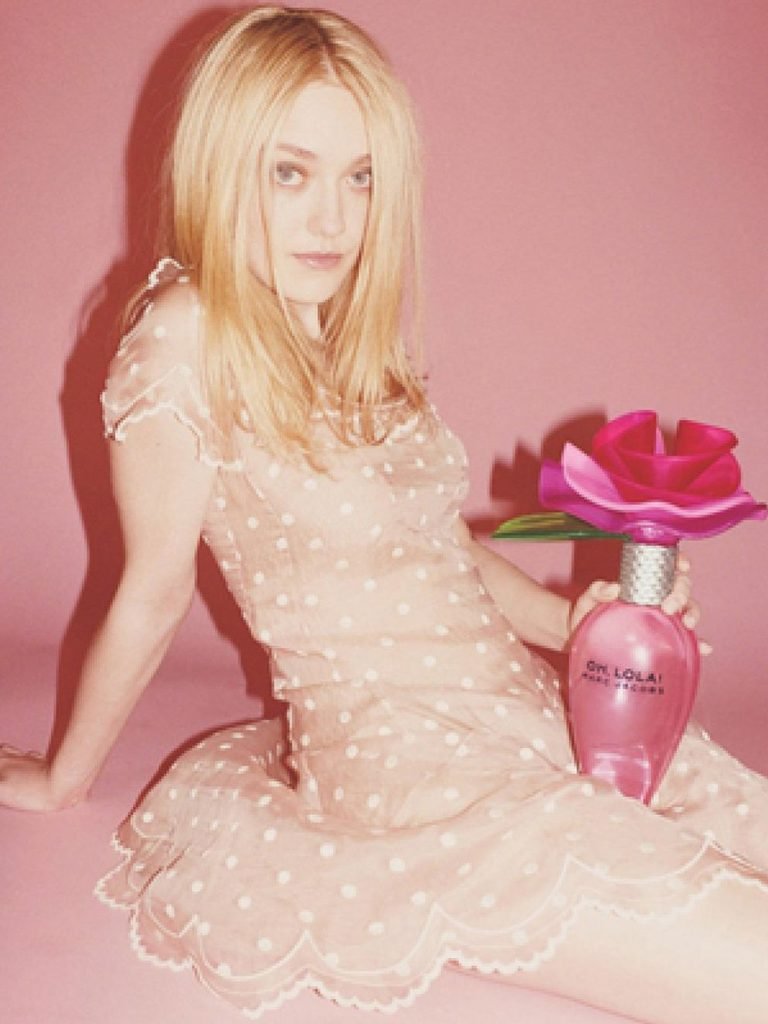
4. The Shadows of the Underage: Marc Jacobs “Oh, Lola!” (2011)
Marc Jacobs cast a 17-year-old Dakota Fanning as the face of his sweet, floral fragrance. The imagery showed Fanning sitting on the floor in a short girlish dress, holding an oversized perfume bottle positioned suggestively between her thighs.
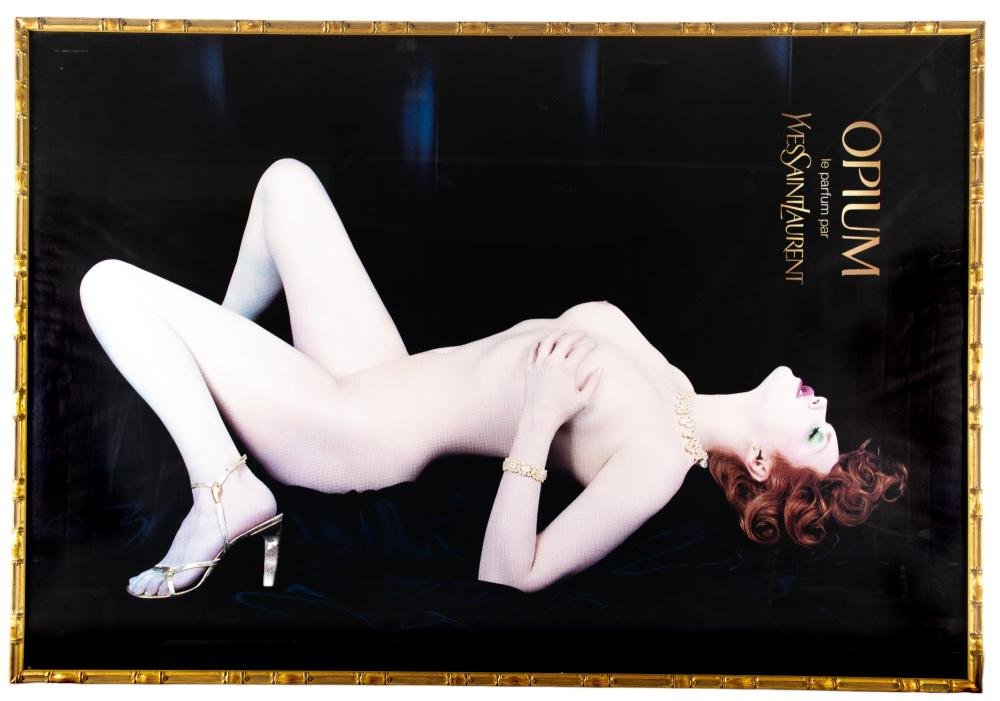
Photographed by Steven Meisel, a completely naked Sophie Dahl lay sprawled on her back across black satin sheets, wearing nothing but gold stilettos to sell Yves Saint Laurent’s Opium.
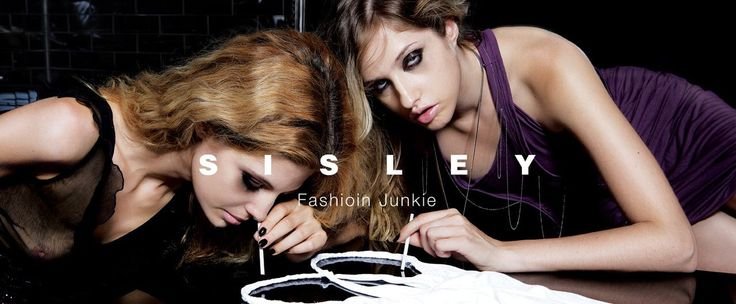
Depicted two young models leaning over a table, using a straw to pretend-sniff a white Sisley dress as if it were a line of cocaine.
For decades, the fashion elite defended these excesses by hiding behind the shield of “high art.”
Karl Lagerfeld was the intellectual architect of this unapologetic attitude. When he famously dismissed the #MeToo movement in 2019, telling models that if they didn’t want their clothes pulled about, they should “join a nunnery” , he was speaking from a bygone era of unchecked authority . He was the same man who championed Hedi Slimane’s ultra-thin physical standards , declared that “no one wants to see” plus-size models on the runway , called singer Adele “a little too fat” , and publicly criticized anyone who questioned the industry’s historical demands .
And for a long time, the world let them get away with it because they were creative geniuses .
But over the last ten years, a massive cultural shift occurred. The public reclaimed the narrative. We demanded that fashion respect human dignity, celebrate body diversity, enforce strict model safety regulations , and treat women as active, empowered subjects rather than passive, sexualized objects.
We cleaned up the magazines. We regulated the photo studios . We banned the offensive billboards. We thought we had won.
Here lies the supreme, bitter irony of today: We have successfully sanitized our physical world, only to surrender our digital world to something far more dangerous.
While we would collectively burn down a brand that put a sexualized image on a billboard, we are silently allowing social media platforms to rot the brains and childhoods of the next generation. We have normalized horrors that occur every single second on our screens—completely uncensored, unbanned, and fueled by multi-billion-dollar algorithms.
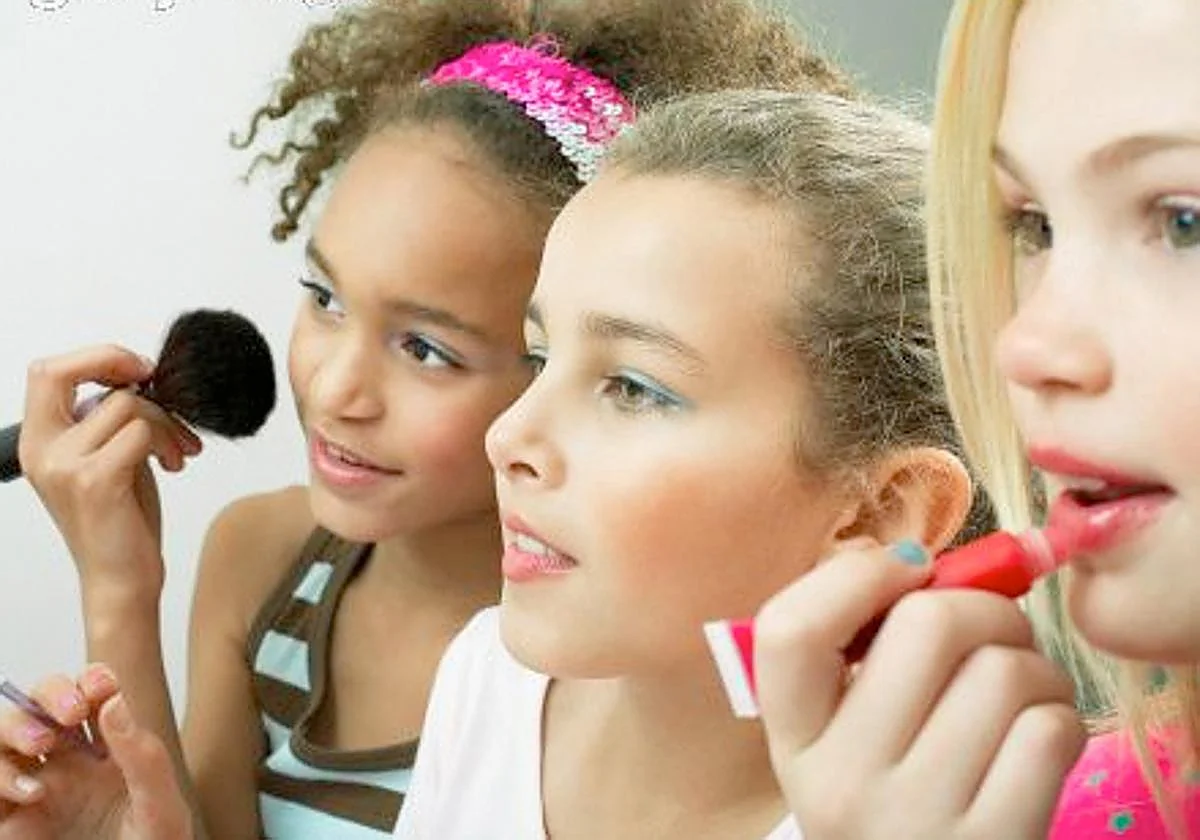
Walk into any high-end beauty retailer today, and you won’t see twenty-somethings looking for lipstick. You will see 10-year-old girls demanding high-potency retinol, vitamin C serums, and anti-aging treatments.
Yesterday’s Sisley ad was banned for suggesting drug use. Yet today, TikTok’s algorithms actively distribute and promote viral “challenges” that encourage teenagers to choke themselves until they pass out, ingest lethal amounts of household chemicals, or jump off moving vehicles for views.
We used to complain that high fashion cosified models. But today’s social media landscape has forced every single teenager to become their own model, marketing director, and product. To survive socially, they must package, filter, and sexualize their own lives for public consumption and algorithmic approval. It is a level of self-commodification that would make the most ruthless modeling agents of yesteryear blush.
As a veteran of this beautiful, chaotic industry, I do not miss the misogyny, the toxic body standards, or the exploitation of the 2000s. The demise of the “shock advertising” era was a necessary, overdue evolution.
But I am deeply alarmed by our collective hypocrisy.
We pride ourselves on our modern sensitivity, our progressive values, and our quickness to “cancel” anything that offends our moral sensibilities. Yet, we remain completely passive as algorithms actively exploit, commercialize, and distort the minds of our children. We banned the billboards because they were visible on our streets, but we ignore the screens because they are hidden in our pockets.
It is time to look up from our clean, curated feeds and ask ourselves: What is the real scandal?
Is it a naked woman sprawled on a piece of velvet, or is it a ten-year-old girl staring into a front-facing camera, crying over a wrinkle that doesn’t exist?
Think about it…..
All images featured in this article are credited to owners . They are used for editorial and illustrative purposes only, with no commercial intent. All rights remain with their respective owners.