 111
111 2
2 3
3 4
4 5
5 6
6 7
7 8
8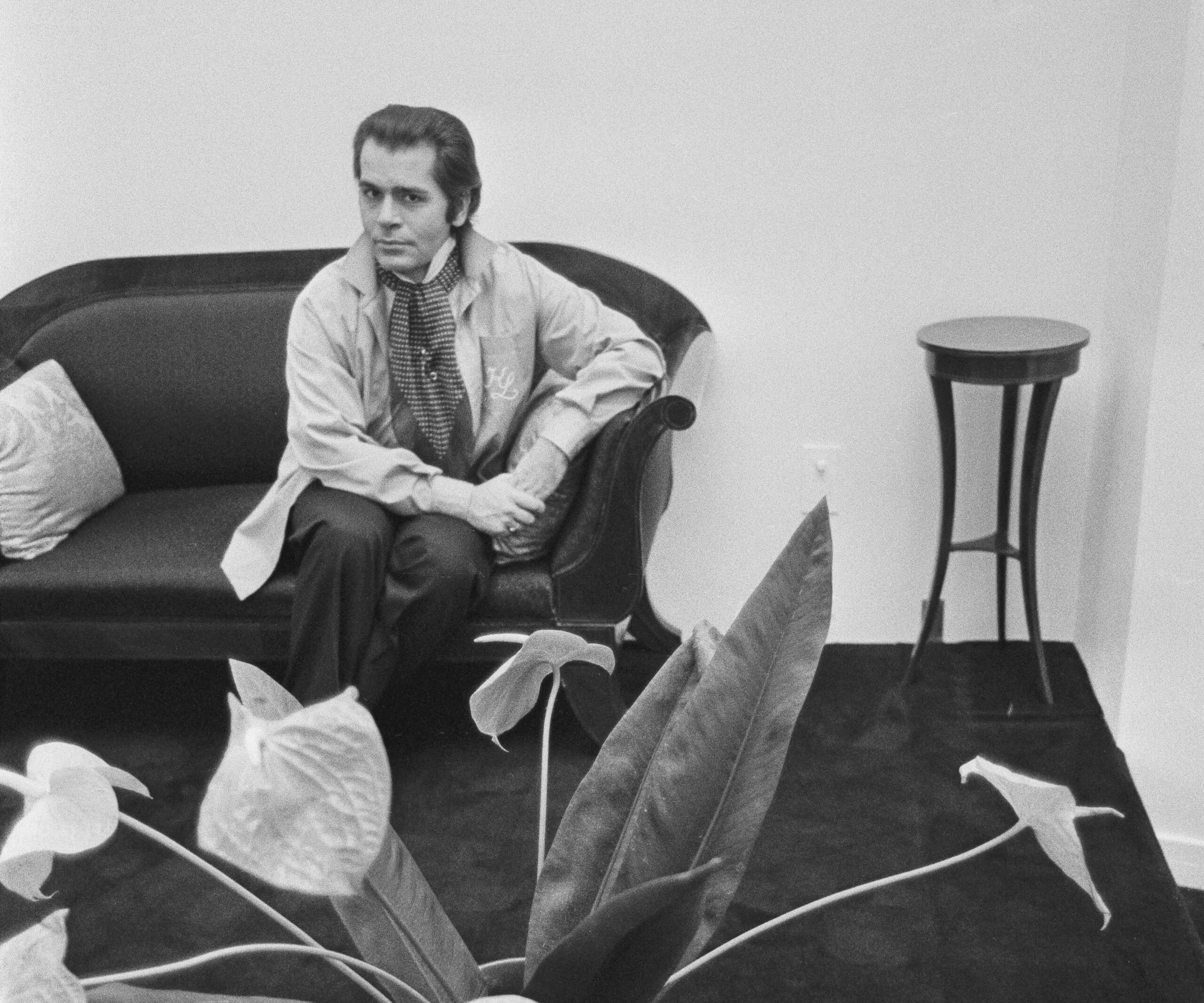
From the severe lessons of a Prussian childhood to the transformation of Chanel, the creation of a global caricature, and the razor-sharp tongue that defined an era of unapologetic elitism.
In the hyper-saturated landscape of modern fashion, where trends expire with the speed of a digital swipe and creative directors are traded like corporate assets, Karl Lagerfeld remains the ultimate, unrepeatable anomaly. He was not merely a designer; he was fashion’s last absolute monarch. With his starched patrician collars, powdered silver ponytail, dark sunglasses, and fingerless leather gloves, he constructed an impenetrable human silhouette that became more famous than the logos he drew.
Yet, beneath the polished armor of his carefully curated caricature lay a mercurial, hyper-intellectual engine that propelled global luxury for more than six decades. He was a designer who lived entirely in the future tense, famously declaring that “nostalgia is the academic euphemism for flunking.”
To understand the legacy of the man they called the Kaiser is to navigate a fascinating maze of academic rigor, unmatched work ethic, brilliant artistic reinvention, and a calculated trail of cultural shockwaves.
Long before he ruled the salons of Paris, he was Karl Otto Lagerfeldt, born on September 10, 1933, in Hamburg, Germany, into a life of cold, Northern European privilege. His father, Otto, was a wealthy businessman who accumulated a fortune by introducing condensed milk to Europe, effectively shielding the family from the brutal deprivations of the World Wars.
But it was his mother, Elisabeth Bahlmann, who would permanently sculpt Karl’s psychological landscape. Elisabeth was a woman of icy elegance, sharp intellect, and terrifyingly low patience. As fashion legend tells it, she would slam doors and demand that Karl speak at a rapid-fire speed just so he could finish his thoughts before she lost interest and left the room. This childhood conditioning birthed his famous, staccato way of speaking and a lifelong horror of lingering in the past. It was also under her watchful, severe eye that he began to hide his hands,which she deemed “ugly”, a habit that eventually evolved into his signature gloved look.
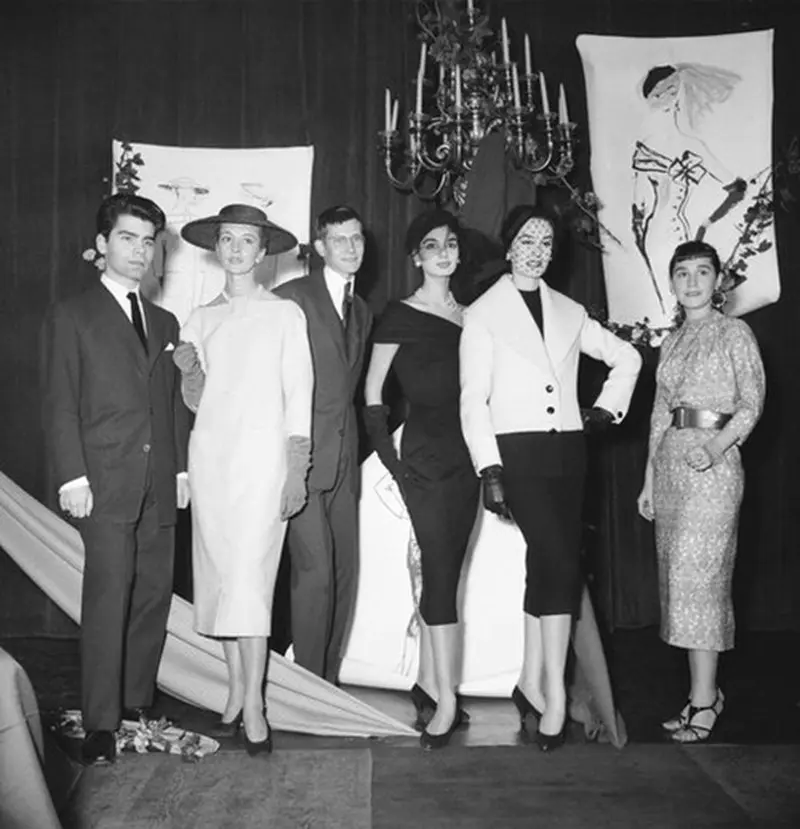
In 1952, a teenage Karl moved to Paris, a city still recovering its postwar glamour. He dropped the “t” from his surname because, as he pragmatically noted, “Lagerfeld” sounded more commercial.
His entry into the fashion pantheon was swift. In 1954, he won the prestigious coat category in a design competition sponsored by the International Wool Secretariat (a historic year, as a young Yves Saint Laurent won the dress category). This triumph caught the eye of Pierre Balmain, who hired the young prodigy as an apprentice. But Karl was not built to be an assistant. “I was not born to be an assistant,” he would later reflect with characteristic arrogance.
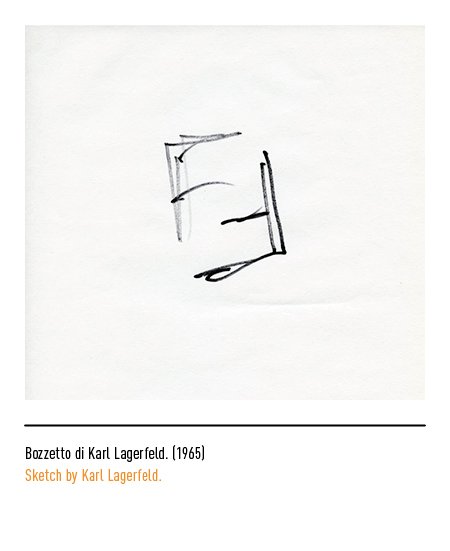
He moved to Jean Patou, designing under the pseudonym “Roland Karl,” before embarking on an incredibly lucrative career as a high-fashion mercenary, freelancing for houses like Chloé and establishing a historic, lifelong alliance with the Italian fur dynasty Fendi in 1965.
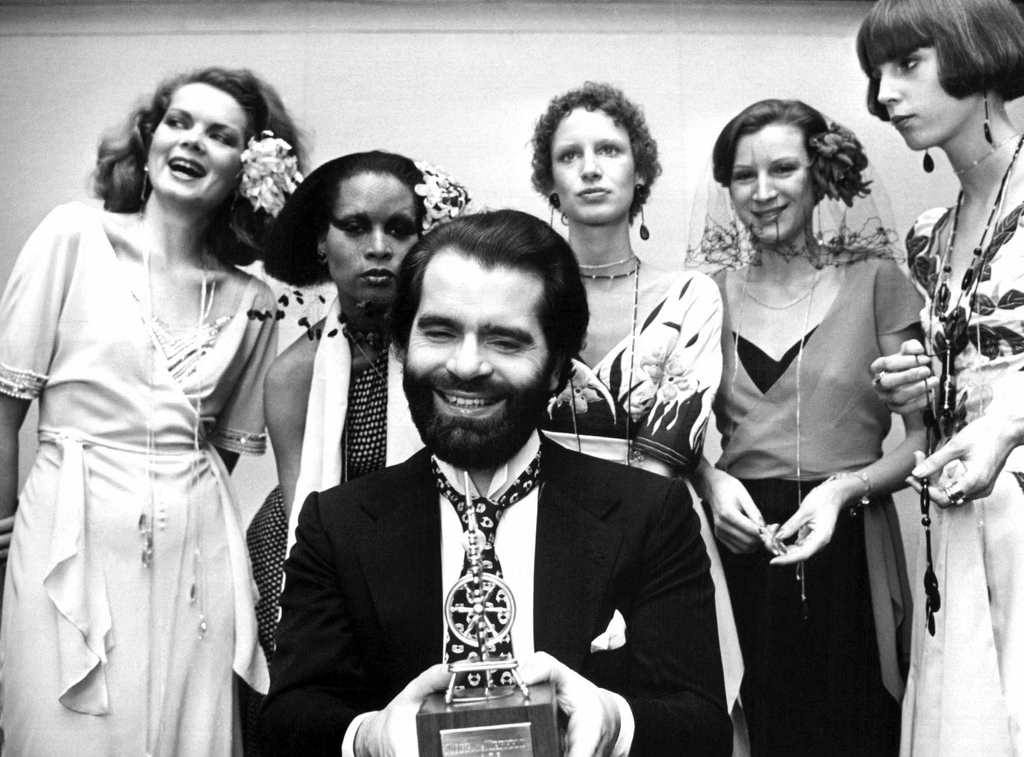
When Alain Wertheimer, the chairman of Chanel, approached Lagerfeld in 1982 to take over the creative direction of the house, Karl’s inner circle begged him to decline. The brand was widely considered “dead”, a beautiful, dusty museum of tweed and pearls frozen in the memory of Coco Chanel, who had passed away a decade prior.
Lagerfeld took the rejection of his peers as a personal dare. Debuting his first haute couture collection for the house in 1983, he performed nothing short of a creative resurrection. He did not gently preserve Coco’s legacy; he aggressively deconstructed it.
Lagerfeld injected the street-level rebellion of punk, the heavy metal of hip-hop, and the structural audacity of pop art into the sacred Chanel DNA. He shortened the hemlines, oversized the double-C logo, layered heavy chains over classic bouclé jackets, and sent surfboards, shopping carts, and spray-paint cans down the pristine runways of the Grand Palais.
For nearly forty years, Lagerfeld managed this staggering dual empire, designing up to fourteen collections a year while shooting his own ad campaigns and publishing art catalogs. He was a creative athlete of unmatched stamina.
Simultaneously, at Fendi, he revolutionized the very concept of fur. Under his direction, fur was stripped of its stiff, heavy, bourgeois associations. He treated it like fabric, shaving it, dyeing it in neon hues, perforating it, and transforming it into lightweight, contemporary outerwear
To be a part of Karl Lagerfeld’s world was to belong to a shifting, glamorous court of hyper-stylized human beings. Lagerfeld did not merely dress women; he anointed muses who embodied the changing spirit of the times.
In the 1980s, his ultimate avatar was the aristocratic Inès de la Fressange. With her sharp French wit and striking resemblance to Coco Chanel, she became the first model to sign an exclusive contract with a haute couture house. However, their relationship collapsed in spectacular, public fashion in 1989 when Inès agreed to pose as “Marianne”—the national symbol of the French Republic. Lagerfeld was furious, declaring her choice to be the embodiment of “everything that is boring, bourgeois, and provincial,” and banned her from his sight. The cold war lasted for over two decades before a late-career reconciliation.
In the 1990s, he turned his gaze to Claudia Schiffer, a pristine, blue-eyed German blonde. In doing so, he broke one of Coco Chanel’s most sacred taboos (Coco famously detested blondes and refused to feature them on her runways). Schiffer’s voluptuous, Brigitte Bardot-adjacent glamour redefined the Chanel woman for the supermodel era.
As the decades marched on, the court evolved to welcome the rebellious energy of Cara Delevingne, the moody, intellectual cool of Kristen Stewart, and the neotenic, delicate beauty of Lily-Rose Depp and Kaia Gerber.
And then, there was Choupette, his pampered Birman cat who became a global icon in her own right. Choupette lived a life of unimaginable luxury, traveling via private jet, dining from silver bowls prepared by personal chefs, and possessing her own maids and modeling contracts. She was the ultimate manifestation of Lagerfeld’s eccentric, isolated luxury.
While the fashion industry worshipped his genius, the broader cultural landscape often viewed Lagerfeld through a lens of profound controversy. He was a man who despised political correctness, viewing it as a form of intellectual censorship. Consequently, his list of public scandals was almost as lengthy as his design achievements.
As documented in critical retrospectives by The Guardian, Lagerfeld was notoriously unapologetic about his views on the human body. He was a vocal proponent of extreme thinness on the runway, sparking widespread fury with his fatphobic remarks, including his infamous assertion that “no one wants to see curvy women” on the catwalk and his dismissive comments regarding public health concerns in the fashion industry.
His provocations extended far beyond the physical. He drew intense political ire for criticizing German Chancellor Angela Merkel during the European migrant crisis, making highly insensitive remarks on French television. Furthermore, in 2018, as the #MeToo movement swept the globe, Lagerfeld declared he was “fed up” with the conversation, controversially questioning why actresses took decades to recount their experiences and famously telling models that if they didn’t want their pants pulled, they should “join a nunnery.”
Lagerfeld knew his words were toxic to polite society, but he simply did not care. He operated as an aesthetic mercenary, entirely detached from the moral standards of the masses.
The Eternal LegacyWhen Karl Lagerfeld passed away on February 19, 2019, in Neuilly-sur-Seine at the age of 85, an entire era of fashion died with him. He was the last designer who could sketch a complete collection by hand in a single morning, read obscure German philosophy in the afternoon, shoot an international magazine cover at dusk, and host a lavish dinner party at midnight.
His posthumous vindication came in the most spectacular fashion. In 2023, the Met Gala dedicated its entire theme, Karl Lagerfeld: A Line of Beauty, to his expansive archive, prompting the world’s elite to dress in homage to his visual signatures. Today, his life has been dramatized on global streaming platforms, cements his status as a historical figure whose complexity rivals the great literary characters of the 19th century.
In the end, Karl Lagerfeld achieved the ultimate design feat: he bridged the chasm between the elite salons of Paris haute couture and the chaotic, commercial pulse of modern street culture. He was a genius, a provocateur, and an unrepentant snob—but above all, he was a man who carved his own uncompromising vision into the very skin of our collective memory.