 111
111 2
2 3
3 4
4 5
5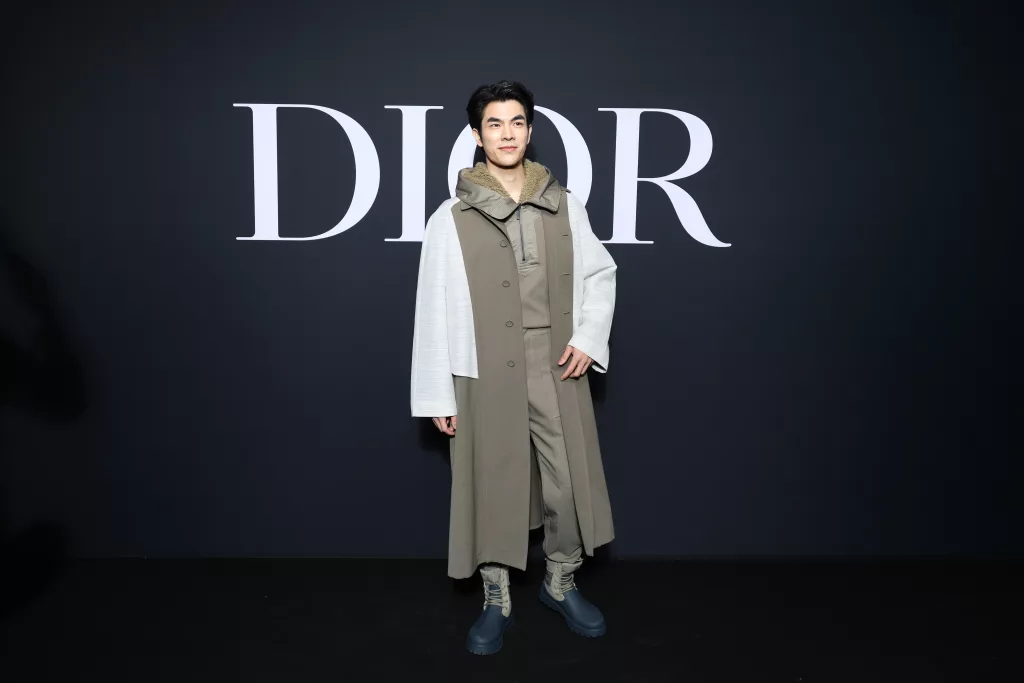 6
6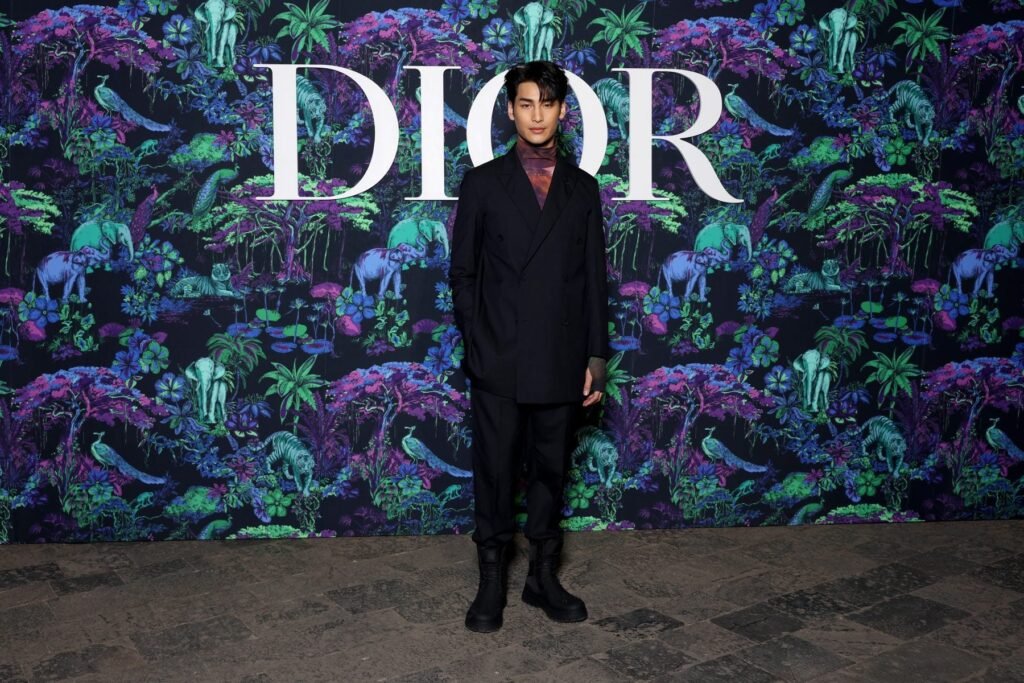 7
7 8
8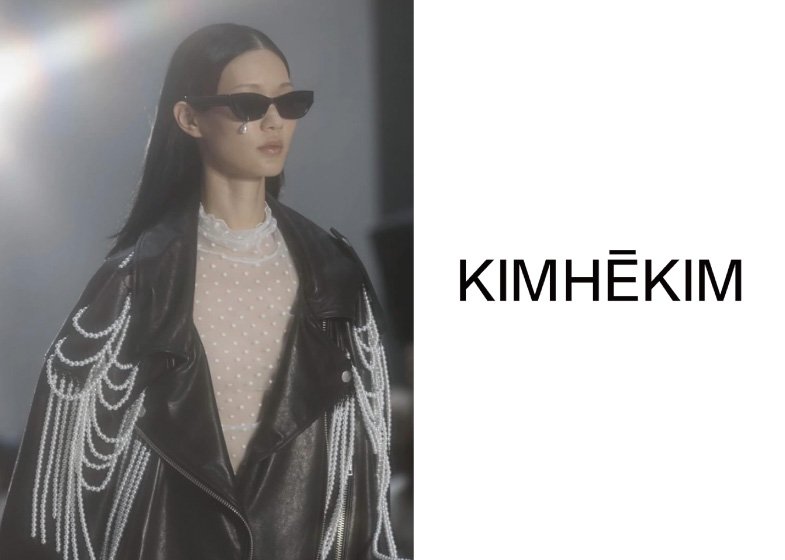
There are designers who look at tradition and try to preserve it exactly as they found it. There are others who look at it and try to escape it entirely. Kiminte Kimhekim has spent a decade doing something more interesting than either , taking the things that shaped him and refusing to leave them untouched.
A GRANDMOTHER, A BARBIE DOLL, AND THE ORIGIN OF EVERYTHING
The story behind KIMHĒKIM starts long before Paris, or fashion school, or any of the credentials that usually open a designer profile. From the age of seven, Kimhekim spent hours with his grandmother in Korea, dressing Barbie dolls in traditional hanbok , a small, domestic ritual that, in hindsight, contains almost the entire design philosophy he’d spend the next three decades refining. He’s described himself, without much embellishment, as a dreamer who left for Paris without hesitation, landing at Studio Berçot, the famously unconventional French fashion school, and graduating in 2009. From there he spent four seasons working alongside Nicolas Ghesquière at Balenciaga , by his own account the youngest person in the studio, too shy to say a proper hello to Ghesquière most mornings, but endlessly fascinated by Cristóbal Balenciaga’s own archive and the roughly forty artisans he’d watch working in the atelier. That period, he’s said, is where the desire to build his own couture-level workshop first took hold.
He began showing independent collections under his own name in 2014 , his first, staged unconventionally inside a Paris flower shop during womenswear fashion week , before formally establishing Maison KIMHĒKIM in 2016 and joining the official Paris Fashion Week calendar in 2019. The house takes its name from the Gimhae Kim clan, an ancient Korean royal lineage historically associated with fine decorative arts — Kimhekim is a direct descendant of it, which turns the brand’s entire premise from a clever concept into something closer to inherited material.
HERITAGE THAT REFUSES TO STAY STILL
KIMHĒKIM never treats that heritage like a costume, and the distinction matters enormously. Hanbok silhouettes, royal Korean references, and traditional craftsmanship show up constantly across the collections, but almost never as a literal historical reference. They function as starting points rather than finished statements — a recognisably Korean shape that then moves somewhere nobody would have predicted. A traditional detail gets exaggerated past logic.
A familiar proportion gets quietly distorted. A restrained garment suddenly grows an enormous bow, a sculptural volume, or an accessory that borders on surreal. The Paris-based Fédération de la Haute Couture et de la Mode describes the house,
accurately, as drawing on that royal heritage while fusing it with modern silhouettes and genuine tailoring craftsmanship. None of it reads as historical costume. None of it reads as nostalgia, either. It reads, simply, as Korean in a language KIMHĒKIM built himself.
FASHION THAT’S ALLOWED TO BE FUNNY
There’s real humour running through the house, which is rarer in luxury fashion than it should be an industry that often treats seriousness itself as a marker of sophistication, where every reference needs an explanation and every detail needs to justify its own existence. Kimhekim seems entirely comfortable letting his clothes be beautiful and slightly ridiculous in the same breath.
The oversized bows that first made the house internationally recognisable are the clearest example , romantic, theatrical, scaled almost past reason and they only work because the technical construction holding them up is genuinely precise. The drama never substitutes for craft. It depends on it entirely.
A DECADE, DISTILLED INTO A SHOW ABOUT SHIPPING CRATES
That balance reached its clearest expression yet on March 2, 2026, when KIMHĒKIM marked its tenth anniversary at Paris Fashion Week with a standalone show titled “Enter the Spectrum,” staged at the Palais de Tokyo as part of Concept Korea , a long-running initiative run by Korea’s Ministry of Culture, Sports and Tourism and the Korea Creative Content Agency to help promising Korean labels gain traction in Paris. The set design leaned entirely into the house’s own cross-continental identity: wooden art crates, the kind used for genuine transcontinental shipping, stamped “Seoul to Paris,” staged as though the show itself was a gallery installation being unpacked in real time, every model functioning as a piece of art in transit.
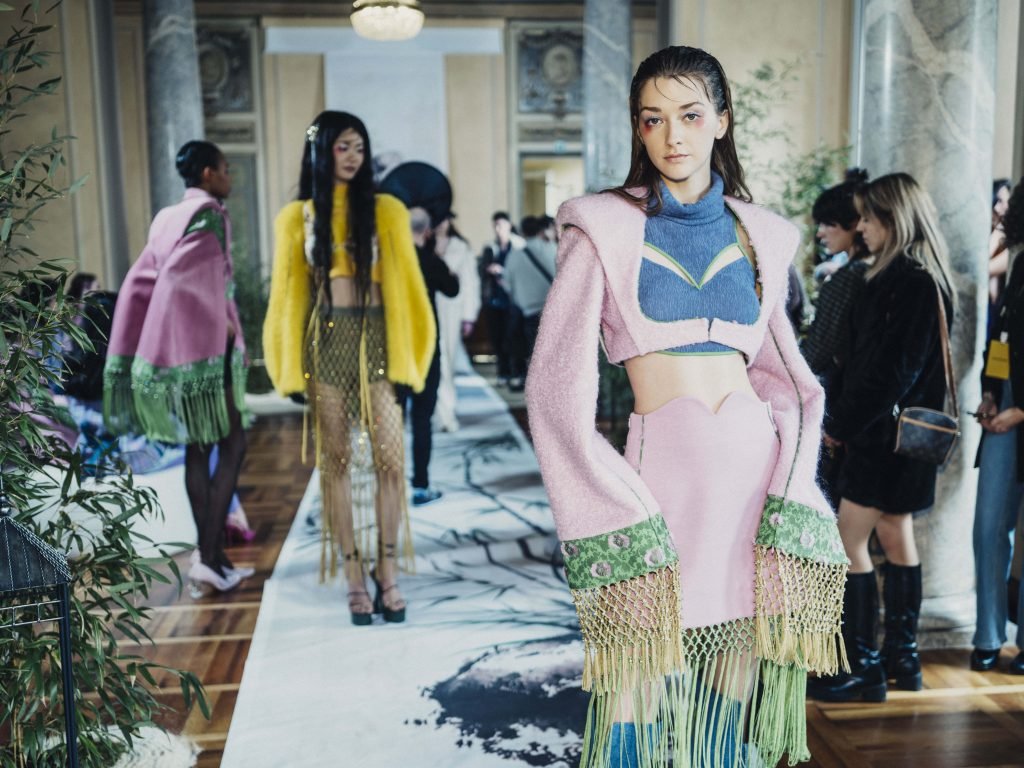
The 41 looks moved in a deliberate arc , pastel mod mini dresses with oversized bows opening the show, dramatically draped satin held together with giant pearls, then a shift into KIMHĒKIM’s structural, architectural register: obsidian blacks, charcoal greys, oversized blazers and pinstriped tailoring building a masculine code that sat directly against the house’s more traditionally feminine ruffled detailing. Six looks were built almost entirely from hand-braided artificial hair, a callback to the house’s FW22 “Hair Chronicles” collection and, further back, to Kimhekim styling his own cousin’s hair as a child — the same instinct from the Barbie-doll years, translated, a couple of decades later, into genuine technical couture. The finale arrived with a four-tier cake and a candle worked into the guest invitation, a small, unpretentious nod to the anniversary itself. In the audience: members of K-pop group Alpha Drive One, recently named Concept Korea’s ambassadors, and Thai actor Zee Pruk — evidence of exactly how far the house’s reach has travelled from that Paris flower shop in 2014.
CLOSING THE DISTANCE COUTURE USUALLY INSISTS ON
What made the anniversary show more than a retrospective exercise was its stated intent: not simply celebrating a decade of archive, but pulling couture closer to something people could actually live in. The collection translated the house’s signature craftsmanship , intricate draping, precise construction, careful layering , into silhouettes designed to feel personal and wearable rather than distant.
Couture has spent most of its modern history being defined by distance: from everyday life, from practicality, from anyone who isn’t a client on a very short list. KIMHĒKIM has spent ten years quietly working against that distance, not by making the extraordinary feel smaller, but by making it feel like it could plausibly belong to someone.
A CITY THAT NEVER MAKES YOU CHOOSE
There’s something distinctly Korean in that instinct, beyond the hanbok references and the royal-family name. Seoul’s own fashion identity has never rested comfortably on minimalism or maximalism alone , it moves fluidly between both, understated and extravagant existing on the same block, traditional architecture framing thoroughly experimental fashion without anyone treating that as strange. KIMHĒKIM runs on the exact same logic. It doesn’t resolve its own contradictions. It keeps them in play, deliberately, season after season.
Global relevance was never really something the house added on top of its identity , it emerged from having a point of view specific enough to travel well outside the country it started in. KIMHĒKIM doesn’t read as a brand still working toward becoming international. A decade, a Palais de Tokyo standalone show, and a client list that’s included Elle Fanning, Gigi Hadid and Blackpink’s Lisa suggest it already crossed that line some years ago — quietly enough that the crossing itself barely needed announcing.
A LITTLE ROMANTIC. A LITTLE MISCHIEVOUS. COMPLETELY UNWILLING TO BEHAVE.
Ten years in, KIMHĒKIM still resists being filed under any single label , not quite Korean fashion, not quite Korean couture, not quite Korean minimalism, because it’s never fully settled into any one of those categories long enough to be defined by it. It’s simply KIMHĒKIM: heritage treated as something alive rather than something sealed behind glass, technique precise enough to support genuine playfulness, and a designer who took a childhood habit of dressing Barbie dolls in hanbok and, without ever quite growing out of it, turned it into one of the more distinctive houses currently working out of Seoul and Paris both.