As South Korea celebrates Chuseok, the autumn harvest festival where centuries-old traditions come alive and families don their finest traditional Hanbok, there is no better moment to explore how this iconic garment transforms on screen.
In the world of global television, few genres possess the intoxicating visual grandeur of the Korean historical drama, or Sageuk. Beyond the gripping political intrigue, tragic romances, and sword-wielding heroics lies a secondary, silent protagonist: the costume design.
Far from being mere period wardrobe, the Hanbok in prestige Sageuks is a complex architectural language. Through delicate silk weaves, hand-embroidered gold thread (Geumbox), color psychology, and intricate ceremonial headwear, costume directors translate rank, emotional isolation, and historical evolution onto the screen…
Here is an in-depth, insider analysis of the costume design behind the most searched, iconic, and visually breathtaking historical K-dramas of all time.
1. ‘Mr. Sunshine’ (2018): The Collision of Joseon Hanbok and Western Modernity
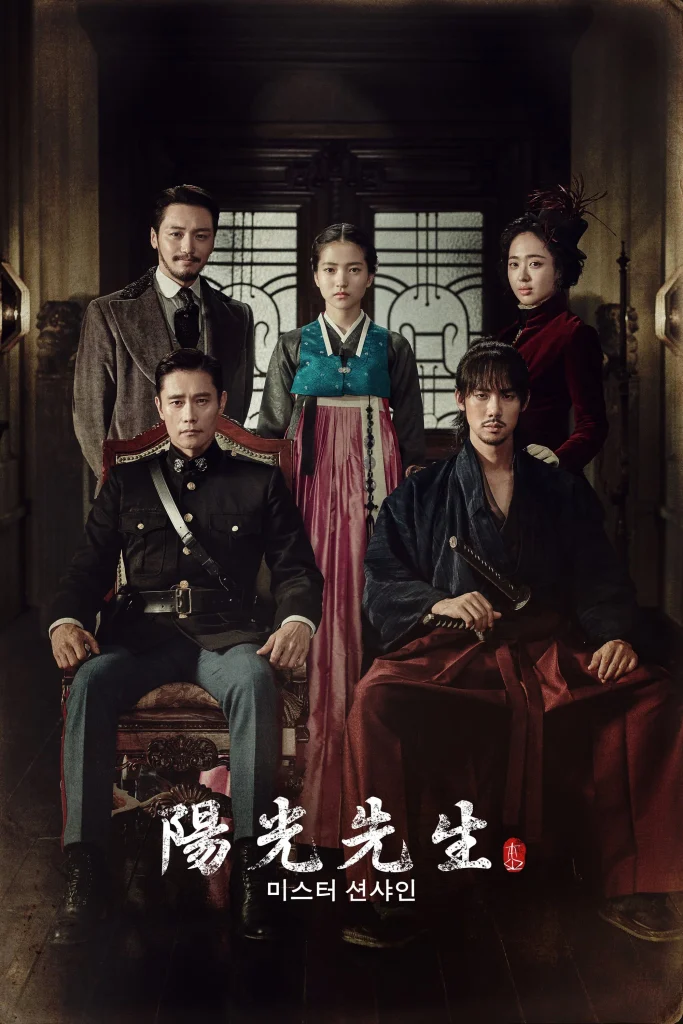
Set during the twilight of the Joseon Dynasty and the dawn of the Korean Empire (turn of the 20th century), Mr. Sunshine stands as a watershed moment in television wardrobe. Costume director Cho Sang-kyung faced the monumental task of capturing a world in violent transition, where traditional Korean silk collided with Western Edwardian corsetry and Japanese military tailoring.
The Sartorial Dichotomy & Tailoring Mechanics
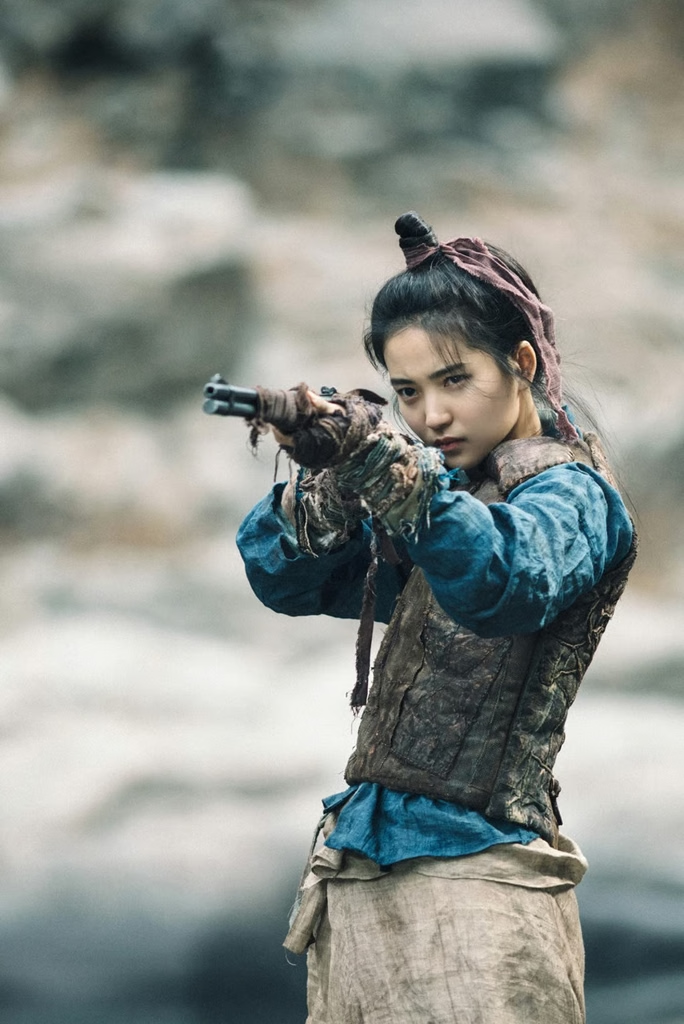
Lady Go Ae-shin (Kim Tae-ri) The Dual Identity:
The Noblewoman: As a high-born aristocrat (Yangban), Ae-shin wears exquisite pastel Hanboks—pale jade, lavender, and soft apricot Jeogori (jackets) paired with expansive, voluminous Chima (skirts) made from raw fine silk. Her silhouettes reflect pristine purity and traditional aristocratic privilege.
The Sniper: By night, Ae-shin strips away the layered skirts for tailored black silk tactical robes, tight wrist bands, and face coverings. This sharp contrast visually embodies her transformation from sheltered noblewoman to covert resistance fighter.
Kudo Hina (Kim Min-jung) Western Modernity as Power:
The Western Wardrobe: As the owner of Hotel Glory, Hina wears immaculate Western Edwardian gowns featuring tight corsets, bustles, high lace collars, and veiled fascinator hats. Her wardrobe symbolizes the influx of global influences in Hanseong (Seoul) and her sharp, independent survival strategy in a male-dominated world.
Iconic Cinematic Scene:
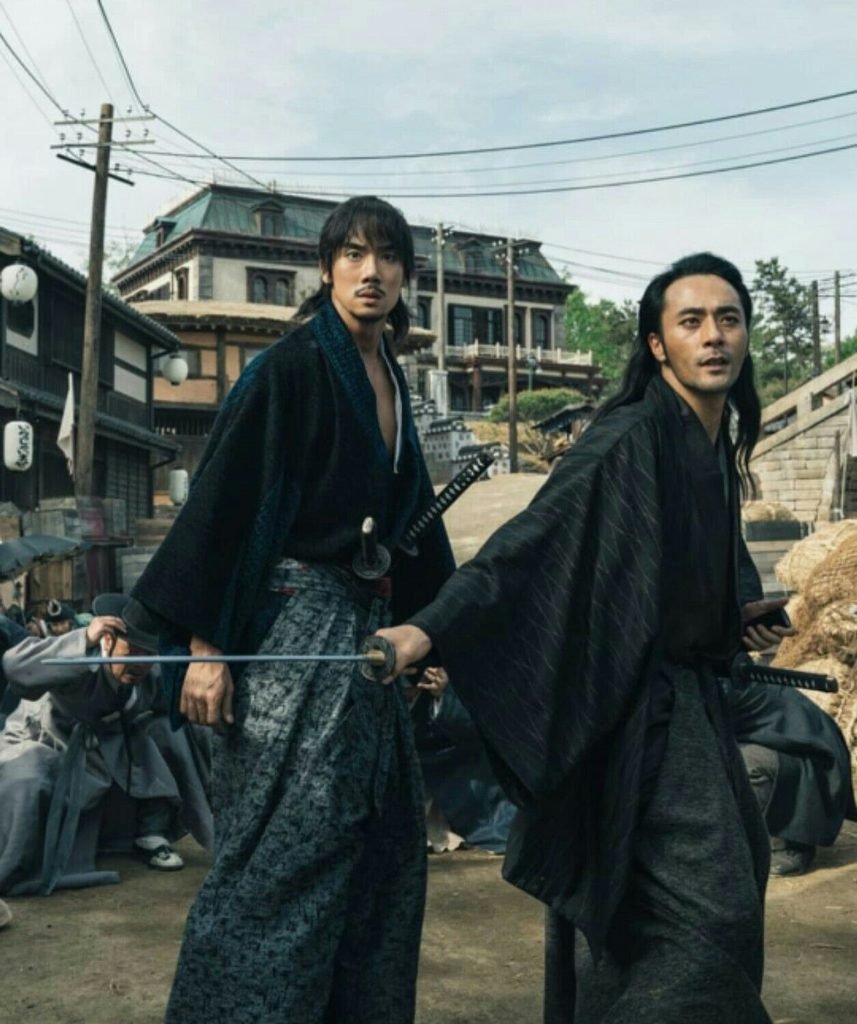
The Hanseong Streetlamp Sequence, where Ae-shin in her traditional pastel Hanbok, Eugene Choi in his dark US Marine uniform, and Goo Dong-mae in his Japanese kimono pass each other under the newly installed electric streetlights—a breathtaking visual summary of three colliding worlds.
2. ‘Kingdom’ (2019–2020): The Geometry of Power & The Global ‘Gat’ Renaissance
Netflix’s global phenomenon Kingdom proved that historical accuracy and gothic horror could merge into haute-couture brilliance. Led by master costume designer Cho Sang-kyung, the series sparked a worldwide obsession with 16th-century Joseon headwear and royal textiles.
The Architecture of Headwear (Gat) & Social Hierarchy
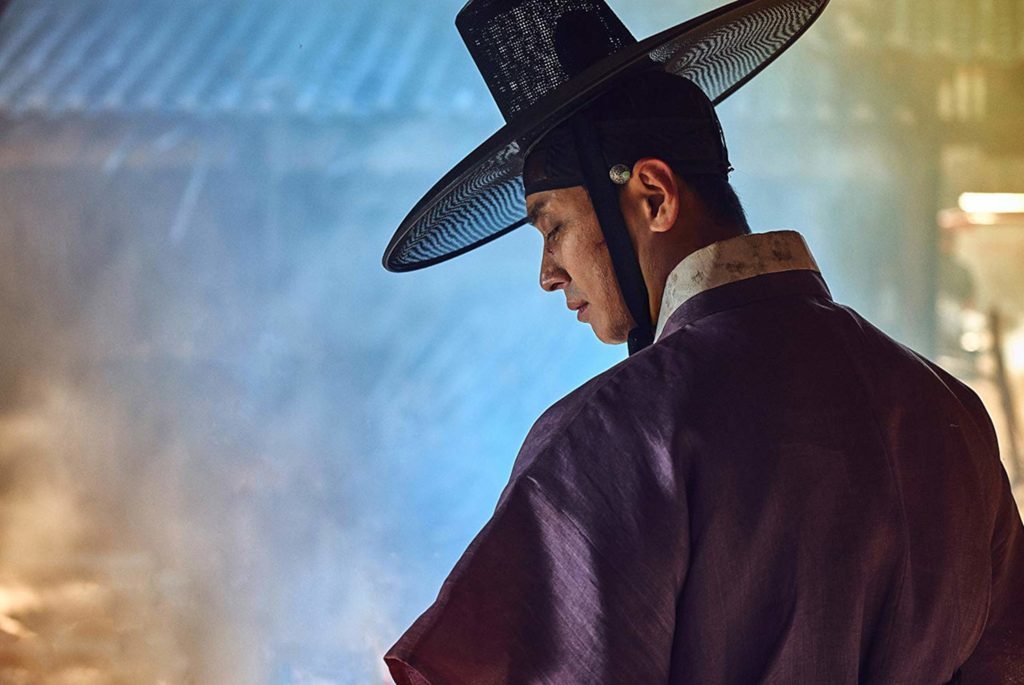
The true genius of Kingdom’s costume design lies in its headwear. In Joseon society, a man’s hat was a direct reflection of his social status, moral standing, and political power:
The Gat: Crafted from translucent black horsehair and woven bamboo, the cylindrical Gat worn by Crown Prince Lee Chang (Joo Ji-hoon) created geometric shadows across the face, projecting authority and mystery.
Ikseongwan & Royal Crowns: The Crown Prince’s winged black cap (Ikseongwan) and military helmet featured intricate gold filigree, contrasting sharply with the raw, unpolished bamboo hats worn by commoners.
Textile Palette & Visual Symbolism
Crown Prince Lee Chang: Begins the series in royal crimson and deep navy silk robes embroidered with dragon crests (Gonryongpo), which gradually become tattered, indigo-dyed linen as he journeys through the zombie-infested countryside, reflecting his detachment from palace decadence.
Minister Cho Hak-ju (Ryu Seung-ryong): Wears heavy, rigid obsidian-black and deep violet silks with stiff collars, giving him a menacing, immovable presence within the palace halls.
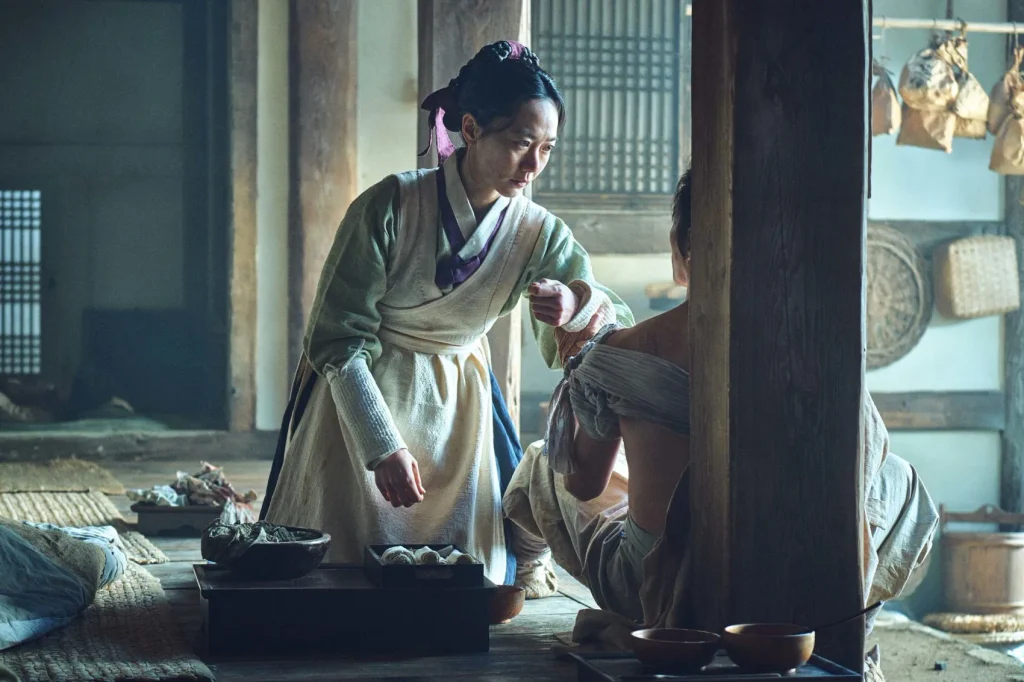
The Commoners: Dressed in natural, unbleached hemp (Mosi) and coarse cotton in earthy tones—which act as a stark canvas for the crimson blood splatters during action sequences.
Iconic Cinematic Scene:
Crown Prince Lee Chang on the Palace Roof, standing against a burning twilight sky in dark navy traveling robes, sword drawn, as his flowing silk coat (Dupo) billows in the wind.
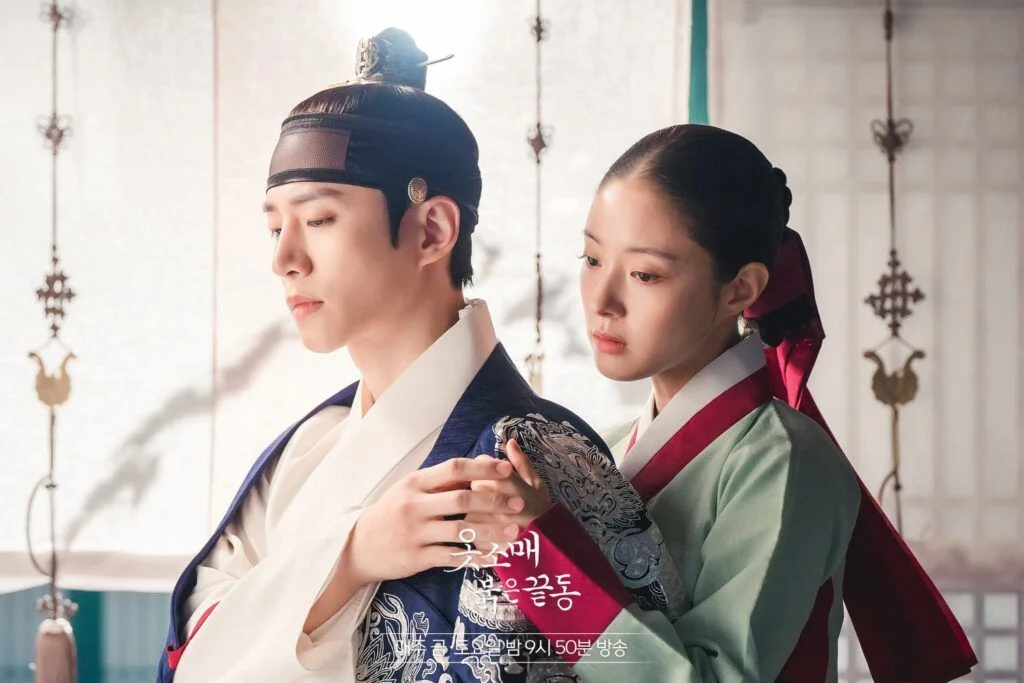
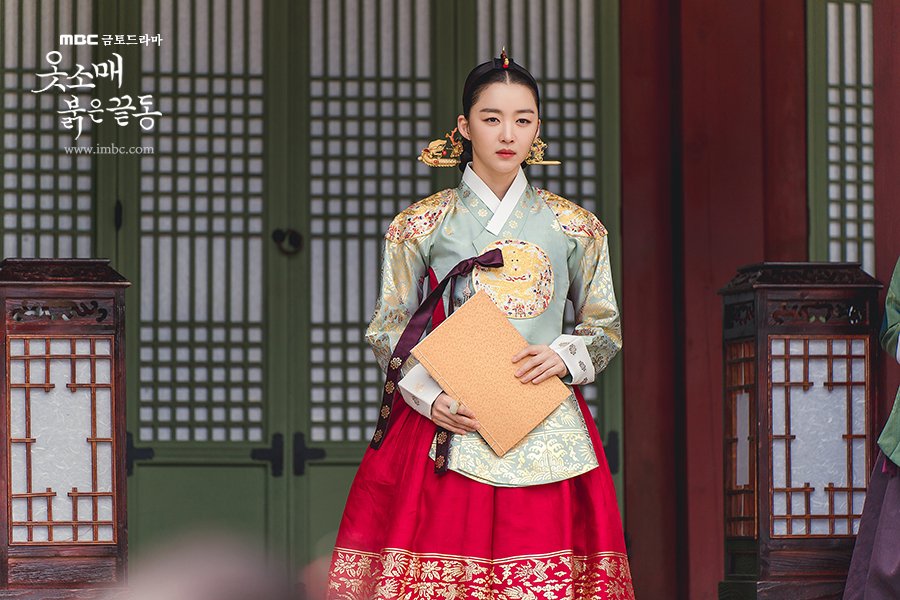
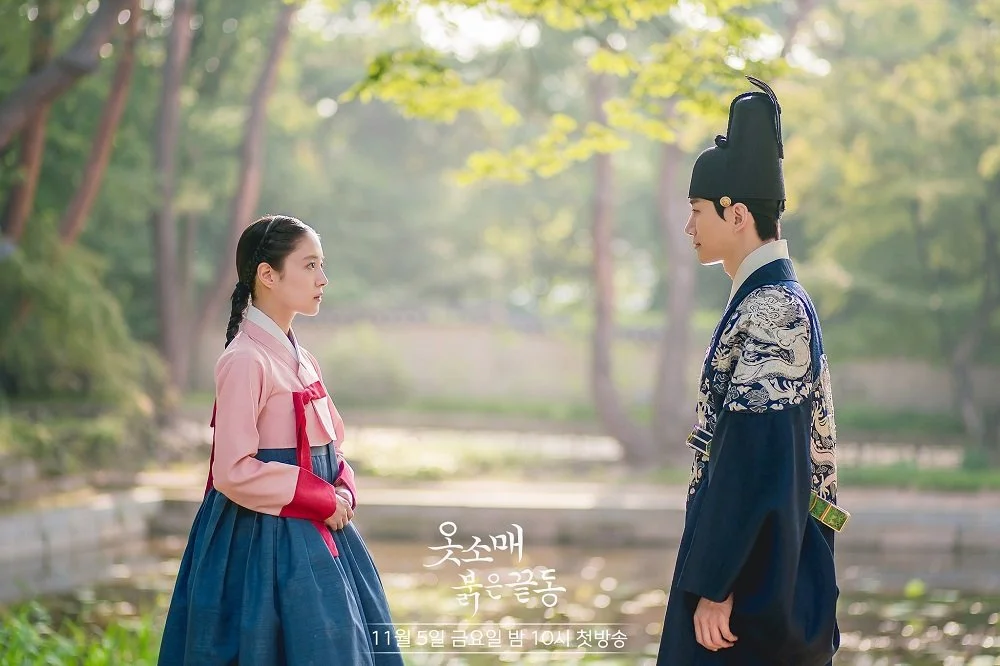
The Red Sleeve captivated global audiences not only through its heartbreaking royal romance between King Jeongjo and court maid Sung Deok-im, but through its obsessive, award-winning attention to 18th-century court etiquette and garment tailoring.
The Anatomy of the Red Sleeve
The title itself refers to a specific costume detail: the bright crimson cuffs (Saekdong) worn on the blue uniform sleeves of Gungnyeo (palace court maids). These red cuffs signified that the woman belonged exclusively to the King.
Garment Breakdown & Evolution
Sung Deok-im (Lee Se-young):
Court Maid Era: Wears the iconic pale sky-blue Jeogori with dark navy Chima and vibrant red sleeve cuffs. The crisp cotton and silk blend reflects her neatness, intellect, and humble rank.
Royal Consort Transformation: Upon becoming Royal Noble Consort Uibin, her wardrobe shifts to heavy silk jacquard in muted coral, blush pink, and pale gold, layered with embroidered Norigae (pendant ornaments) and elaborate jade hairpins (Binyeo).
King Yi San (Lee Jun-ho):
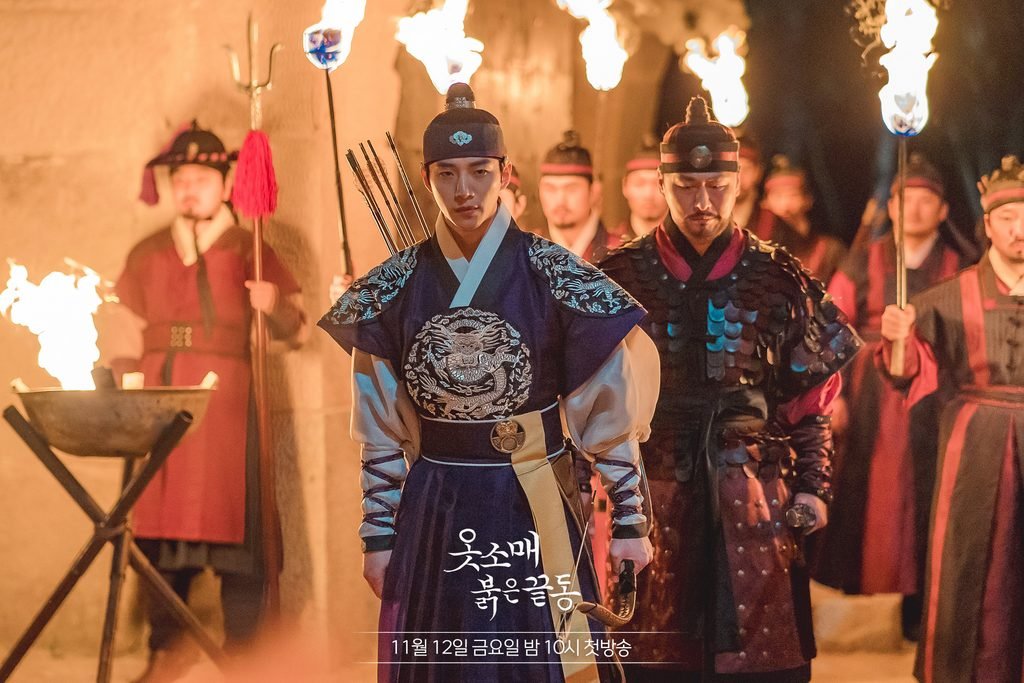
The Scarlet Gonryongpo: The King’s daily business robe features vivid scarlet silk hand-embroidered with circular gold-thread dragons (Boh) on the chest, shoulders, and back. The precise structure of his padded shoulders projects regal responsibility and emotional restraint.
Iconic Cinematic Scene:
The Royal Library Sequence, where afternoon sunlight filters through traditional paper screens (Hanji), illuminating the soft sheen of Deok-im’s blue sleeves as she turns the pages of a manuscript beside Yi San in his scarlet silk.
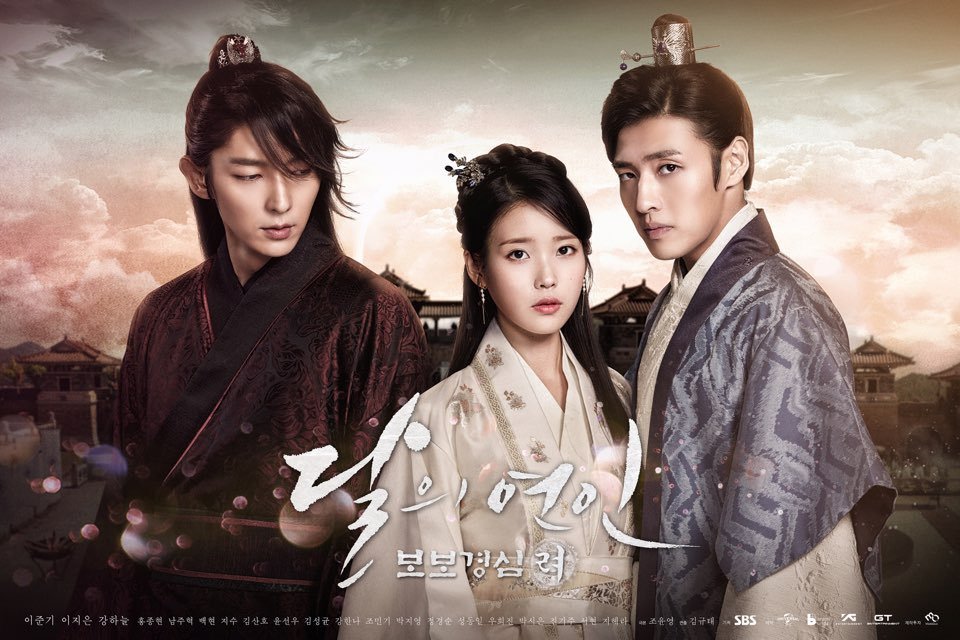
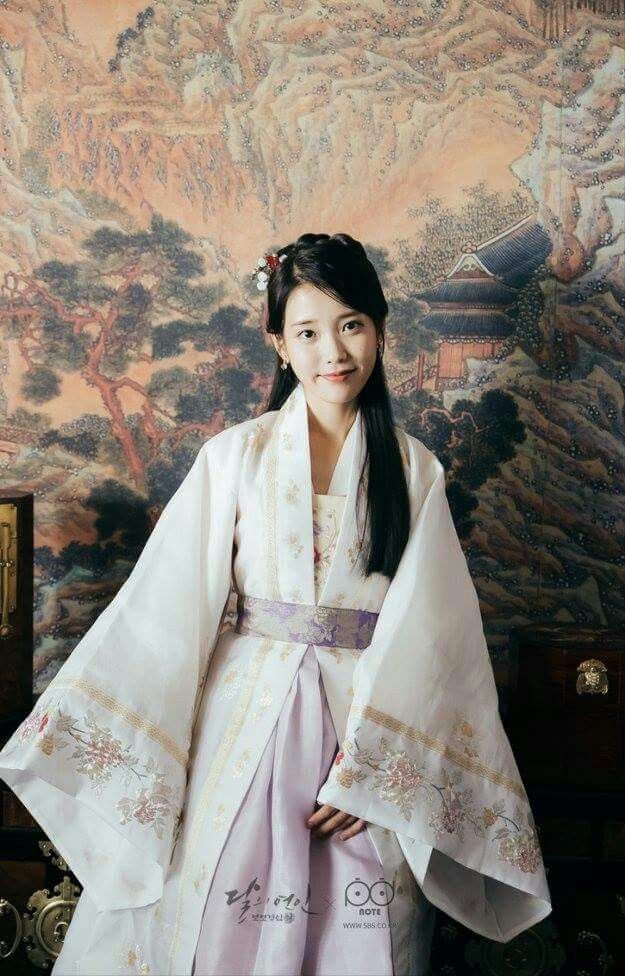
Unlike the neo-Confucian restraint of the Joseon Dynasty, the Goryeo Dynasty (918–1392) was celebrated for its opulent, fluid, and jewel-toned fashion. Moon Lovers: Scarlet Heart Ryeo capitalized on this historical era to deliver one of the most aesthetically lavish dramas in K-drama history.
Goryeo vs. Joseon Aesthetics
Silhouettes: Goryeo garments featured wider, flowing sleeves, metallic embroidery, and high-waisted drapes that allowed for greater fluid movement compared to the structured Joseon coat.
Jewel Tones: Deep sapphire blue, royal violet, emerald green, and crimson were worn by princes and royalty, heavily embellished with gold leaf patterns.
Character Garment Breakdown
4th Prince Wang So (Lee Joon-gi):
The Outcast: Begins in dark, asymmetrical black silk robes paired with a leather face mask and high-collared pauldrons, reinforcing his “wolf-dog” reputation.
The Monarch: As King Gwangjong, his wardrobe evolves into regal black and gold silk robes featuring metallic dragon embroidery and structured pauldrons, projecting absolute, dangerous authority.
Hae Soo (IU / Lee Ji-eun):
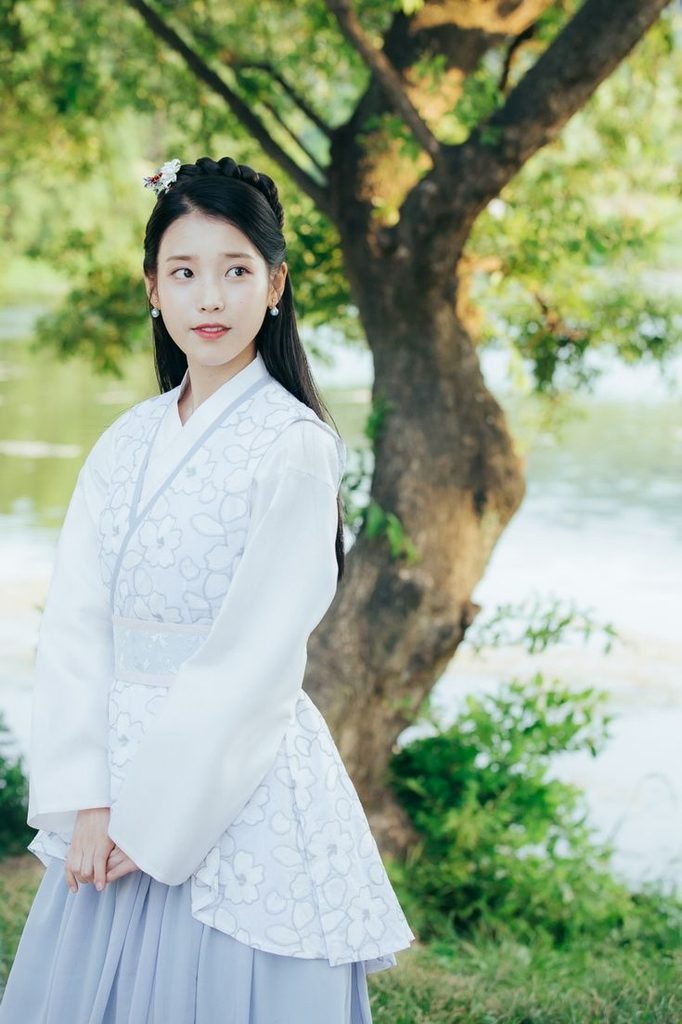
Youthful Freedom: Begins in bright pastel silks, pale yellow, soft mint, and peach, with delicate floral embroidery.
Palace Confinement: As a court lady in the Damiwon, her attire shifts to uniform pale blue and white silks, symbolizing her loss of freedom within the royal court.
Iconic Cinematic Scene:
The Rain Ritual Sequence, where Wang So walks through the praying crowd in heavy black silk and gold embroidery, holding an umbrella over Hae Soo as rain drenches the palace courtyard.
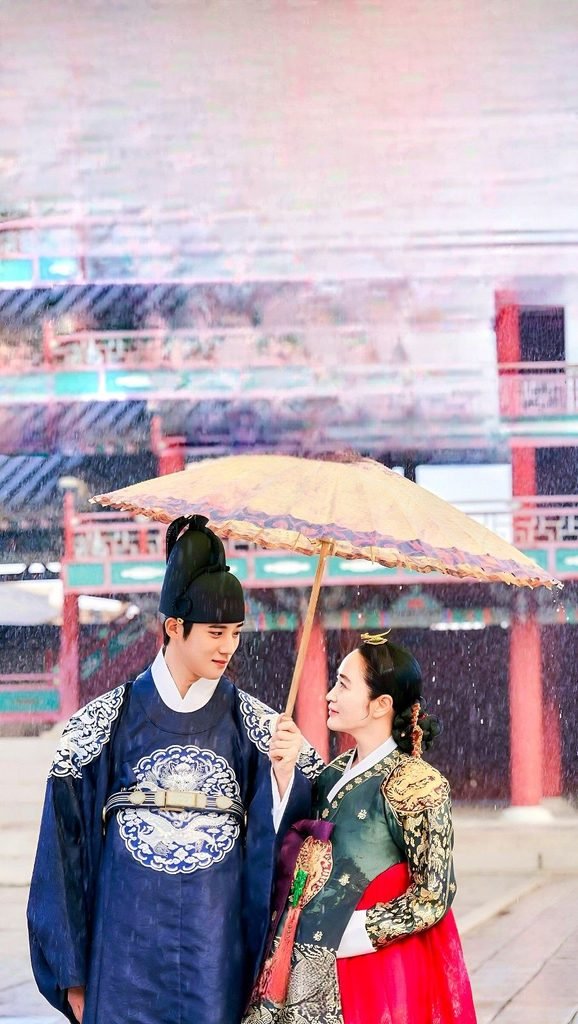
5. ‘Under the Queen’s Umbrella’ (2022): Ceremonial Majesty and Royal Parenting
This critically acclaimed hit elevated Joseon court fashion by offering an unprecedented look at royal ceremonial vestments and the intricate hierarchy among royal concubines.
Ceremonial Garments & Hair Architecture
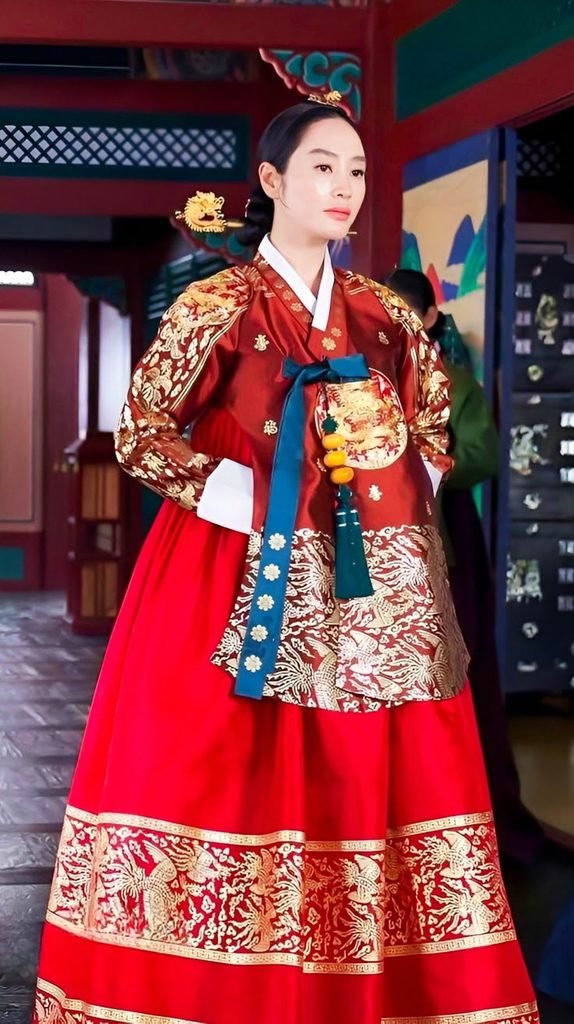
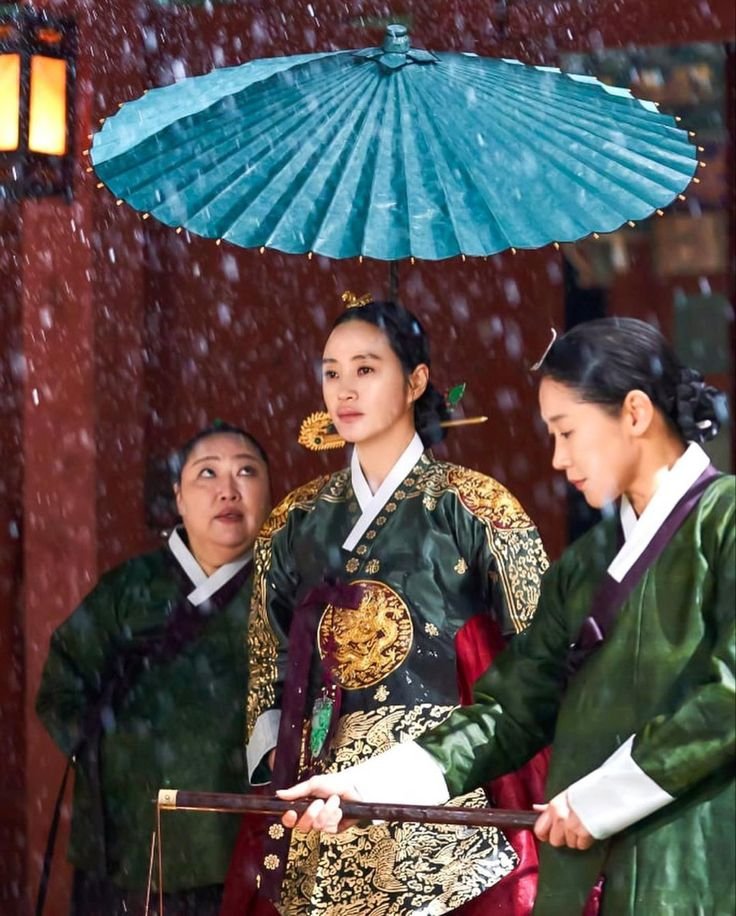
Queen Im Hwa-ryeong (Kim Hye-soo) , The Jeokui:
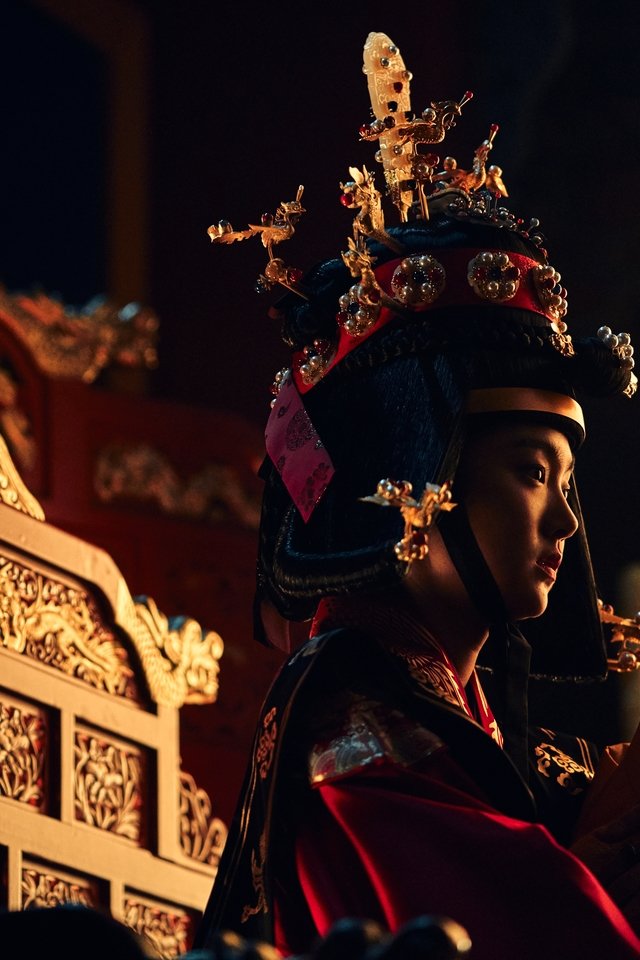
The Royal Gown: For grand court ceremonies, the Queen wears the Jeokui, a heavy, deep royal-blue silk robe embroidered with pairs of pheasants and gold clouds, symbolizing marital harmony and supreme female authority.
The Hair Architecture: Accompanied by the Tteogaji (a massive ceremonial wooden hair structure) secured with long dragon-headed jade hairpins (Yong-binyeo).
The Concubines’ Color Hierarchy:
Royal concubines were assigned specific color palettes based on rank. Senior concubines wore rich plum, magenta, and gold brocades, while lower-ranking concubines were restricted to lighter, unembroidered pastels.
What makes the costume design of these historical K-dramas so immortal is their ability to bridge ancient heritage with contemporary haute couture sensibility. Modern Korean designers,from Kimhēkim and Miss Sohee to Leesle, continue to cite Sageuk wardrobe as a primary source of inspiration for their international runway collections.
In the hands of visionary costume directors, the Hanbok is not a relic of the past; it is a timeless canvas of human emotion, power, and high art.
All images featured in this article are credited to owners . They are used for editorial and illustrative purposes only, with no commercial intent. All rights remain with their respective owners.
 1
1 2
2 3
3 4
4 5
5 6
6 7
7 8
8