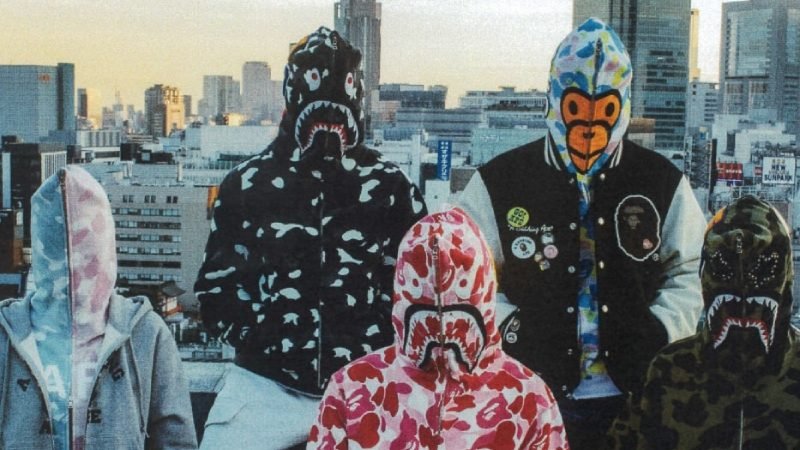

On Anna Jackson’s Kimono: Kyoto to Catwalk, and the quiet arrogance of assuming a garment ever stands still.
I want to admit something before I get into this: for years, I used the word “timeless” about the kimono the exact same lazy way most of us do. As a compliment. As a shorthand for “this garment doesn’t need me to think about it.” I was wrong, and it took a 320-page book with a very unglamorous library-catalogue title to show me why.
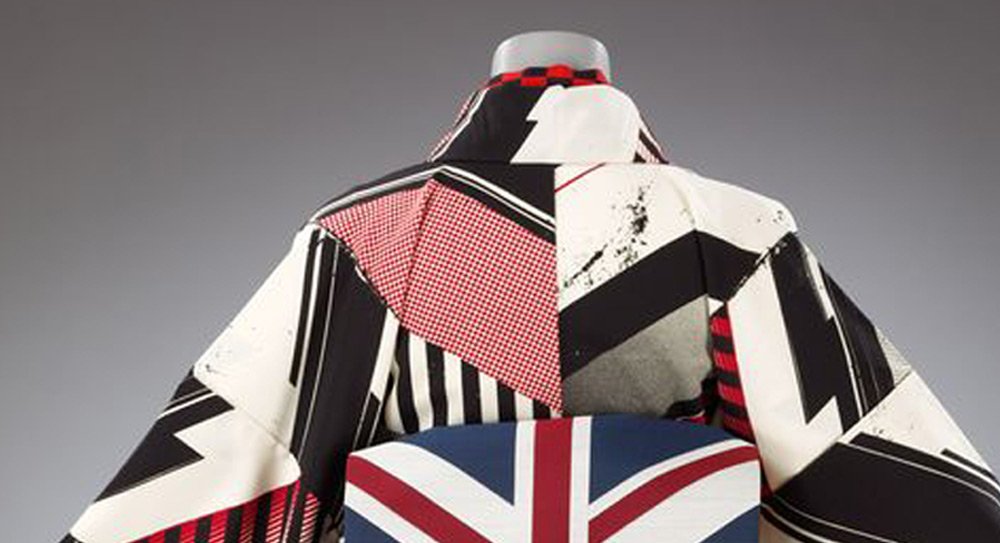
Kimono: Kyoto to Catwalk, edited by Anna Jackson , Keeper of the Asian Department at the V&A , was published in 2020 to accompany the museum’s exhibition of the same name, which opened that February as Europe’s first major show devoted entirely to the kimono. I came to the book long after the exhibition closed, the way most of us encounter most things now, and it did something I wasn’t expecting from an exhibition catalogue: it made me faintly embarrassed about every assumption I’d been carrying around unexamined.
Here is the assumption, laid bare: that the kimono is a fixed thing. A costume, essentially. Something you’d see in a woodblock print or a period film, frozen at whatever moment felt most “authentically Japanese” to a Western eye. Jackson spends the entire book quietly, patiently, dismantling that idea, and she does it with the kind of scholarly generosity that never once talks down to the reader.
What the book actually is
Structurally, it’s less a single argument than a chorus , Jackson edited contributions from multiple specialists, organised into sections that move from the kimono’s construction and codification through to what I found the most electric part: its reinvention. There’s a chapter on geisha and the mystique they’ve helped preserve. One on kimono rental and tourism, and what it means when a centuries-old garment becomes a two-hour costume for a photo outside a temple. One that traces how the kimono entered Western wardrobes and Western painting, and one that follows it back out again through the eyes of Japanese designers actively rebuilding it for the present.
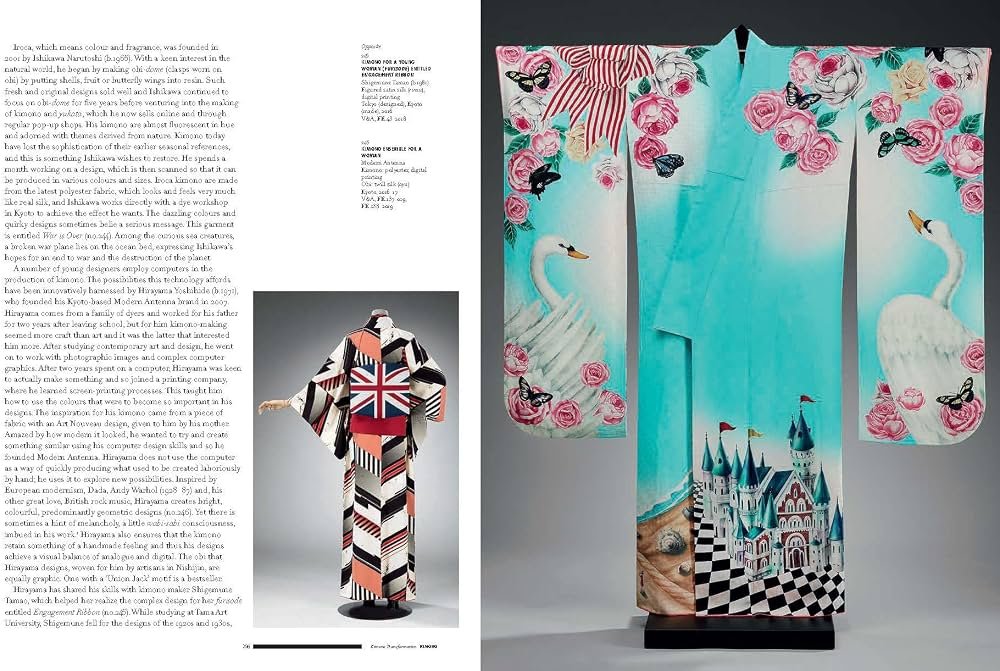
Over two hundred kimono are illustrated, most drawn from the V&A’s own holdings, alongside pieces from collections around the world. And it’s genuinely a beautiful object as a book , but the pictures aren’t the reason I kept it on my desk for a month instead of shelving it.
The part that actually got me
It’s the throughline between two ideas that shouldn’t sit as close together as they do: on one hand, a garment so codified that reading a kimono correctly , its pattern placement, its formality, the specific way it signals age, marital status, occasion , requires a genuinely specialised literacy most of us will never have. On the other hand, that exact same garment being picked apart, reassembled, and reinterpreted by designers like Issey Miyake, referenced by John Galliano, worn by Björk and David Bowie in ways that had almost nothing to do with the original grammar at all.
Jackson doesn’t flatten that tension into a simple “appreciation versus appropriation” argument, which is the easy, exhausting version of this conversation we’re all a little tired of having badly. She’s more interested in the mechanics of how a garment can be simultaneously the most codified thing in a culture’s wardrobe and the most freely reinterpreted , and how those two facts have coexisted, uneasily and productively, for centuries, not just since fashion discovered Japan in the 1990s.
Why I think you should read it, even the parts that feel academic
I won’t pretend every chapter reads like a magazine feature , some of the contributions lean properly scholarly, and there were paragraphs I had to read twice. But that’s sort of the point. This isn’t a coffee-table book performing depth. It’s an actual museum publication that happens to be gorgeous, written by people who’ve spent careers with this garment rather than a season with it.
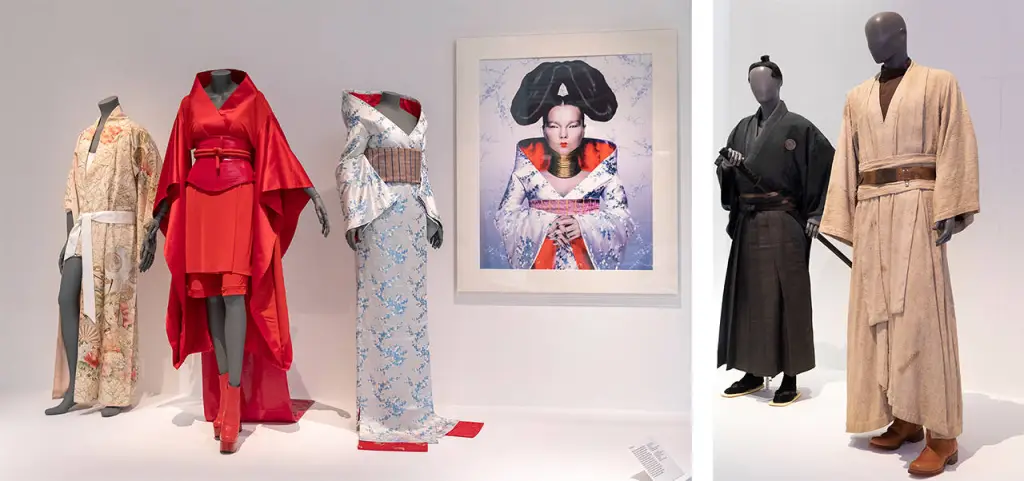
What I took away, in the end, wasn’t a fact I can quote at a dinner party. It was a correction to a habit of mind , the lazy Western instinct to describe non-Western dress as static, sacred, untouchable, while our own fashion gets to be dynamic, living, endlessly remixable. The kimono has been doing exactly what every fashion object does , absorbing meaning, shedding it, getting reinterpreted by the next generation that needs it to say something different , for far longer than most of what we call “fashion” has existed.
I don’t reach for “timeless” the same way anymore. I reach for something closer to what Jackson’s book actually argues: not timeless. Just very, very good at outliving whichever moment tried to define it.
All images featured in this article are credited to owners . They are used for editorial and illustrative purposes only, with no commercial intent. All rights remain with their respective owners.