 111
111 2
2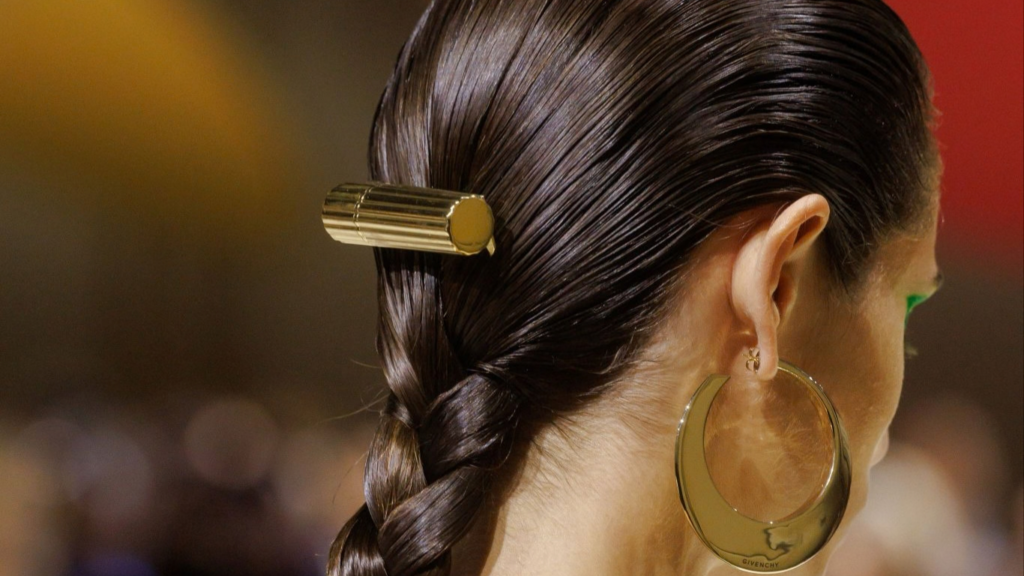 3
3 4
4 5
5 6
6 7
7 8
8
Beige had its moment. Now the industry wants to be seen. But is it really that simple?
There is a sentence that Lena Dunham said in early 2026, during an appearance on the Las Culturistas podcast, that somehow managed to capture everything the fashion industry had been quietly thinking for the past year and a half. Speaking about quiet luxury , those reassuring camel coats, the logo-free cashmere, the aesthetic that had dominated every mood board and every “investment piece” listicle since approximately 2022 , she asked a question nobody had dared to say out loud: “Since when did elegance mean that you are going to wear oatmeal, with bone, with beige, with tan?”
The audience laughed. Fashion people, when they heard it, laughed and then went slightly pale. Because she was right. And they knew it. And several of them had spent the past three years building entire wardrobes around exactly that premise.
This is where fashion finds itself in 2026. Standing in the ruins of its own beige moment, asking what comes next , and whether what comes next is genuinely new or just the industry doing what it always does: selling you the opposite of what it sold you last season.
HOW WE GOT HERE
To understand the current moment, you have to understand what quiet luxury actually was , not the aesthetic, but the feeling it was responding to.
Quiet luxury emerged as fashion’s answer to collective anxiety. The early 2020s were not a time when anyone wanted to be conspicuous. Pandemic uncertainty, economic instability, the general exhaustion of navigating a world that had lost its rhythm , all of it created a cultural appetite for clothing that whispered rather than shouted. The Row built a following so devoted it bordered on religious. Loro Piana sold cashmere to people who had previously not thought carefully about cashmere. Hermès’ Birkin became not just a bag but a financial instrument. The resale premium on a well-chosen quiet luxury piece regularly exceeded its original retail price , which is, when you think about it, the ultimate flex: owning something so understated that it costs more than the things that announce themselves.
The television show Succession accelerated everything. When Siobhan Roy walked onto screen in her perfectly cut, aggressively neutral wardrobe, she was wearing a philosophy as much as a collection. Wealth that needs to announce itself is insecure. Real power doesn’t need a logo. The subtext landed everywhere , in TikTok wardrobes, in editorial direction, in the buying decisions of department stores from London to Seoul. For approximately three years, the most fashionable thing you could do was look like you weren’t trying.
The problem with not trying, of course, is that eventually it starts to feel exactly like that.
THE DATA THAT CHANGED EVERYTHING
By the final quarter of 2025, something was shifting. You could feel it in the collections. You could see it in the search data. And the search data, specifically, told a story that no amount of editorial restraint could contradict.
Pinterest’s 2026 annual trend report registered a 225% surge in searches for “80s luxury” , the power shoulders, the structured glamour, the unapologetic silhouettes of an era that made quiet luxury look like it was afraid of itself. Searches for “Glamoratti” aesthetics , a term that didn’t exist eighteen months ago, used to describe the jewel-drenched, opulently personal dressing of an imagined glamorous aristocracy , spiked across platforms. The word “eccentric” began trending in makeup searches. Searches for beaded necklaces, sculptural earrings and statement brooches rose by more than 100% in the closing months of the year. Searches for “80s-inspired excess” went up alongside searches for lace on everything from bomber jackets to phone cases.
The data and the collections were telling the same story at the same time. After years of minimalism as the default, the industry and the consumer had arrived at the same conclusion simultaneously: enough beige.
WHAT THE RUNWAYS ACTUALLY SHOWED
Paris Fashion Week Spring/Summer 2026 will be remembered for a long time , and not only because fourteen creative directors presented debut collections in a single season, creating the most significant reshaping of the luxury landscape in a generation.
It will be remembered because the collections themselves said something definitive about where fashion was going. And what they said, collectively, was: we are done whispering.
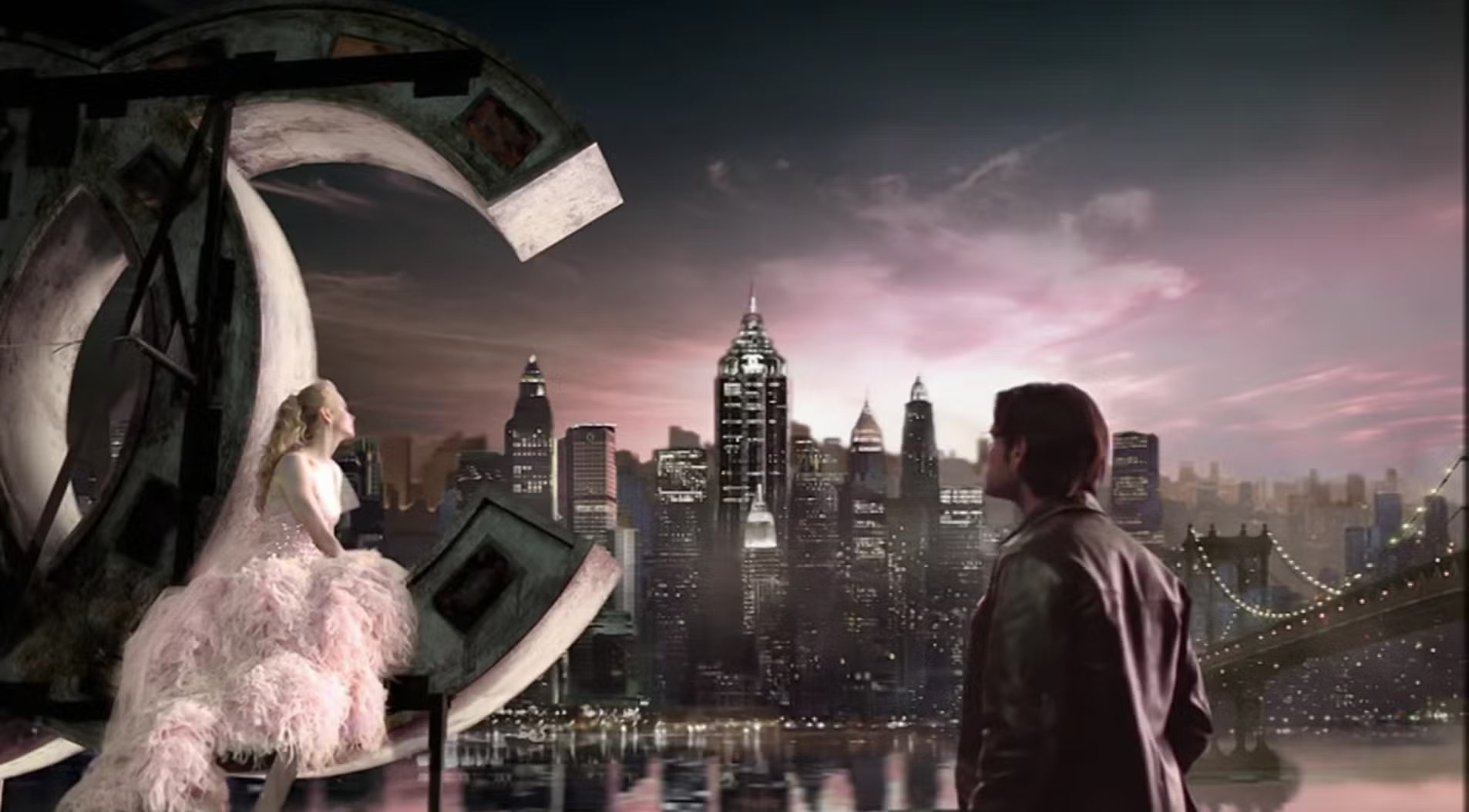
Matthieu Blazy’s debut at Chanel , the most anticipated show of the season , arrived not as a quiet refinement of what came before, but as a full-throated creative statement. He transformed the Grand Palais into a celestial theatre, with enormous glowing planets hovering above a black runway and shooting stars crossing the ceiling. The collection balanced masculine tailoring with baroque pearls, transparent knits with silk linings, crumpled camellias with raw-edged suit jackets. The finale, set to Snap’s “Rhythm is a Dancer,” saw a model twirl joyfully on the runway. “I just wanted to have fun,” Blazy said afterwards. “Something beautiful and enjoyable , that’s what fashion should offer.” It was perhaps the most important sentence said at a fashion show that entire season. A creative director at the helm of the most iconic fashion house in the world saying that joy, not restraint, was the point.
At Louis Vuitton, Nicolas Ghesquière staged his show inside the Louvre’s historic apartments , once home to Anne of Austria, gilded marble and frescoed ceilings everywhere , and opened with pared-back stone-toned looks before building toward maximalism: crystal-encrusted jackets with ruffled hems, beaded gowns, floral lace tops, voluminous shirtdresses. The contrast was deliberate. He was showing you both options and letting the collection make the argument for the louder one.
Pierpaolo Piccioli’s debut at Balenciaga brought romance back to a house that had been operating in a very different register. Schiaparelli’s Daniel Roseberry delivered what observers called one of the most visionary ready-to-wear collections of his career. At Tom Ford, Haider Ackermann paired sharp tailoring with liquid silk and acidic greens and Klein blue. At Dries Van Noten, Julian Klausner leaned into amplified prints with a confidence that was almost aggressive in its commitment to pattern.
What is interesting about all of this is what it was not. It was not logomania. It was not the brash excess of the 2010s, when a designer could put a large logo on a sweatshirt and call it a collection. The new maximalism arriving in 2026 is doing something considerably more sophisticated: it is maximalism filtered through the craft values that quiet luxury brought in. The quality is still there. The construction is still precise. The fabric choices are still serious. What has changed is the permission to use all of that craft in service of drama rather than restraint.
Patricia Maeda, womenswear director at trend forecasting agency Future Snoops, described it with precision: “The fashion landscape is embracing bold self-expression and unapologetic indulgence. In 2026, maximalism takes many forms, from 80s-inspired power glam to styles that demand attention.” What she didn’t say, but what the collections themselves made clear, is that this maximalism has to be earned. It is not about wearing more. It is about wearing with more intention.
THE QUIET 80s: THE MOST INTERESTING IDEA OF THE SEASON
The reference point that keeps appearing ( the 80s ) is worth unpacking, because the 2026 interpretation of it is genuinely new.
The original 80s in fashion were about excess for its own sake. Dynasty shoulder pads. Power dressing as armour. Colour as combat. The political and economic context of that decade produced clothing that was declarative to the point of aggression. It was not subtle, and it was not trying to be.
The 2026 version, which critics and analysts have begun calling the “quiet 80s,” takes the architectural bones of that era , the strong shoulder, the structured blazer, the sense that a silhouette should hold space in a room , and filters them through everything the craft-focused years since have taught the industry. What emerges is power dressing that is confident rather than combative. Wide-leg trousers. Strong blazers. Statement-making suiting. The shoulder is there, but it is shaped rather than padded. The volume is there, but it is controlled rather than excessive. Balenciaga, Sacai, Mugler and Chanel all showed versions of this idea in their Spring/Summer 2026 collections.
It is, perhaps, the most intelligent aesthetic synthesis the industry has produced in years: the emotional expressiveness of maximalism, shaped by the quality consciousness of quiet luxury. You do not have to choose. You just have to know where the line is.
WHO IS ACTUALLY WINNING?
The headline version of this story is easy to write: quiet luxury is dead, maximalism has won, the beige era is over. And in terms of what is generating cultural heat right now , what is being searched, what is being worn on red carpets, what is appearing in editorial , that headline is not wrong.
But spend any time looking at what is actually selling and the picture becomes considerably more interesting.
The Row is not struggling. Hermès is not struggling. The brands that built their identity on craft and restraint have not seen their customers abandon them because maximalism is having a moment. What has happened is something more nuanced: the customers of those brands are beginning to introduce maximalist elements into their quiet luxury foundations rather than replacing one with the other.
A perfectly cut beige trouser , the quietest piece in the wardrobe , worn with an extraordinary vintage jewellery stack. A cashmere coat , the quietest coat imaginable , in a colour that is not neutral at all. The quiet luxury foundation providing the credibility; the maximalist element providing the conversation. This is, as one analyst observed, harder to execute than either pure minimalism or pure excess , because it requires taste rather than commitment to a philosophy.
Gen Z is driving much of the momentum toward the louder end of this spectrum, which makes cultural sense. The generation that grew up watching K-pop idols wear Versace on runways and saw maximalist fashion celebrated in every form of entertainment they consumed has less attachment to the idea that restraint signals sophistication.
For Gen Z, expression is sophistication. Blending in is the failure. The “robot in beige” aesthetic, as one commentator described it, is not aspirational , it is slightly embarrassing.
The sustainability angle, counterintuitively, is also fuelling maximalism rather than restraint. The new maximalism is not the fast fashion excess of a decade ago , it is the heirloom economy. Vintage pieces reworked with modern materials. Exposed seams and raw edges signalling craftsmanship in an age of algorithmic production. Garments chosen for their permanence rather than their seasonality. You can be loud and sustainable simultaneously, if what you are wearing was made to last and means something to the person wearing it.
THE HOUSES IN BETWEEN
The most interesting position in this debate belongs to the houses that have refused to choose sides entirely , and there are more of them than the trend narrative suggests.
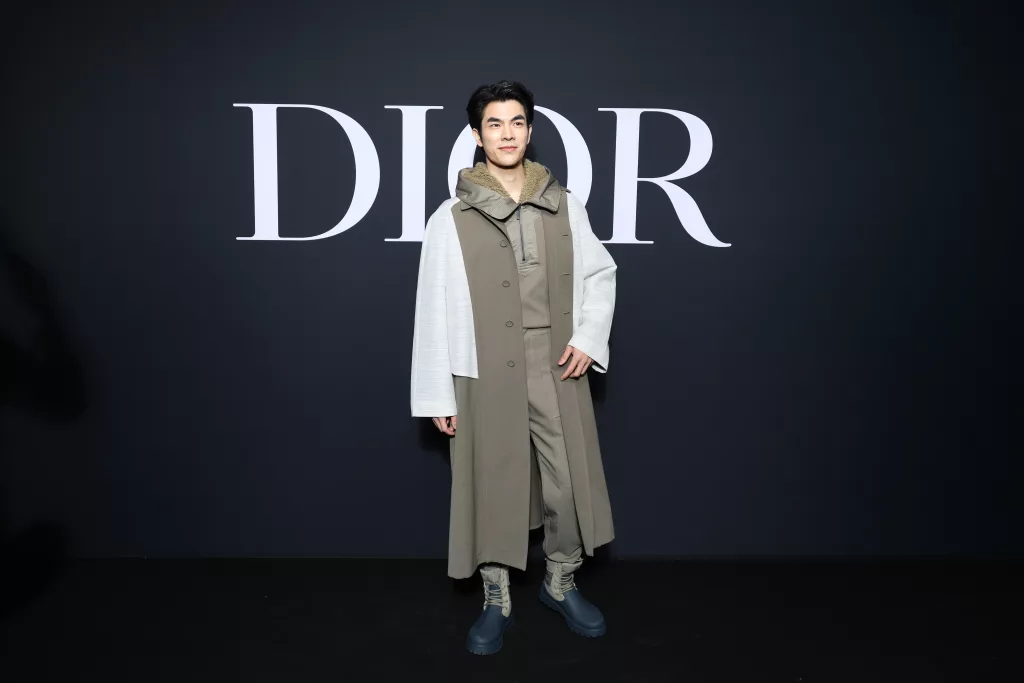
Celine under Michael Rider has continued its evolution without fully committing to either extreme: navy blazers and foulard-lined trenches that have a Philo-era quality of refined intelligence, with occasional bursts of something more expressive underneath. Jonathan Anderson’s debut at Dior started with a jolt and built toward something archival and deconstructed , neither quiet nor maximalist in any conventional sense, but with the designer’s own obsessive intelligence replacing both.
These are the collections that will probably age best. The ones that are not making an argument for a trend but are making an argument for a point of view.
WHAT COMES NEXT
The most honest answer to the question of who is winning in 2026 is: nobody yet. The pendulum is clearly moving in one direction , toward expression, toward colour, toward drama, toward the understanding that showing up in a room is not something to be embarrassed about. The data confirms it. The collections confirmed it. The cultural mood confirms it.
But fashion history is pretty consistent on one thing: the pendulum always swings back. The maximalism of the 80s produced the minimalism of the 90s. The logomania of the 2010s produced the quiet luxury of the early 2020s. Whatever is emerging now will produce its own reaction in due course.
What is different this time , what makes 2026 genuinely interesting rather than just another aesthetic cycle , is that the reaction is not a rejection but a synthesis. The best dressers right now are not choosing between quiet luxury and maximalism. They are using the craft intelligence that quiet luxury brought to the industry as the foundation for a more personal, more expressive, more genuinely individual way of dressing.
That is not a trend. That is taste. And taste, as it turns out, is the one thing that never goes out of style.
All images featured in this article are credited to owners . They are used for editorial and illustrative purposes only, with no commercial intent. All rights remain with their respective owners.