 111
111 2
2 3
3 4
4 5
5 6
6 7
7 8
8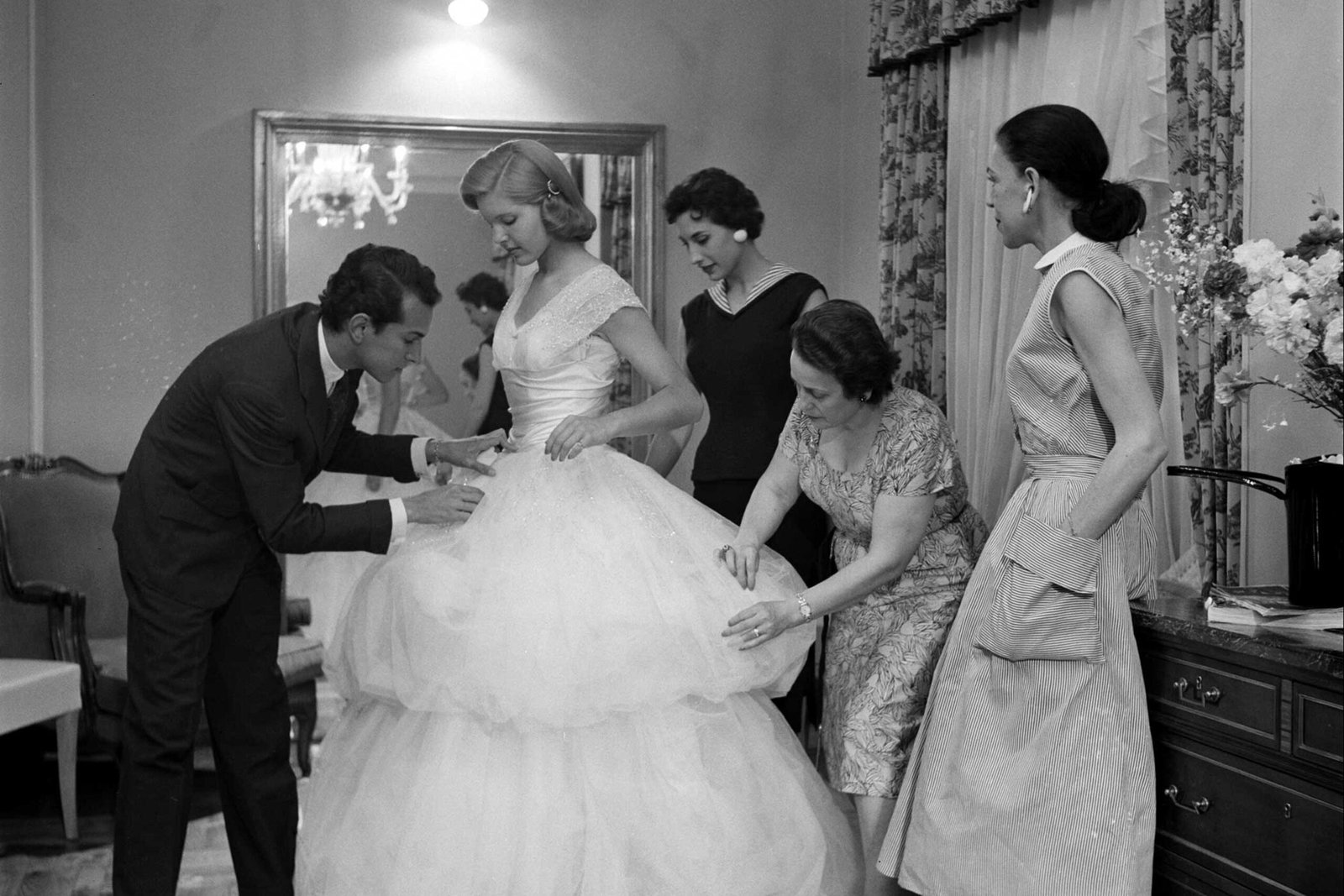
In the vast tapestry of 20th and 21st-century fashion, few names evoke the unadulterated splendor of classical femininity quite like Oscar de la Renta. Across a career spanning more than five decades, the Dominican-born designer did not merely make clothes; he defined the sartorial vocabulary of power, romance, and transatlantic elegance.
At a time when global fashion often gravitated toward radical shock value or minimalist austerity, de la Renta remained unapologetically devoted to beauty. He bridged the meticulous craftsmanship of Parisian haute couture with the pragmatic vitality of American ready-to-wear, establishing a fashion empire that dressed political dynasties, Hollywood royalty, and generations of women who sought to feel extraordinary.
Born in Santo Domingo in 1932 to a prominent Dominican family, Óscar Renta Fiallo developed an early sensibility for vibrant color and tropical light, elements that would forever permeate his design DNA. At age 18, he traveled to Spain to study painting at the prestigious San Fernando Royal Academy of Fine Arts in Madrid. However, his life shifted trajectory when his fashion illustrations caught the attention of Cristóbal Balenciaga.
Apprenticing under Balenciaga, the “Master of Masters”, de la Renta absorbed foundational lessons in structural volume, architectural draping, and absolute respect for fabric. Balenciaga’s influence taught him how to manipulate heavy silks, gazar, and organza to sculpt the female body without constraining it.
Seeking to master the delicate art of embellishment, de la Renta moved to Paris in 1961 to join the house of Lanvin-Castillo as a couture assistant under Antonio del Castillo. There, in the heart of French haute couture, he honed his expertise in intricate beadwork, delicate embroidery, and fluid evening tailoring, completing an elite European education that very few American designers of his generation possessed.
Arriving in New York City in 1963, de la Renta sought advice from legendary Vogue editor-in-chief Diana Vreeland. Contemplating an offer from Christian Dior, Vreeland offered him a pivotal piece of career guidance that changed American fashion history:
> “Go to Elizabeth Arden because she is not a designer, and she will promote your name. At Dior, you will be eclipsed by the shadow of a French giant. At Arden, you will learn the business and build your own identity.”
Following Vreeland’s advice, de la Renta designed for Arden before partnering with designer Jane Derby. Upon Derby’s passing in 1965, he took full ownership of the label, launching Oscar de la Renta.
His early collections were a breath of fresh air: rich paisley prints, ruffled bohemian skirts, vibrant polka dots, and luxurious silk pajama separates. He took the effortless ease demanded by the modern American woman and infused it with European couture technique and the sunny, opulent color palettes of his Caribbean roots.
In 1993, Oscar de la Renta achieved a monumental milestone that reshaped the global fashion hierarchy: he was appointed Creative Director of the historic French couture house Pierre Balmain. He became the first American designer in history to head a Parisian Haute Couture maison.
Taking over Balmain during a period when classic couture houses were struggling to find modern relevance, de la Renta delivered a decade-long “Golden Era.” Rather than dismantling the house’s heritage, he honored Pierre Balmain’s founding ethos of “Jolie Madame” (pretty woman) while injecting American vitality:
While haute couture established his critical acclaim, de la Renta’s vision for full lifestyle brand extension transformed his business into a global empire. He understood early on that luxury should extend into everyday ritual and sensory experience.


Oscar de la Renta’s impact extended far beyond the runway; he was the undisputed master of American fashion diplomacy. Over five decades, he became the trusted couturier for generations of U.S. First Ladies, seamlessly navigating bipartisan lines with grace and dignity:
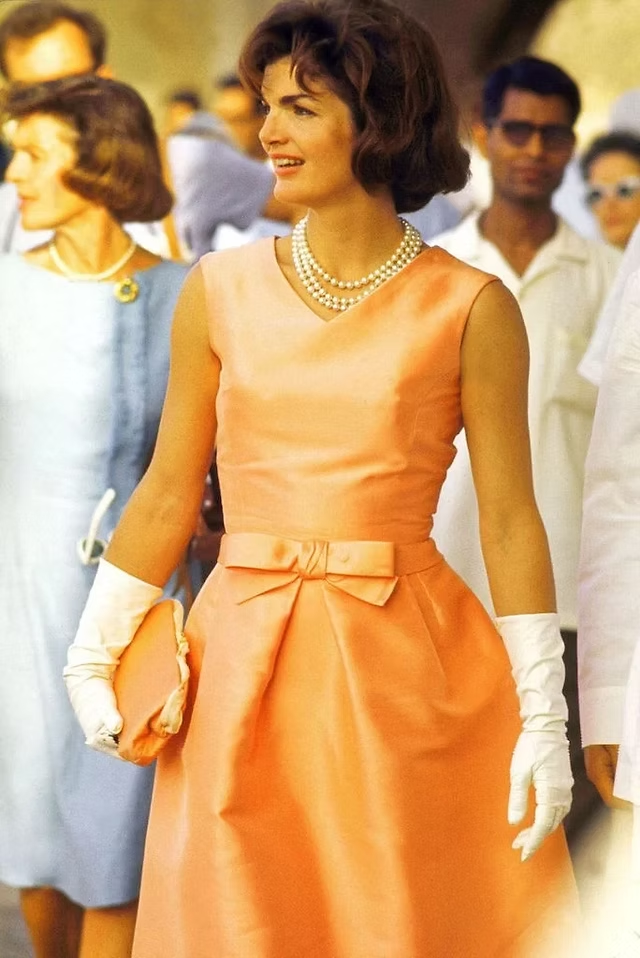
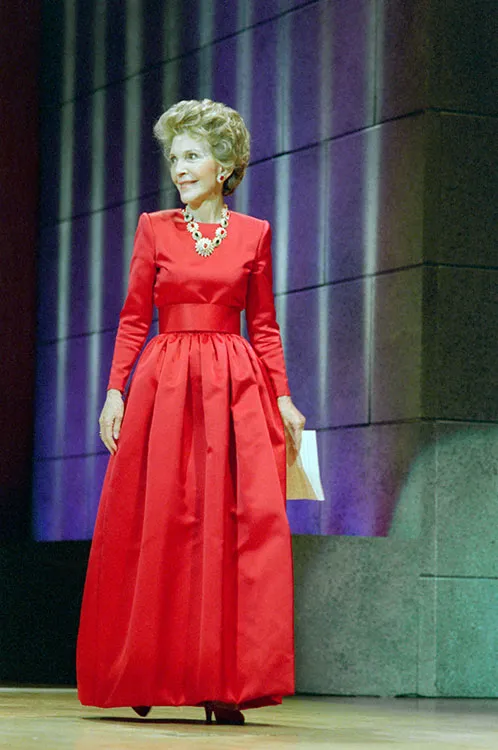
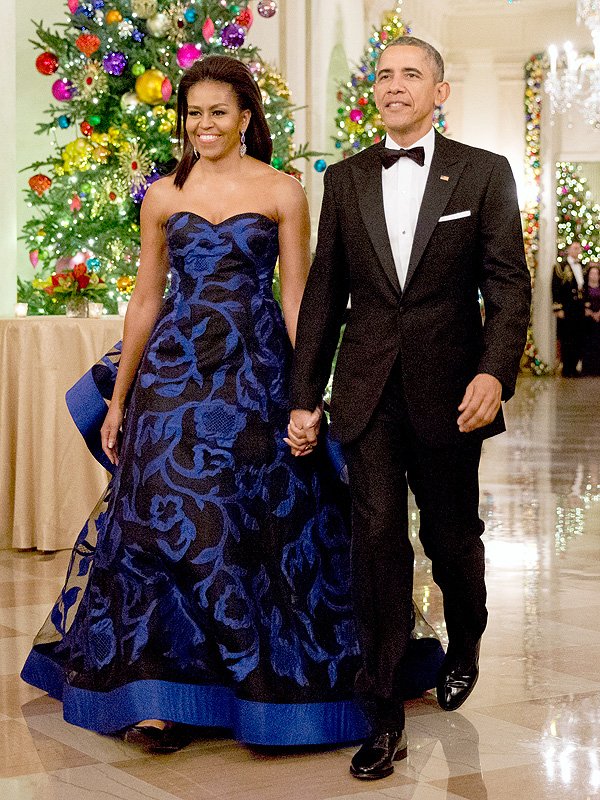
De la Renta famously viewed fashion as nonpolitical: “My job is to make a woman look and feel her absolute best, regardless of her political platform.”
From the Met Gala steps to the Academy Awards, Oscar de la Renta was the definitive red-carpet architect. His designs were engineered for unforgettable visual impact, utilizing dramatic ball gown skirts, hand-dyed silk faille, and meticulous inner boning that gave garments majestic structure without sacrificing movement.
Among his most iconic red-carpet creations:
Following Oscar de la Renta’s passing in October 2014 at the age of 82, the fashion world mourned the loss of one of its most gentlemanly figures. However, the house was built for longevity.
In 2016, the brand appointed Laura Kim and Fernando Garcia, both of whom spent years training directly alongside Oscar, as Co-Creative Directors. Under their leadership, the brand has preserved its founder’s commitment to ultra-feminine romance, exquisite floral embroideries, and red-carpet grandeur, while modernizing silhouettes for a younger, global audience.
Oscar de la Renta’s legacy remains crystal clear: true luxury is timeless, elegance is an attitude, and beauty will always have a place at the very top of fashion.
All images featured in this article are credited to owners . They are used for editorial and illustrative purposes only, with no commercial intent. All rights remain with their respective owners.