 111
111 2
2 3
3 4
4 5
5 6
6 7
7 8
8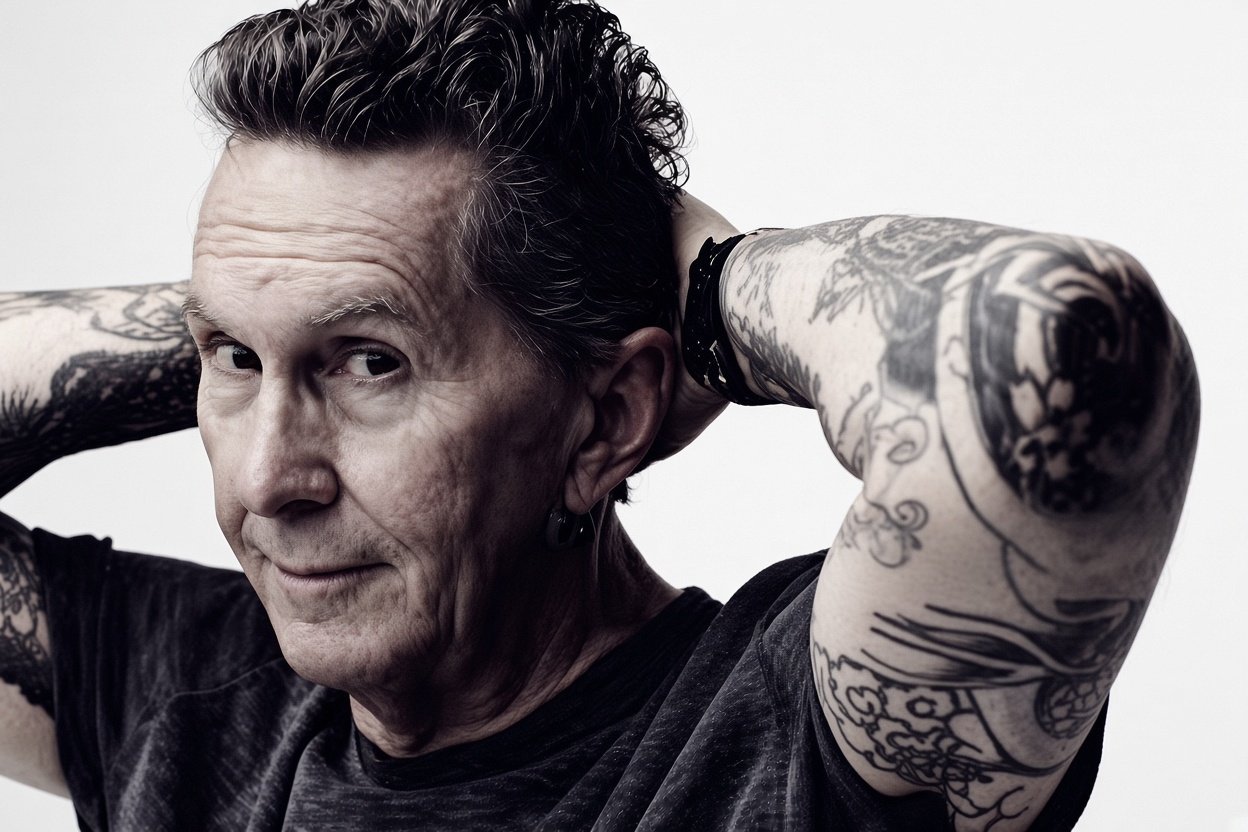
From Yale fellowships to Y2K maximalism, how the godfather of custom tattooing bridged the gap between fine art academia, Gifu’s underground, and the modern streetwear renaissance.
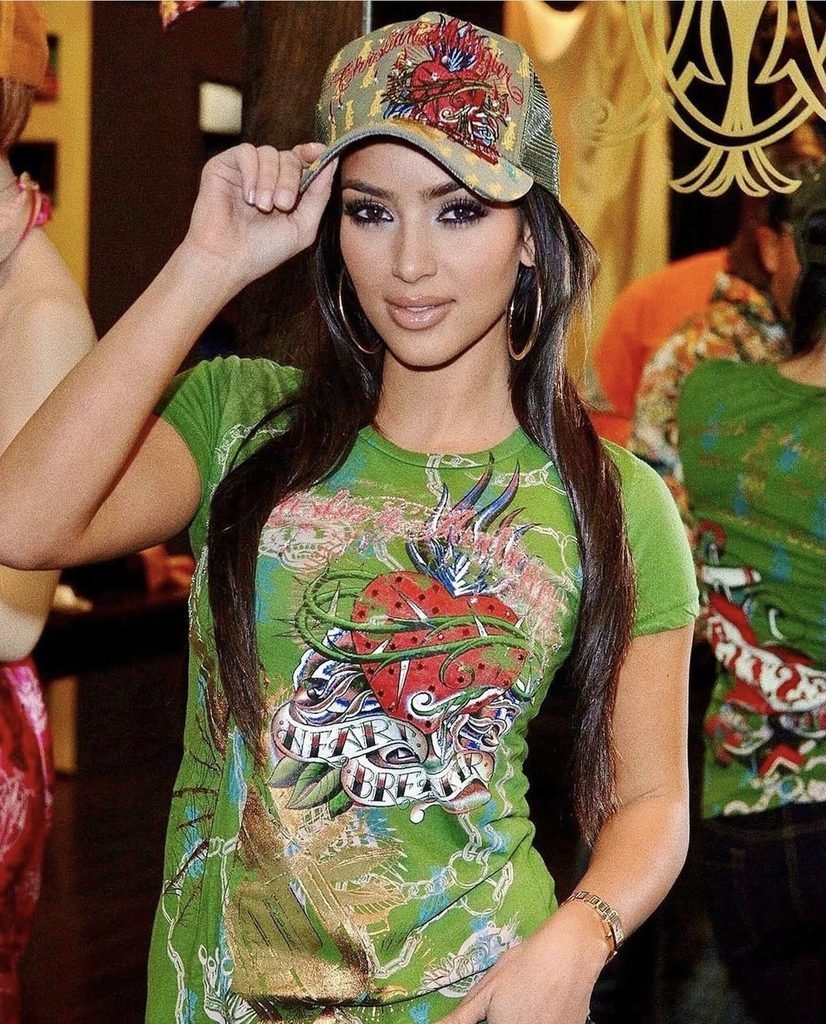
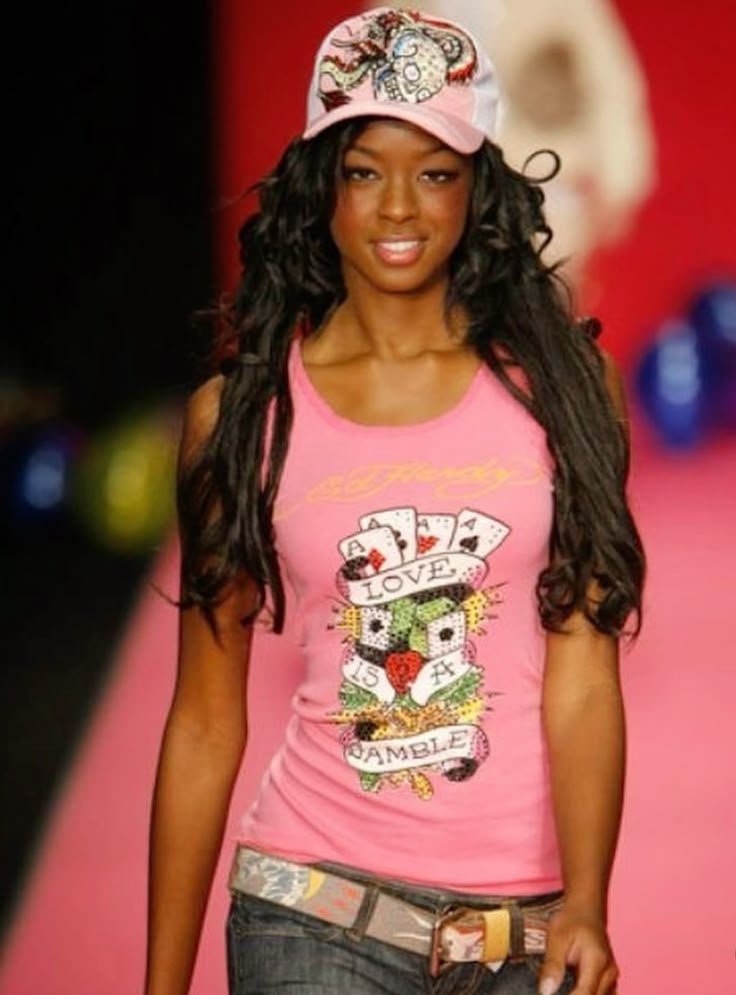
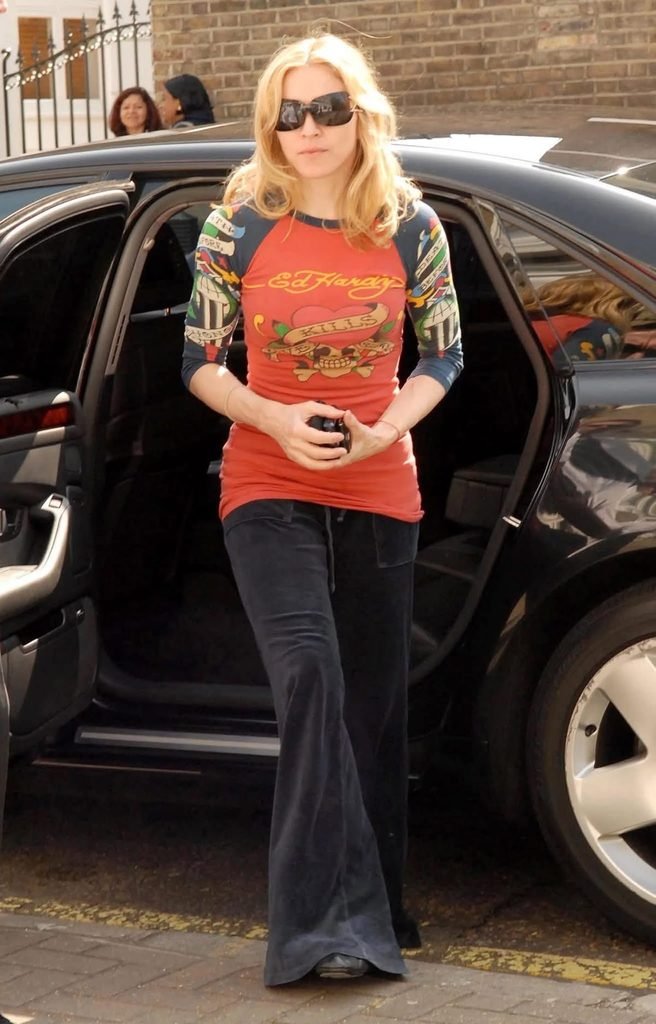
In the pantheon of contemporary design, few names evoke as visceral or polarized a reaction as Ed Hardy. To the millennial generation, the moniker immediately conjures a nostalgic, rhinestone-encrusted fever dream of mid-2000s maximalism: trucker hats, graphic tees, and bold, skull-and-rose motifs that defined a highly commercial era of celebrity street style. Yet, beneath the veneer of Y2K pop culture saturation lies one of the most intellectually rigorous, avant-garde artistic journeys of the 20th century.
Long before his signature became a multi-million dollar fashion trademark, Don Ed Hardy was a renegade printmaker who engineered a cultural revolution, single-handedly transforming tattooing from a stigmatized, maritime folk craft into a globally recognized form of high art.
Born in 1945 and raised in the idyllic, beachside enclave of Corona del Mar, California, Hardy’s fascination with the graphic allure of ink began in his childhood. Obsessed with pirate lore, clipper ships, and the tattoos of military servicemen returning from World War II, a ten-year-old Hardy set up a mock “tattoo parlor” in his mother’s photo-coloring den. Using wet colored pencils and his mother’s Maybelline eyeliner, he drew intricate designs on neighborhood kids, charging them pennies while enforcing a strict “parents’ permission only” rule.
But Hardy’s path was not that of a typical street artist. Blessed with encouraging mentors—including a high school art teacher who bypassed the era’s popular “surf art” to introduce him to the genius of Pablo Picasso—Hardy pursued formal training at the prestigious San Francisco Art Institute (SFAI). There, he excelled in printmaking and etching under the tutelage of West Coast art titans Joan Brown, Manuel Neri, and Gordon Cook.
By 1967, Hardy had earned his Bachelor of Fine Arts and was offered a full scholarship and graduate fellowship for the Master of Fine Arts program at Yale University. Then, he chose to do the unthinkable: he walked away from the Ivy League.
Hardy’s trajectory changed in a flash of artistic epiphany. After getting inked in Oakland by Samuel Steward—a former university professor turned tattooist who ran under the needle name Phil Sparrow—Hardy was shown a book of traditional Japanese tattoos (Irezumi). It was a visual thunderbolt.
“In that moment, I knew I’m not going to go to Yale if tattoos can look like this,” Hardy recalled. “I’m going to do tattoos because I knew I could achieve this.”
To understand Hardy’s genius is to understand his synthesis of Eastern and Western visual vocabularies. Encouraged by his mentor, the legendary old-school tattooist Norman “Sailor Jerry” Collins, Hardy established a deep connection with the traditional tattoo master Kazuo Oguri, known as Horihide.
In 1973, Hardy traveled to Gifu, Japan, becoming the first non-Asian artist ever invited to study within the highly secretive and traditionally closed world of classical Japanese Irezumi. Immersed in Japan’s ukiyo-e woodblock print heritage—and tattooing a clientele that largely consisted of underground Yakuza members—Hardy mastered the color philosophies, water-shading techniques, and massive, narrative body compositions that would forever reshape Western tattooing.
Upon returning to the United States, Hardy and his wife, Francesca Passalacqua, risked everything on a bold experiment. In 1974, they opened Realistic Tattoo in San Francisco. It was a private, appointment-only studio that operated under a revolutionary, poetic slogan: “Wear Your Dreams.”
Prior to Hardy, entering a tattoo shop was akin to looking at a “Denny’s menu” of pre-drawn wall designs, known as flash. Hardy blew this model apart. He became the first practitioner to treat the human body as a bespoke canvas, inviting clients to bring in their unique personal dreams, fears, and tastes to collaborate on custom masterpieces.
Through his scholarly publications under Hardy Marks Publications (founded in 1982) and his iconic, monumental fine-art projects—such as the breathtaking “2000 Dragons”, a 500-foot-long acrylic scroll painted on Tyvek to mark the turn of the millennium—Hardy successfully bridged the gap between raw street culture and the elite art world.
How, then, did this master of underground, Zen-infused printmaking become a household name printed on graphic hoodies, energy drinks, and designer perfumes?
The transition from subculture icon to fashion empire began in the early 2000s, when Hardy licensed his archival artwork to Ku USA. However, the seismic shift occurred in 2005, when French designer Christian Audigier (of Von Dutch fame) licensed the global rights to the Ed Hardy brand.
Audigier deployed an aggressive “celebrity seeding” marketing strategy, plastering Hardy’s vintage American traditional flash—panthers, snarling tigers, bleeding hearts, and daggers, onto high-end streetwear. The aesthetic was loud, defiant, and perfectly tailored to the ostentatious, paparazzi-fueled energy of the mid-2000s. Under Audigier’s direction, the brand peaked at an astronomical $700 million in gross revenue in 2009, with flagship stores spanning from San Francisco and New York to Dubai, Bangkok, and Mumbai.
Yet, the dizzying ascent was met with a swift, dramatic over-saturation. Hardy himself grew deeply dissatisfied with Audigier’s creative and commercial directions—objecting to how Audigier prominently printed his own name on branded garments (sometimes up to 14 times, compared to Hardy’s once), and how the brand became synonymous with short-lived reality TV stars. Following a series of high-stakes legal battles, Hardy regained control of his brand in 2010, eventually selling an 85% majority stake to Iconix Brand Group while retaining a 15% minority share.
Like all great subversive movements, the Ed Hardy aesthetic has undergone a brilliant contemporary re-evaluation. Today’s fashion landscape, fueled by a relentless obsession with early-2000s nostalgia (Y2K) and authentic archive wear, has welcomed the brand back with open arms.
A successful European relaunch in 2018 sparked highly sought-after collaborations with cult brands like Illustrated People—sold through luxury fashion sanctuaries like Selfridges, ASOS, and Topshop. This was soon followed by a brilliant, bedazzled global capsule collection with Rose In Good Faith in 2019 and a historic, star-studded Los Angeles runway fashion show in 2024, proving that Hardy’s bold, uncompromising lines are as culturally potent as ever.
This contemporary style renaissance has run parallel to Hardy’s ultimate institutional vindication. In 2019, the de Young Museum in San Francisco hosted “Ed Hardy: Deeper Than Skin”, a landmark, career-spanning retrospective that placed his childhood drawings from the 1950s and his classical printmaking editions side-by-side with historical etchings by Rembrandt van Rijn and Albrecht Dürer.
Standing in front of his works on museum walls, Hardy captured the beautiful irony of his journey.
“It’s a terrific affirmation, not only for myself, but for a lot of the old bandits and pirates that helped me in the business,” he mused. “They operated outside polite society, outside of the structure that controls what people think of as art.”
As the worlds of high-fashion and street subversion continue to bleed into one another, Don Ed Hardy remains the ultimate blueprint: an artist who refused the ivory tower of Yale to carve his own dreams onto the living canvas of humanity.