 111
111 2
2 3
3 4
4 5
5 6
6 7
7 8
8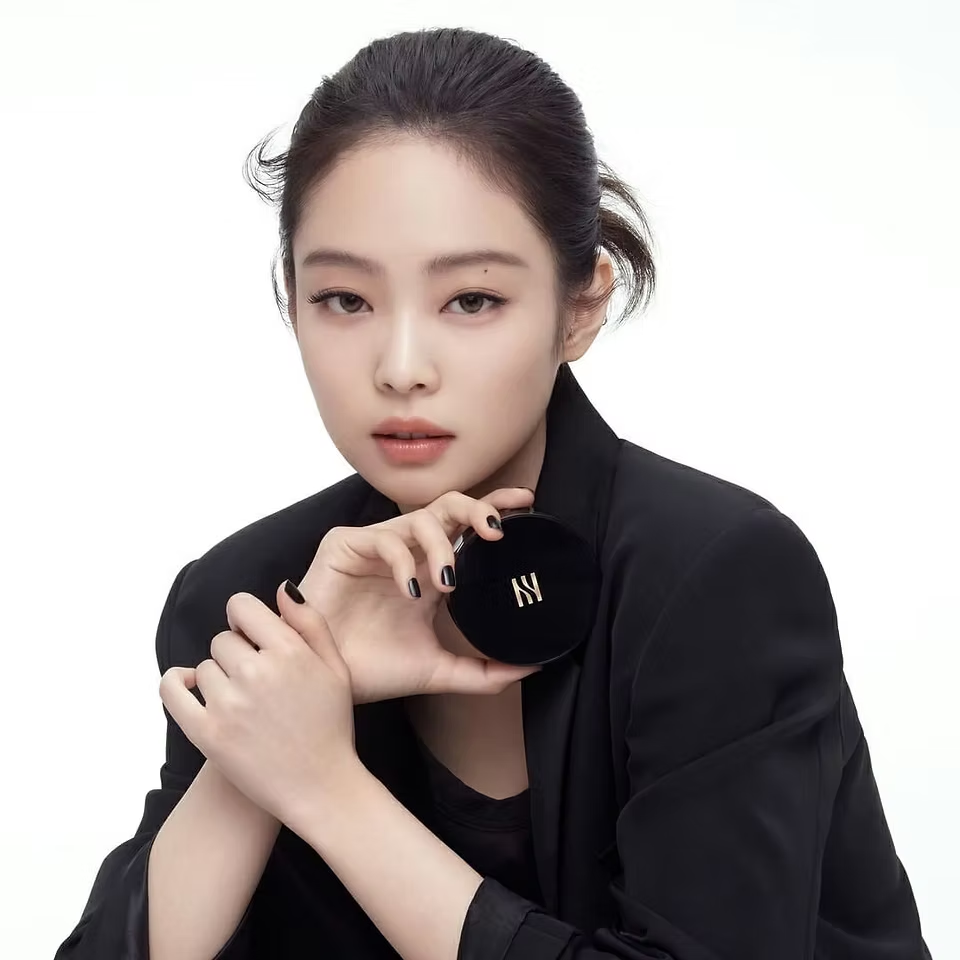
Long before “glass skin” became a TikTok obsession and before luxury beauty brands rushed to imitate Korean complexion products, South Korea had already transformed the global makeup industry with one invention:
The cushion foundation.
Portable, luminous, skincare-focused and engineered for speed, the cushion compact became one of the most important beauty innovations of the 21st century , not simply because of packaging, but because it fundamentally changed the philosophy of makeup itself.
And unlike many Western beauty trends that prioritize transformation, the cushion was designed around something specifically Korean:
skin that still looked like skin.
The first modern cushion foundation was officially launched in 2008 by Amorepacific through its brand IOPE under the name:
IOPE Air Cushion
The product is widely credited as the first true cushion compact and is considered one of the biggest innovations in Korean beauty history.
The invention reportedly came after Amorepacific researchers experimented with:
The inspiration itself became almost legendary inside the beauty industry:
parking-lot stamp ink pads.
Researchers realized that a sponge saturated with product could dispense liquid evenly while remaining portable and hygienic.
At the time, Korean consumers wanted:
Traditional liquid foundation felt too heavy and time-consuming.
The cushion solved all of it simultaneously.
The rise of cushions is inseparable from Korean beauty culture itself.
Unlike Western beauty trends of the 2000s which prioritized:
Korean beauty ideals focused on:
The Korean beauty industry often describes this ideal as:
The objective was never to completely hide texture.
Instead: makeup should enhance skin quality while appearing almost invisible.
Cushions were perfectly engineered for this philosophy.
Technically, a cushion foundation is:
liquid foundation stored inside a sponge or mesh system within a compact case.
The user presses an applicator puff onto the sponge to release product.
This changed makeup application dramatically because:
The puff itself also became a defining feature.
Unlike brushes or beauty blenders, cushion puffs were designed to:
The “patting” technique became one of the signatures of K-beauty makeup application.
As the market evolved, cushions became increasingly specialized.
The original format.
Product sits inside a saturated sponge reservoir.
The sponge absorbs product over time, leading many users to feel product is wasted.
Popular among:
Many users on Reddit and Asian Beauty forums note that mesh cushions last longer than traditional sponge cushions.
Built specifically for:
Usually contain:
Brands like:
became famous for glow cushions.
These exploded during the COVID-19 pandemic.
Masks created demand for:
Amorepacific specifically identified the rise of matte cushions between 2020–2022.
Products like:
became bestsellers.
These blurred the line between makeup and skincare.
Common ingredients include:
Many Korean chemists describe cushions as:
skincare formulas with color.
This skincare-first philosophy became one of the defining characteristics of K-beauty.
If one cushion transformed the category into luxury, it was:
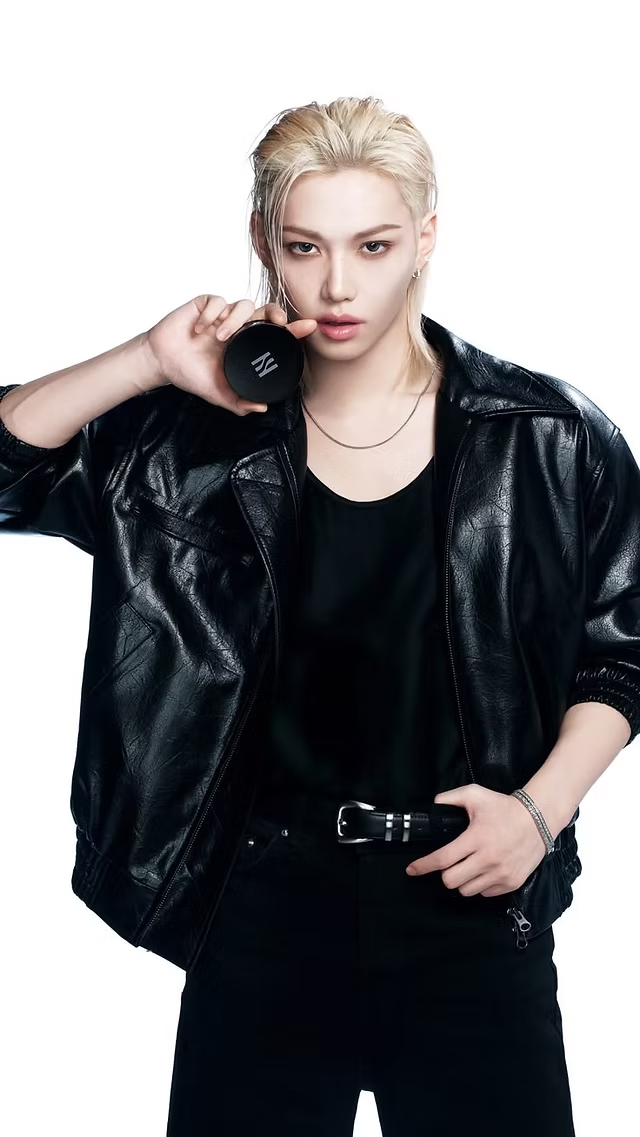
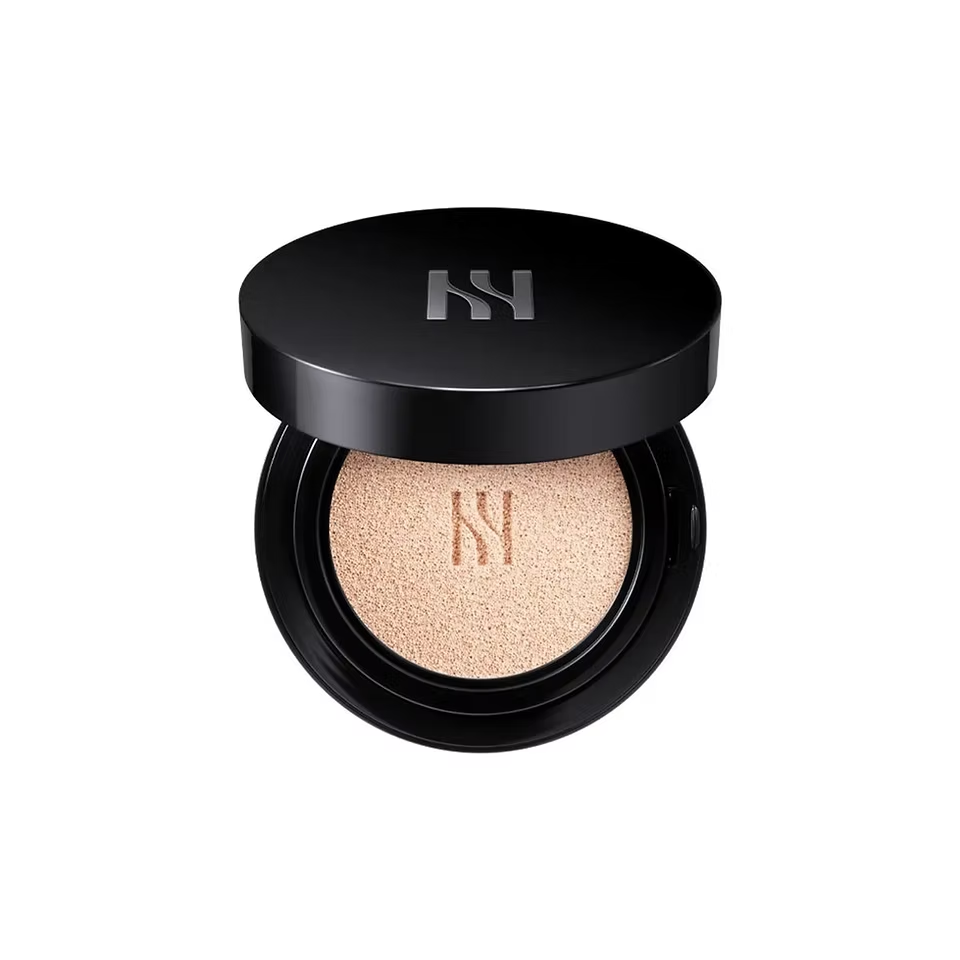
Originally launched in 2017, the product changed perceptions of cushion makeup entirely.
Before Hera Black Cushion, many consumers viewed cushions as:
Hera introduced:
The product later became globally associated with Jennie, helping establish the image of the “luxury Korean cushion.”
By 2024:
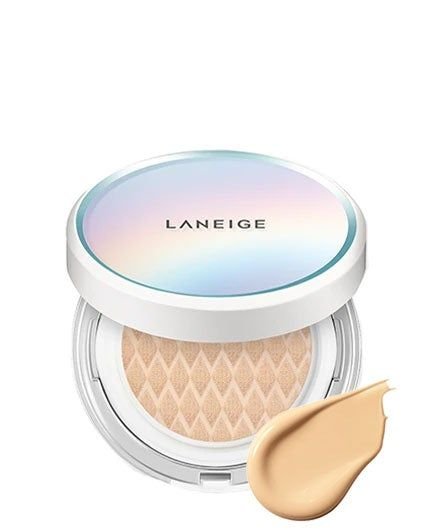
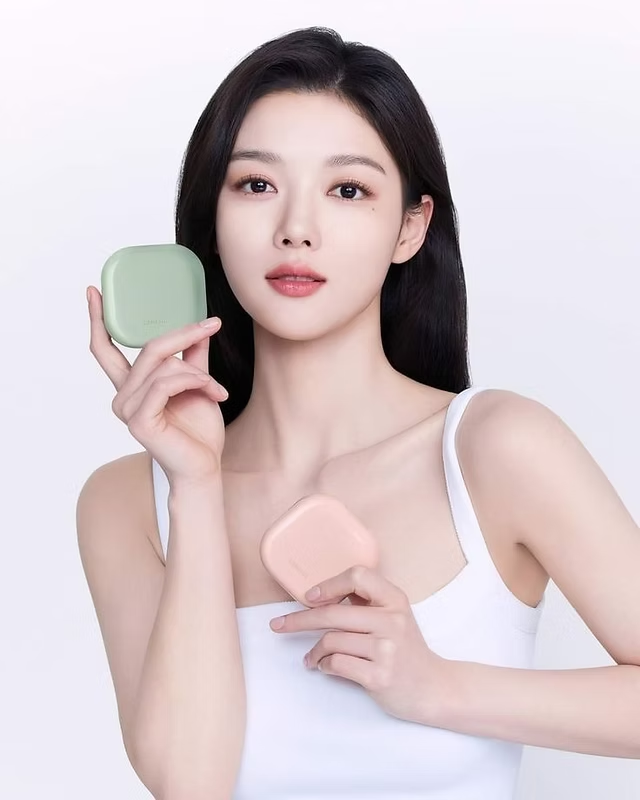
During the pandemic, another cushion exploded globally:
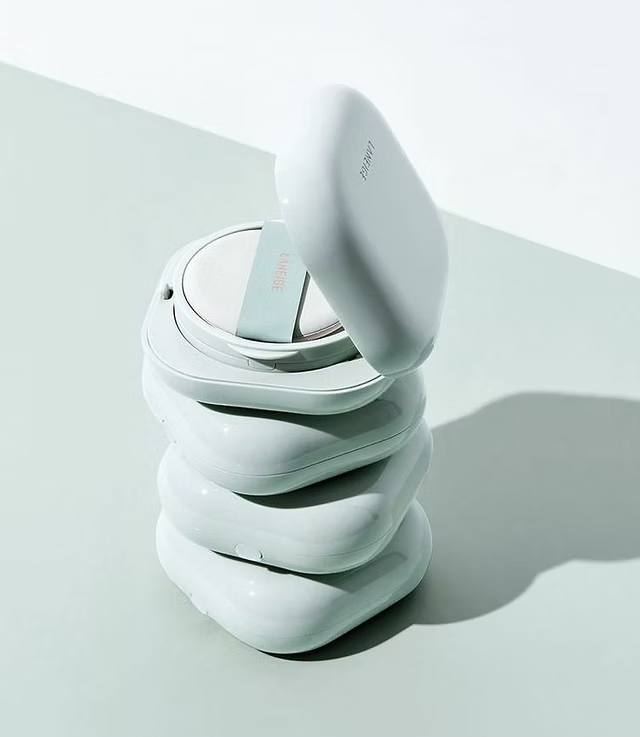
Released in 2020, it became instantly recognizable for:
Its “Humid Defense™” technology was specifically marketed for durability under masks and humidity.
The design itself became culturally influential.
Suddenly: cushions were no longer just beauty products, they became collectible fashion objects.
Several factors explain the worldwide success.
Cushions fit modern urban life:
Western foundations during the 2010s often emphasized:
Cushions introduced:
This influenced global makeup trends massively.
Korean beauty has long emphasized daily SPF.
Most cushions include:
allowing consumers to reapply coverage and sun protection simultaneously.
K-pop idols accelerated global cushion popularity enormously.
Idols became associated with:
Brands strategically used ambassadors including:
The cushion compact itself became visually tied to Korean celebrity beauty standards.
One of the biggest criticisms of cushions historically involved shade inclusivity.
Early K-beauty cushions often launched with:
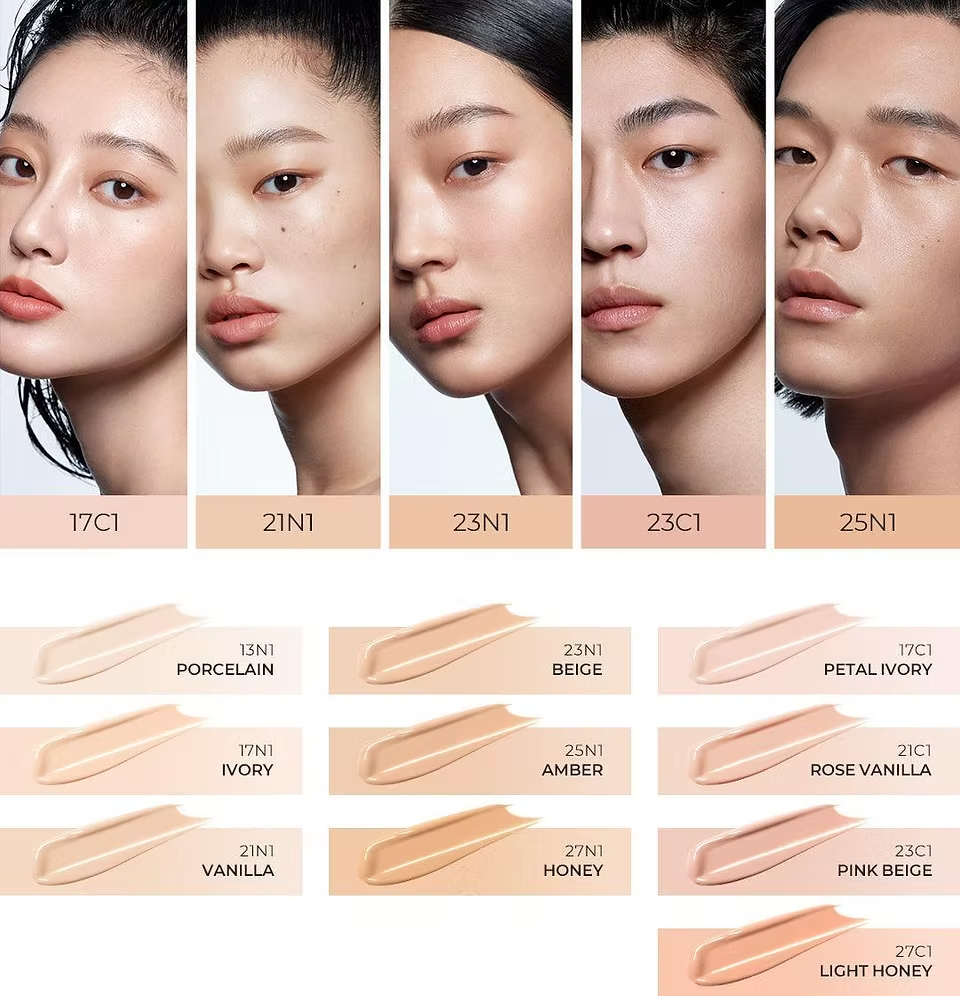
This created backlash internationally.
Over time, brands began expanding.
Innisfree notably launched 14 cushion shades for international markets, considered groundbreaking for K-beauty at the time.
Meanwhile, brands like Dr. GIO Cosmetics specifically emerged to address darker skin tones within cushion makeup.
Another major aspect of cushion culture is refillability.
Many Korean brands sell:
This created:
However, compatibility between brands remains inconsistent, something users frequently discuss online.
Today, nearly every major beauty company has attempted its own version. But the DNA remains unmistakably Korean.
The cushion was never just about convenience, It was about redefining beauty itself.
All images featured in this article are credited to owners . They are used for editorial and illustrative purposes only, with no commercial intent. All rights remain with their respective owners.