 111
111 2
2 3
3 4
4 5
5 6
6 7
7 8
8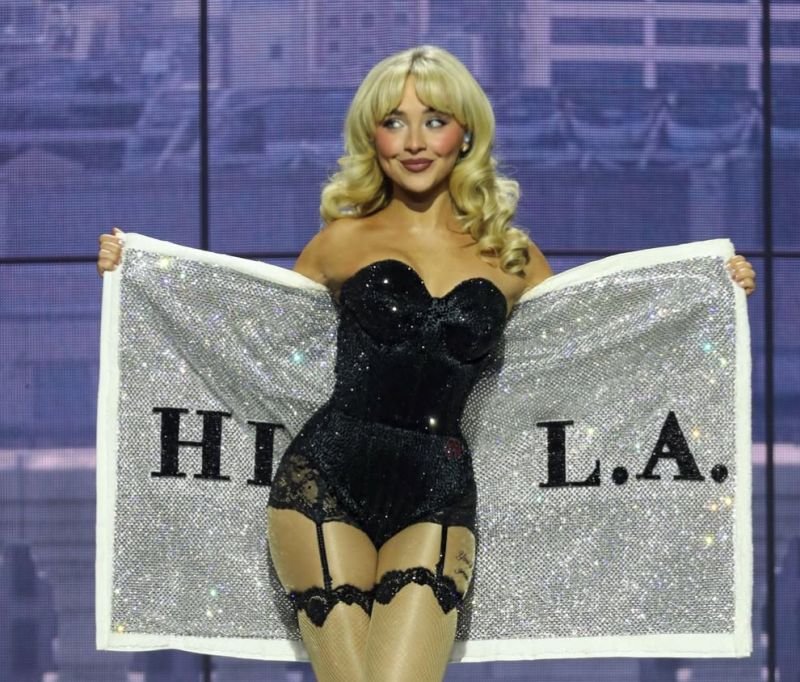
Put them side by side for a second , Sabrina Carpenter in a hand-bedazzled Victoria’s Secret bodysuit, Doja Cat wrapped in latex and animal print somewhere between a red carpet and a horror set — and the internet does the thing it always does: is this fashion, or is it just skin?
Wrong question, honestly. The one worth asking is what the costume is actually doing inside the story being told. Because Carpenter and Doja Cat are running two of the most fully-built visual worlds in pop right now, and they are not doing the same thing at all, even in the moments where the necklines land in exactly the same place.
CARPENTER’S PIN-UP UNIVERSE IS A JOKE YOU’RE MEANT TO BE IN ON
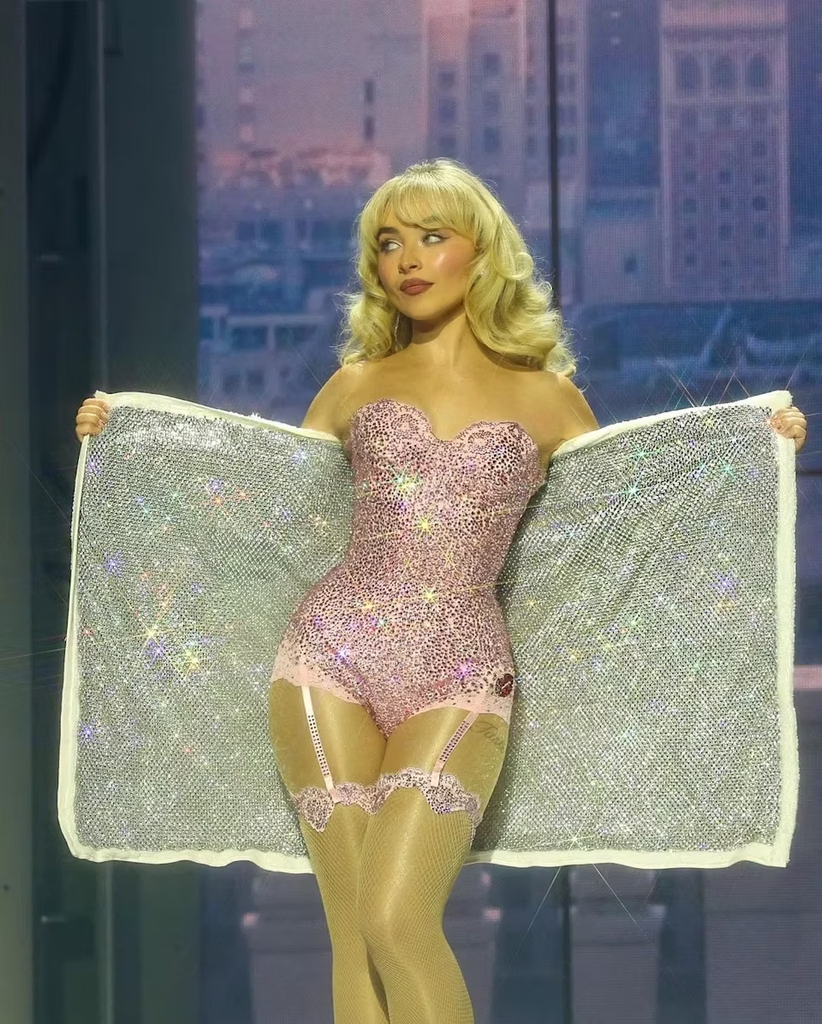
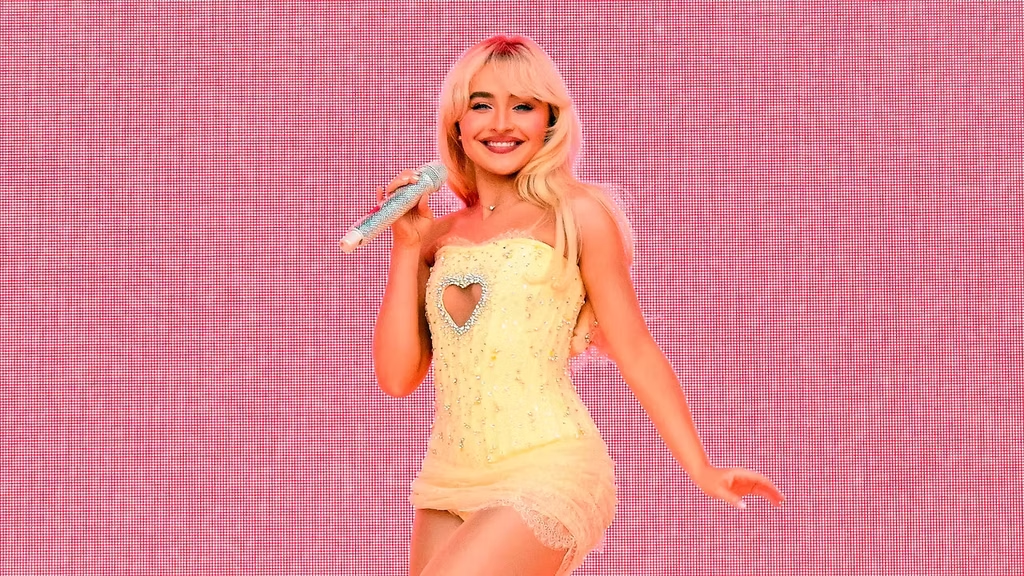
Jared Ellner — the stylist who’s also dressed Emma Chamberlain and Camila Cabello — has been building Sabrina Carpenter’s look since 2023, and he’s not being vague about where it comes from. Bardot. Marilyn Monroe in There’s No Business Like Show Business. Audrey Hepburn in Funny Face. The babydoll dresses from Grease. This is a specific, deliberately old-Hollywood pin-up world, and it’s being executed at a level that has nothing to do with “sexy pop star” as a default setting — a custom Victoria’s Secret bodysuit hand-finished with 150,000 crystals over 140 hours, a black lace Patou catsuit with matching opera gloves, custom pieces from the LA label Frolov and rising designer Emily Essen.
And the whole thing opens with a bit, not a statement. Carpenter walks out wrapped in a bath towel, playing confused, as if she’s just discovered there’s a concert happening — then drops it to reveal the full sparkling look underneath. It’s slapstick before it’s glamour. That ordering matters. She’s told Time flat out that she sees the corsets and garter belts as an embrace of femininity on her own terms, not a performance for anyone else’s benefit. You can take that framing or leave it — but the intent, consistently, is nostalgia delivered with a wink, not a dare.
DOJA CAT TREATS HER BODY LIKE A SPECIAL EFFECT
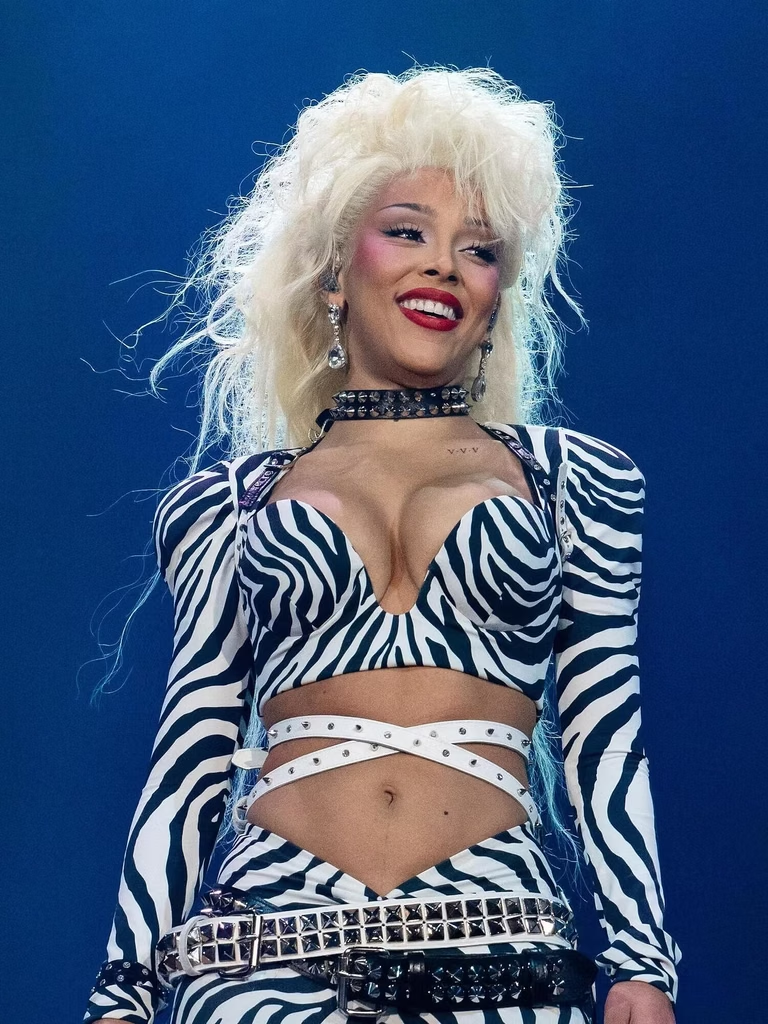
Brett Alan Nelson has styled Doja Cat since 2019, and he sums up the whole project in three words: “Original. Authentic. Weird.” That’s a different job entirely from Ellner’s — less about curating one referential aesthetic, more about building something that barely existed before it hit the stage. Jean Paul Gaultier opened his own archive for her, unearthing jellyfish dresses and Renaissance-inflected gowns that had never been photographed. Schiaparelli’s Daniel Roseberry has dressed her in some of his most overtly surrealist pieces, the kind of thing that reads more like a walking sculpture than a red-carpet look. Her 2023 Scarlet tour ran almost entirely on a single unsettling idea — costumes built around exposed viscera, straight out of horror-movie language, all soaked in one dominant colour: red.
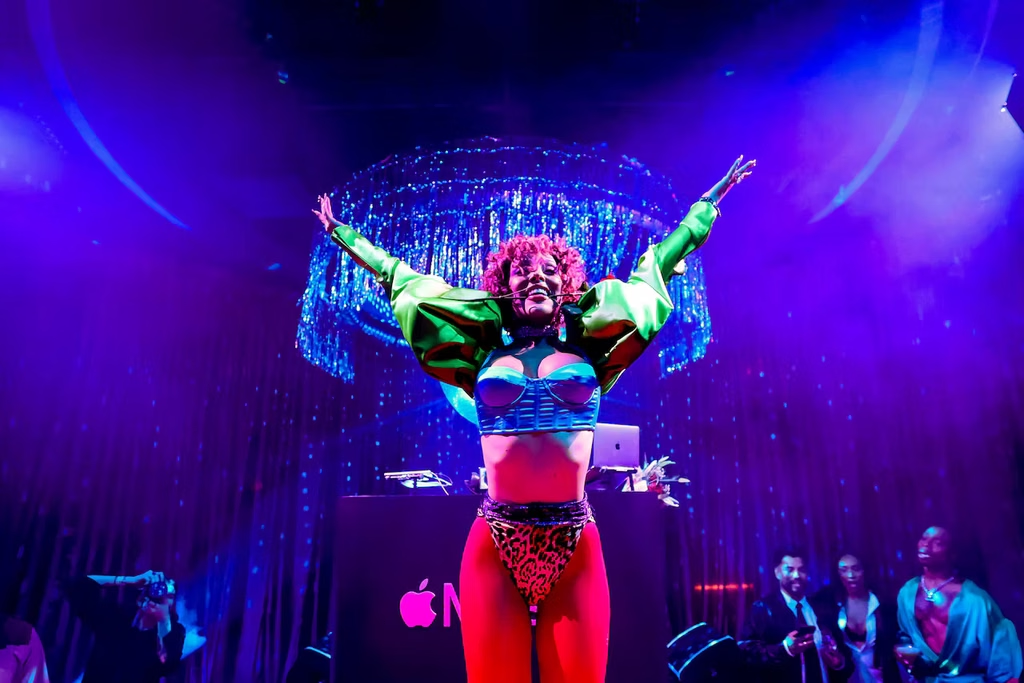
The current Vie era has swung hard the other way, into glossy ’80s maximalism — animal-print bodysuits with corseted front panels, sheer catsuits layered under latex, a Marc Jacobs partnership feeding directly into the record’s whole visual identity. Different mood entirely from Scarlet’s body-horror. Same underlying instinct, though: on Doja, the body isn’t really the subject of the costume. It’s the raw material for a stranger, bigger idea. Carpenter’s clothes say look how pretty this is. Doja’s say look what this can turn into.
IDENTICAL SKIN, ENTIRELY DIFFERENT SENTENCES
This is really the whole answer to the “is this too much?” conversation that follows both of them everywhere: the exact same amount of exposed skin can mean two completely different things, because the meaning was never really about the fabric. It’s about the framing around it.
Carpenter’s reveals are built like punchlines , the towel drop, the fake wardrobe malfunction, the very deliberate wink at old pin-up cheesecake. The joke only lands because the audience is in on it, and the whole show is engineered to make sure they are. Doja’s reveals are built like transformations — a body turning into something else entirely, whether that’s a couture sculpture on a Paris carpet or a horror-tour prop covered in latex. Neither one is more “vulgar” than the other in any way that actually holds up. They’re answering different questions. Carpenter’s asking, isn’t this fun? Doja’s asking, what if a person could look like this?
Which is also why an identical corset can read completely differently depending on who’s in it and why it’s there. Stick that same silhouette in a slapstick pin-up number versus a horror-tour organ costume, and a screenshot of both might look interchangeable out of context , but they’re not saying the same thing at all. Context and intention are doing the actual work. The fabric’s just the delivery system.
BOTH OPERATIONS ARE BIGGER THAN A COSTUME CHANGE
It’s worth being honest about the machinery behind both of these, because neither happens by accident. Carpenter’s wardrobe is a tight, deliberate collaboration between her stylist and a narrow set of houses — Victoria’s Secret, Patou, Frolov — each one handed a specific act of the show to own visually. Doja’s is a rotating cast of fashion’s most prestigious surrealists, Gaultier and Schiaparelli chief among them, treating a pop tour with the same seriousness most houses reserve for a runway. Both are extravagantly expensive, extravagantly considered creative operations , closer to a season’s worth of collections compressed into ninety minutes than to “just” a costume change.
SO, FASHION OR PROVOCATION?
Honestly, the question’s aged out. Provocation used to mean shock purely for its own sake , skin as a headline generator. What’s happening on these two stages is more deliberate than that: costume working as narrative device, every look built to carry a specific character through a specific emotional beat. Call it vulgar if it isn’t your taste. But vulgarity, by definition, doesn’t ask its audience for anything beyond a reaction. What Carpenter and Doja Cat are doing asks for a bit more attention than that , enough to notice the reveal is a joke, or that the latex is doing the work a special effect used to do.
That’s not provocation. That’s just fashion doing the thing it’s always done best , saying something very specific, without ever having to say it out loudFashion, Fantasy or Provocation? The New Language of Pop Stage Costumes.
Put them side by side for a second , Sabrina Carpenter in a hand-bedazzled Victoria’s Secret bodysuit, Doja Cat wrapped in latex and animal print somewhere between a red carpet and a horror set , and the internet does the thing it always does: is this fashion, or is it just skin?
Wrong question, honestly. The one worth asking is what the costume is actually doing inside the story being told. Because Carpenter and Doja Cat are running two of the most fully-built visual worlds in pop right now, and they are not doing the same thing at all, even in the moments where the necklines land in exactly the same place.
CARPENTER’S PIN-UP UNIVERSE IS A JOKE YOU’RE MEANT TO BE IN ON
As a pin-up girl that I am (well, I was back in the day), I have to admit that Sabrina won me over with the staging, the costumes, and the vibe of her new tour
Jared Ellner ( the stylist who’s also dressed Emma Chamberlain and Camila Cabello ) has been building Sabrina Carpenter’s look since 2023, and he’s not being vague about where it comes from. Bardot. Marilyn Monroe in There’s No Business Like Show Business. Audrey Hepburn in Funny Face. The babydoll dresses from Grease. This is a specific, deliberately old-Hollywood pin-up world, and it’s being executed at a level that has nothing to do with “sexy pop star” as a default setting , a custom Victoria’s Secret bodysuit hand-finished with 150,000 crystals over 140 hours, a black lace Patou catsuit with matching opera gloves, custom pieces from the LA label Frolov and rising designer Emily Essen.
And the whole thing opens with a bit, not a statement. Carpenter walks out wrapped in a bath towel, playing confused, as if she’s just discovered there’s a concert happening , then drops it to reveal the full sparkling look underneath. It’s slapstick before it’s glamour. That ordering matters. She’s told Time flat out that she sees the corsets and garter belts as an embrace of femininity on her own terms, not a performance for anyone else’s benefit. You can take that framing or leave it , but the intent, consistently, is nostalgia delivered with a wink, not a dare.
DOJA CAT TREATS HER BODY LIKE A SPECIAL EFFECT
Brett Alan Nelson has styled Doja Cat since 2019, and he sums up the whole project in three words: “Original. Authentic. Weird.” That’s a different job entirely from Ellner’s , less about curating one referential aesthetic, more about building something that barely existed before it hit the stage. Jean Paul Gaultier opened his own archive for her, unearthing jellyfish dresses and Renaissance-inflected gowns that had never been photographed. Schiaparelli’s Daniel Roseberry has dressed her in some of his most overtly surrealist pieces, the kind of thing that reads more like a walking sculpture than a red-carpet look. Her 2023 Scarlet tour ran almost entirely on a single unsettling idea , costumes built around exposed viscera, straight out of horror-movie language, all soaked in one dominant colour: red.
The current Vie era has swung hard the other way, into glossy ’80s maximalism , animal-print bodysuits with corseted front panels, sheer catsuits layered under latex, a Marc Jacobs partnership feeding directly into the record’s whole visual identity. Different mood entirely from Scarlet’s body-horror. Same underlying instinct, though: on Doja, the body isn’t really the subject of the costume. It’s the raw material for a stranger, bigger idea. Carpenter’s clothes say look how pretty this is. Doja’s say look what this can turn into.
IDENTICAL SKIN, ENTIRELY DIFFERENT SENTENCES
This is really the whole answer to the “is this too much?” conversation that follows both of them everywhere: the exact same amount of exposed skin can mean two completely different things, because the meaning was never really about the fabric. It’s about the framing around it.
Carpenter’s reveals are built like punchlines , the towel drop, the fake wardrobe malfunction, the very deliberate wink at old pin-up cheesecake. The joke only lands because the audience is in on it, and the whole show is engineered to make sure they are. Doja’s reveals are built like transformations , a body turning into something else entirely, whether that’s a couture sculpture on a Paris carpet or a horror-tour prop covered in latex. Neither one is more “vulgar” than the other in any way that actually holds up. They’re answering different questions. Carpenter’s asking, isn’t this fun? Doja’s asking, what if a person could look like this?
Which is also why an identical corset can read completely differently depending on who’s in it and why it’s there. Stick that same silhouette in a slapstick pin-up number versus a horror-tour organ costume, and a screenshot of both might look interchangeable out of context , but they’re not saying the same thing at all. Context and intention are doing the actual work. The fabric’s just the delivery system.
BOTH OPERATIONS ARE BIGGER THAN A COSTUME CHANGE
It’s worth being honest about the machinery behind both of these, because neither happens by accident. Carpenter’s wardrobe is a tight, deliberate collaboration between her stylist and a narrow set of houses , Victoria’s Secret, Patou, Frolov , each one handed a specific act of the show to own visually. Doja’s is a rotating cast of fashion’s most prestigious surrealists, Gaultier and Schiaparelli chief among them, treating a pop tour with the same seriousness most houses reserve for a runway. Both are extravagantly expensive, extravagantly considered creative operations , closer to a season’s worth of collections compressed into ninety minutes than to “just” a costume change.
SO, FASHION OR PROVOCATION?
Honestly, the question’s aged out. Provocation used to mean shock purely for its own sake , skin as a headline generator. What’s happening on these two stages is more deliberate than that: costume working as narrative device, every look built to carry a specific character through a specific emotional beat. Call it vulgar if it isn’t your taste. But vulgarity, by definition, doesn’t ask its audience for anything beyond a reaction. What Carpenter and Doja Cat are doing asks for a bit more attention than that , enough to notice the reveal is a joke, or that the latex is doing the work a special effect used to do.
That’s not provocation. That’s just fashion doing the thing it’s always done best , saying something very specific, without ever having to say it out loud