 111
111 2
2 3
3 4
4 5
5 6
6 7
7 8
8
Here’s a number that stuck with me: a single haute couture dress can take hundreds of hours to make. The client sees maybe four of them , a fitting, a reveal, a walk across a quiet salon floor. Everything else happens in a room she’ll never set foot in, made by hands she’ll never shake, and most of it won’t survive long enough to be worn by anyone.
That’s the part of luxury nobody puts in the ad campaign. Not the dress , the wreckage around the dress. The prototypes that get unpicked. The embroidery that outlasts whatever inspired it. The shoes that get carved and then quietly shelved. The fabric that gets cut, rejected, and burned. This is where the real cost of luxury actually lives. Not in the price tag itself, but in everything that had to fail privately so the final piece could look inevitable in public.
THE DRESS THAT ISN’T THE DRESS
Before a couture garment exists in real fabric, it exists in cheap cotton. The toile , a rough prototype stitched in calico or muslin , is where a sketch gets tested against actual gravity, and honestly, it’s where most of the real decisions get made. At Chanel under Karl Lagerfeld, the process ran with something close to ritual precision: he’d see every look first as a toile, to settle the fabric and any embroidery, then again in the real material once it was fully ornamented, then a final time on the model who’d actually wear it. A single couture piece usually goes through three to five of these toile iterations before anyone touches the good fabric , and every single one of those earlier versions gets unpicked or thrown out the moment it’s done its job.
Which means the dress you eventually see isn’t the first draft of anything. It’s the fourth or fifth draft of a garment whose earlier drafts no longer exist in any form at all. The toile isn’t a shortcut on the way to the dress. It basically is the design process , and it’s built, on purpose, to be thrown away.
THE ROOM NOBODY GETS INVITED INTO
Every serious couture house runs on an internal hierarchy most clients never think twice about. The petites mains , literally “small hands” , start out mastering a single straight stitch for months before anyone trusts them with something as basic as a seam. Eventually they can rise to première d’atelier, the person who takes a flat sketch and turns it into an actual three-dimensional shape by draping and pinning it directly onto a mannequin.
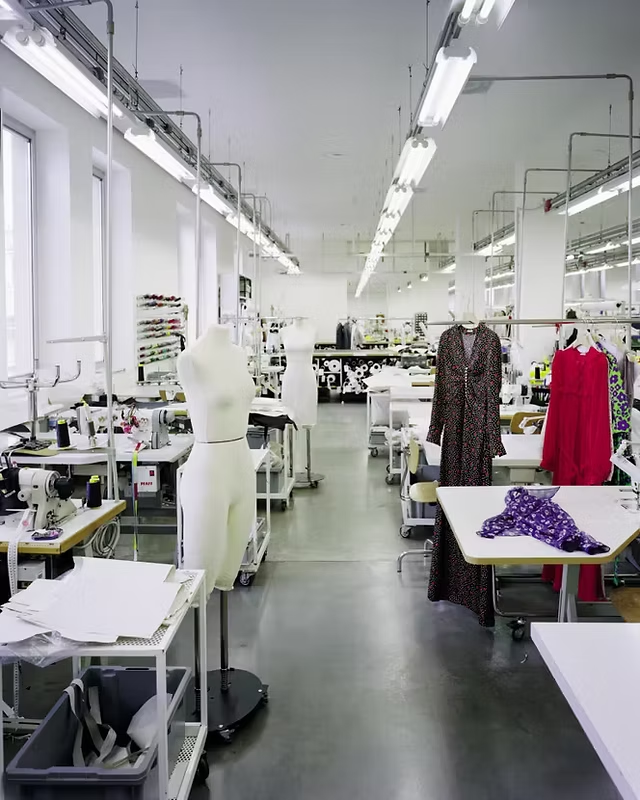
Houses split their workshops in two along the way: the atelier tailleur handles structured tailoring, the atelier flou handles soft, draped silks , and the split is so total that someone trained in one rarely, if ever, crosses into the other for their entire career. None of that labour shows up in the finished dress. It’s not supposed to. The whole job of a great atelier is to disappear completely into the seam, which means, if you think about it, the client is really paying for hundreds of hours of decisions and corrections that leave literally no visible trace in what she takes home.
THE EMBROIDERY THAT OUTLIVES WHATEVER INSPIRED IT
Some of the most extraordinary work in fashion never gets seen up close by anyone outside a single workshop. Maison Lesage , the embroidery house behind decades of Chanel’s and Yves Saint Laurent’s most extravagant pieces , has, across its full archive, produced work that François Lesage himself once estimated at nine million hours. The single most famous example is a 1988 jacket made for Saint Laurent, based on Van Gogh’s sunflowers: over 350,000 sequins, 100,000 hand-painted ceramic beads, more than 18 kilograms in weight, and upwards of 770 hours of embroidery to finish. Saint Laurent’s brief to Lesage was apparently as simple as asking for something like a chandelier reflected in a mirror, with the skies of Paris behind it. What came back will, realistically, be worn a handful of times across its entire existence.
Lesage is one of eleven ateliers now gathered under Chanel’s le19M complex in Paris, alongside the shoemaker Massaro, jeweller Goossens, feather specialist Lemarié, and others — all of them making things almost nobody outside the industry will ever see up close, built specifically to be glimpsed for a few seconds of runway lighting and then carefully put away.
THE SHOE THAT NEVER TAKES A SINGLE STEP
Manolo Blahnik has spent over fifty years hand-carving his own shoe prototypes , sketching the idea, then whittling the wooden last himself, cutting the upper pattern, assembling the sample by hand before a single factory artisan is even allowed to study it and start copying it for real production. A single Blahnik shoe moves through roughly fifty separate production stages before it’s finished, which is part of why his factory in Parabiago, Italy, only turns out around eighty pairs a day across the entire operation. Now multiply that whole process by every version he decides not to use before landing on the one that actually reaches a shop floor, and the math gets a little uncomfortable: for every pair someone eventually buys, there are earlier hand-carved, hand-assembled versions that existed only long enough to be judged, and then set aside for good.
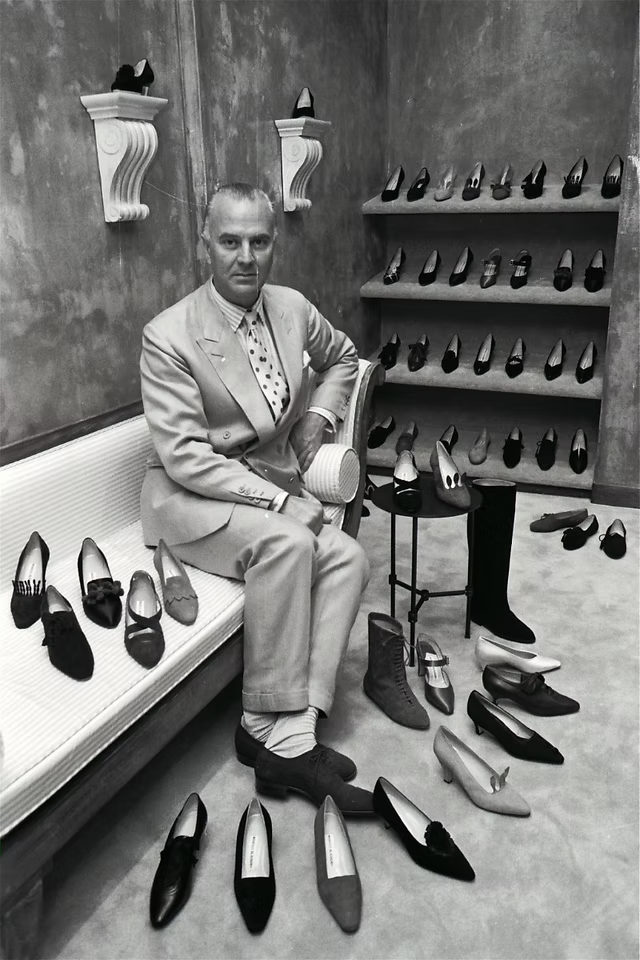
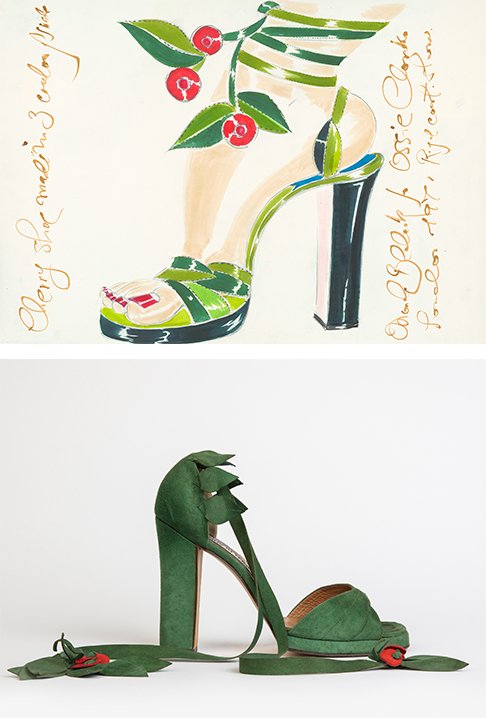
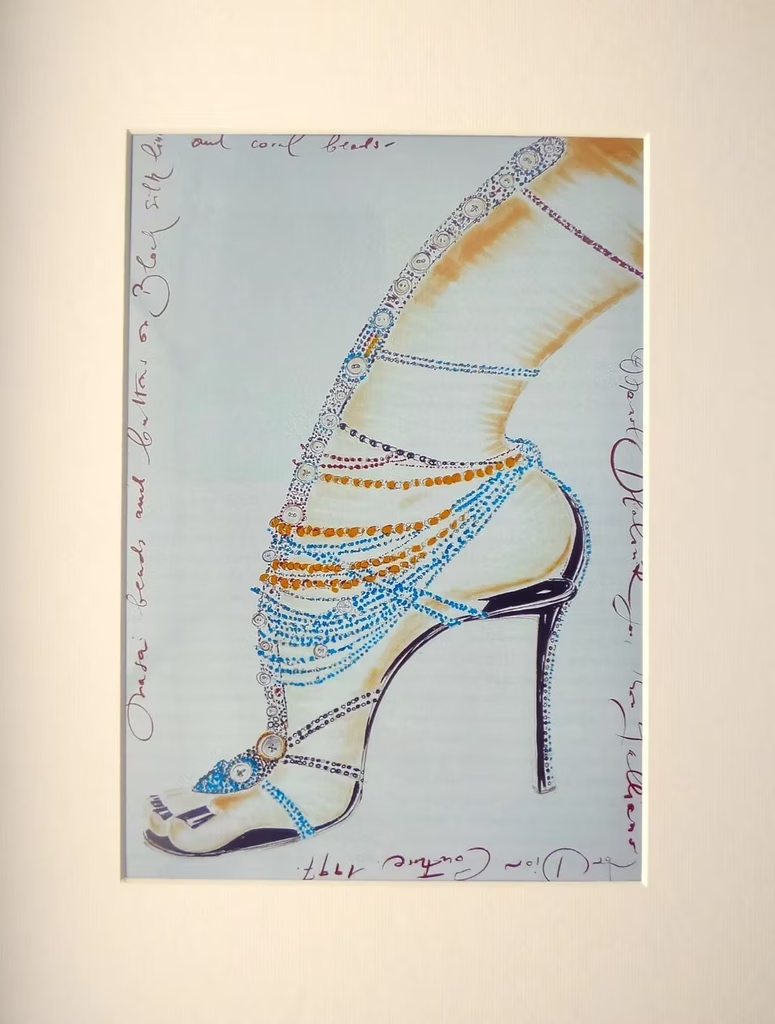
That’s basically true across footwear and accessories at most serious houses. The prototype isn’t a rough draft of the eventual product. It’s the product’s first and only performance, for an audience of exactly one person, before it gets retired.
THE FABRIC THAT NEVER BECOMES ANYTHING AT ALL
Zoom out from any single house and the invisible pile gets a lot bigger. The fashion industry produces an estimated 92 million tonnes of textile waste a year, and roughly 15% of all fabric used in garment manufacturing gets lost on the cutting-room floor alone , cut wrong, misshapen, or just surplus to what the pattern actually needed. Deadstock , fabric made but never used for its original purpose , is now a market worth several billion dollars globally, big enough that LVMH runs its own resale platform for it, NONA Source, specifically to keep some of the group’s excess out of landfill. In 2017, Burberry made headlines for incinerating roughly $37 million worth of unsold product in a single year , not by accident, but as a deliberate move to stop the goods from ending up discounted or counterfeited somewhere down the line.
None of that fabric ever became something a client could actually buy. Most of it never became anything at all.
THE GARMENTS THAT SIMPLY DISAPPEAR
Even the pieces that do make it down a runway aren’t guaranteed to last. Formally archiving collections is a surprisingly recent habit in fashion , even Dior didn’t start properly preserving its own history until the house’s fortieth anniversary. Before that shift, longtime American Vogue editor Hamish Bowles has pointed out, the whole industry treated a runway sample as something meant to be sold, not saved , product first, artefact a distant second, if it registered as an artefact at all. Even now, a house showing sixty-odd looks a season, twice a year, across decades under one designer, has to weigh the real cost of keeping every single one in climate-controlled storage against a far smaller number it can actually justify preserving.
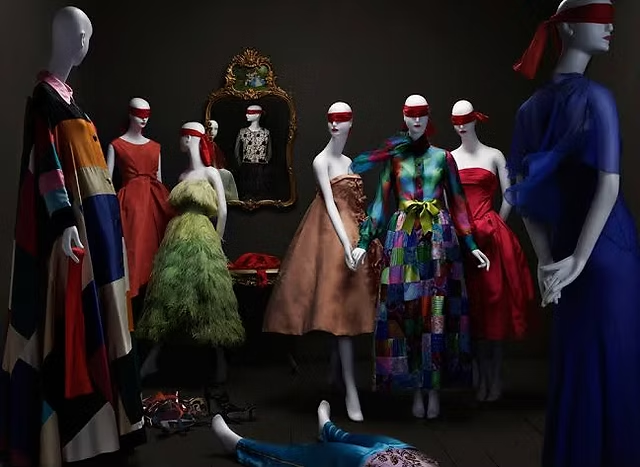
The rest get sold, altered to fit a client’s own measurements, repurposed, or just lost to time and ordinary wear, since they were built to be worn in the first place, not kept behind glass.
Which means whatever survives in a house’s official memory is already a curated fraction of what actually got made , and an even smaller fraction of what got tried on, fitted, photographed under studio light, and then shown to absolutely nobody.
WHAT THE PRICE TAG IS ACTUALLY PAYING FOR
None of this shows up on an invoice, and honestly, that’s kind of the whole point. When a house charges what it charges, the client isn’t really paying for silk, thread, and a handful of hours of someone’s time. She’s paying for every toile that got unpicked to get the drape right. Every embroidery hour that outlasted the relationship it was made to celebrate. Every hand-carved shoe last that got judged and quietly shelved. Every metre of fabric cut away and never used. Every earlier version of the garment that had to fail privately, so the one she’s wearing could look effortless in public.
Luxury was never really about the object. It’s about everything that had to disappear first, so the object could look inevitable.
All images featured in this article are credited to owners . They are used for editorial and illustrative purposes only, with no commercial intent. All rights remain with their respective owners.