 111
111 2
2 3
3 4
4 5
5 6
6 7
7 8
8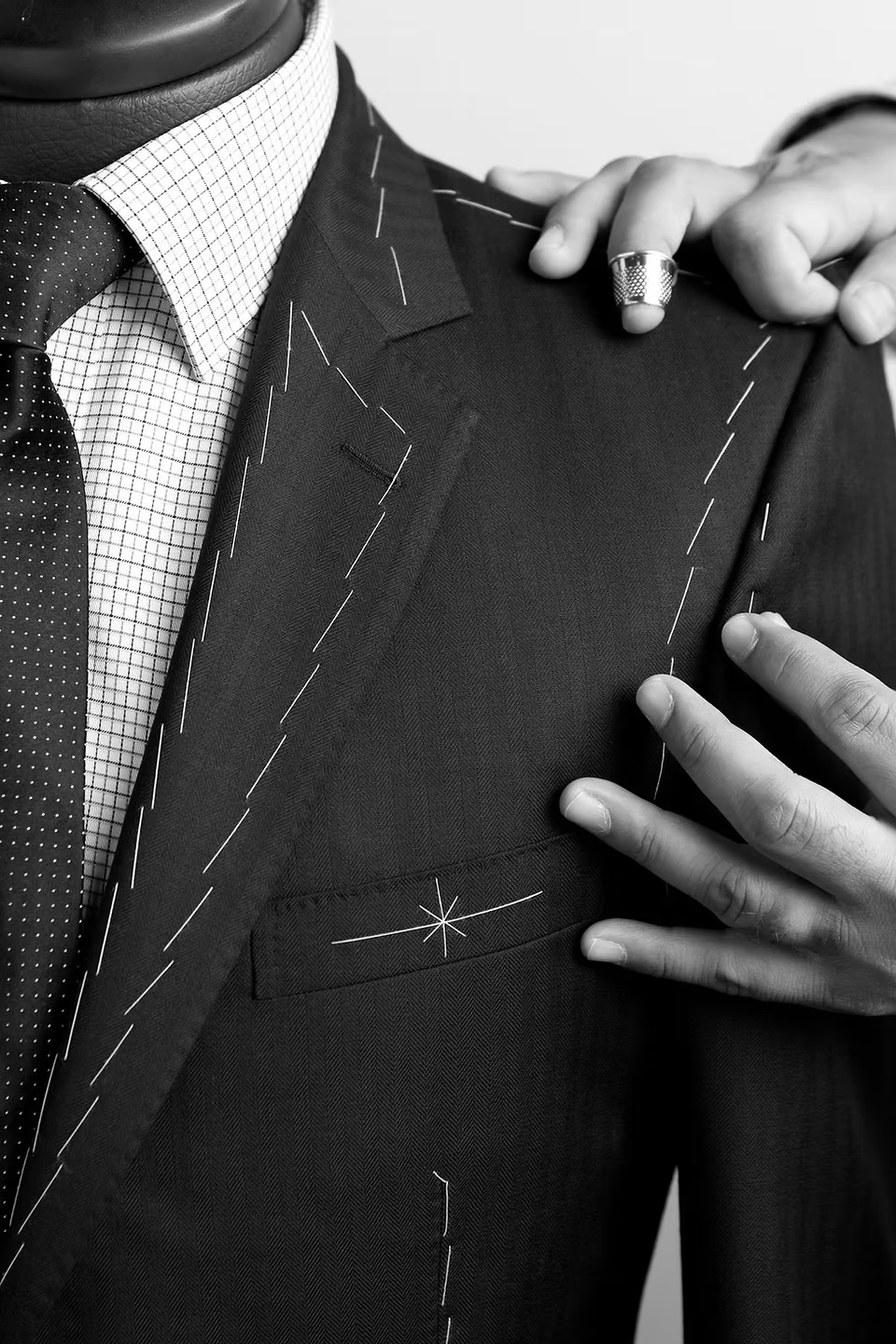
Everyone throws these words around. Couture. Atelier. Heritage. Archive. I’ve watched them get slapped on a £40 t-shirt as casually as they get used to describe a dress that took eight hundred hours to make , and honestly, most people using them, on either end of that spectrum, couldn’t tell you what they actually mean.
So let’s fix that. Not a trend report. A dictionary , the one nobody hands you when you start caring about fashion, the one that separates people who use these words correctly from people who just like how they sound.
COUTURE
Here’s the thing that surprised me most researching this: “couture” isn’t a vibe. It’s a legal category. In France, “haute couture” is a protected term, regulated by the Chambre Syndicale de la Haute Couture, and a house has to earn the right to use it every single year. The rules, set in 1945 and only lightly relaxed since: a Paris atelier with at least fifteen full-time technical staff, garments made to order for private clients with multiple fittings, and two collections presented in Paris annually. Right now, there are only around fifteen houses on earth legally allowed to call themselves haute couture. Estimates put the total number of haute couture clients worldwide somewhere between 150 and 250 people. That’s it. That’s the entire client base for the most-referenced word in fashion.
So the next time you see “couture” on a party dress from a fast-fashion site , that’s not couture. That’s just a word someone borrowed because it sounded expensive.
ATELIER
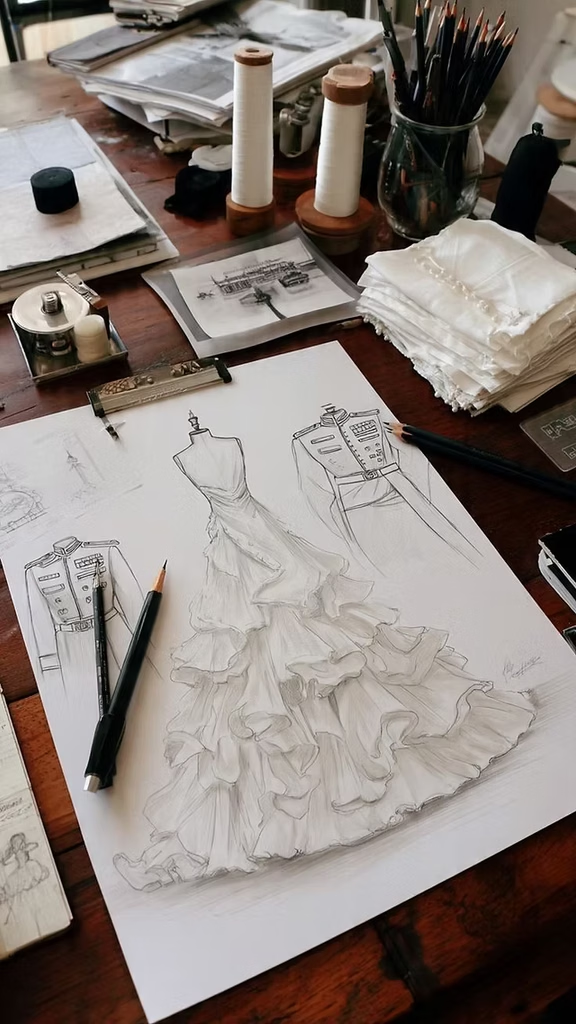
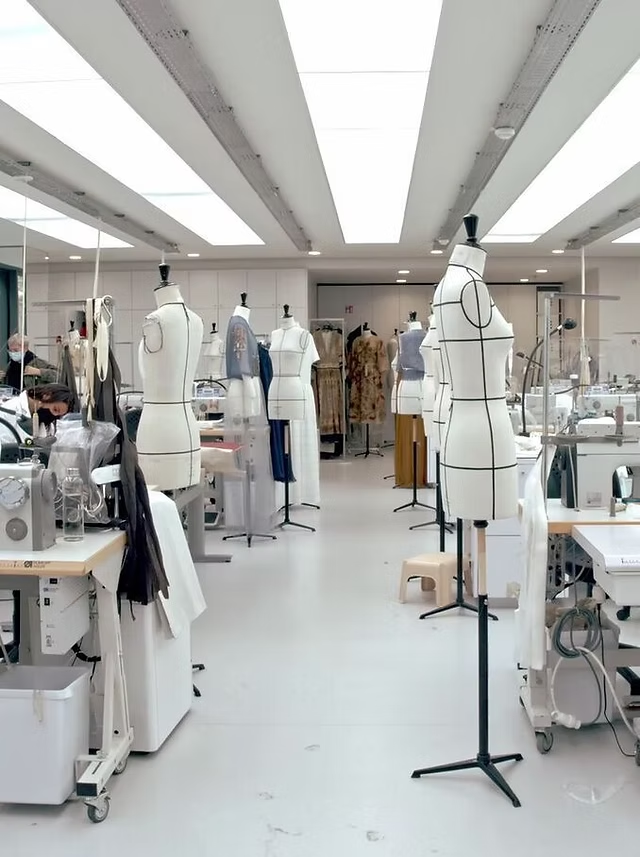
Literally, just French for “workshop.” But inside a real fashion house it means something very specific: a hierarchy, almost monastic in its structure. Every serious couture house splits its atelier in two , the atelier tailleur, which handles structured tailoring, and the atelier flou, which handles soft, draped fabrics like silk and chiffon. The specialisation runs so deep that a seamstress trained in one workshop will, in most cases, never cross into the other across an entire career. Within each, you climb from petite main , apprentice, sometimes spending months mastering nothing but a single straight stitch , up to première d’atelier, the person trusted to take a designer’s flat sketch and drape it into three-dimensional form, live, on a mannequin. When people say “atelier” to sound fancy, this is the actual machine they’re gesturing at.
BESPOKE
I’d always assumed bespoke and made-to-measure were basically the same thing. They’re not, and the difference is the whole point. The word comes from Savile Row in London, from the old verb “to bespeak” , to speak for something, to have it set aside and made specifically for you. A bespoke garment is cut from a pattern built entirely from scratch for one individual, no template involved at all. Made-to-measure, by contrast, starts from an existing standard pattern that just gets adjusted to fit you. A genuine Savile Row bespoke suit requires a minimum of fifty hours of hand work and a series of fittings before it’s finished. So “bespoke” isn’t a fancier way of saying “customised.” It means built from nothing, for exactly one person, by hand.
RTW (READY-TO-WEAR)
This is the opposite end of everything above , and it’s the category responsible for basically all the clothing any of us actually own. Ready-to-wear, or prêt-à-porter, means garments made in standardised sizes and sold finished, off the rack, no fitting required. It wasn’t always respectable. When Pierre Cardin launched a mid-priced ready-to-wear line for the Printemps department store in Paris in 1959, the Chambre Syndicale actually expelled him for it , off-the-rack was considered beneath a serious couturier at the time. Cardin didn’t care, reportedly telling the New York Times decades later that he was born an artist but he was also a businessman. By the 1960s and 70s, everyone had quietly followed him. Today, ready-to-wear is where nearly every major house makes the overwhelming majority of its actual revenue , haute couture, for most of them, barely turns a profit at all. It exists to sell the dream that ready-to-wear then sells, at scale, to the rest of us.
RESORT (OR CRUISE)
My favourite one, because the origin story is so specific. In 1919, Gabrielle Chanel noticed that her wealthy clients were heading off to the Mediterranean each winter and had absolutely nothing appropriate to wear once they got there , their wardrobes were all built for cold Parisian winters. So she designed a small collection of lightweight pieces made specifically for that in-between moment, and the resort, or cruise, collection was born. It sits outside the traditional Spring/Summer and Fall/Winter calendar entirely, shown between May and June, meant for people whose lives don’t run on the same seasonal clock as everyone else’s. It’s since become a genuine commercial engine , some houses report cruise now accounts for a huge share of annual turnover , but it started as literally nothing more than: rich people going on holiday with nothing to wear.
MÉTIERS D’ART
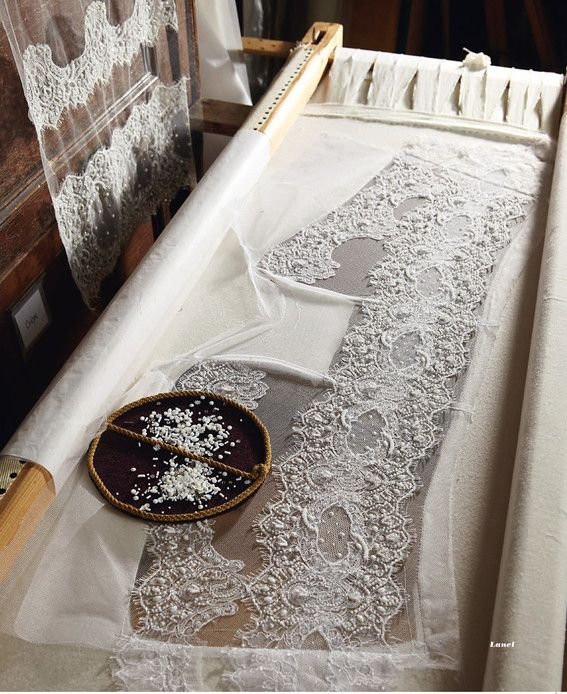
French for “arts and crafts,” but in fashion it refers to something much narrower and far more precious: the specialist ateliers, mostly independent, that supply the embroidery, feathers, jewellery, and shoes that go into couture. Chanel has taken this further than any other house, gathering eleven of these specialist workshops , the embroiderer Lesage, the shoemaker Massaro, the jeweller Goossens, the feather house Lemarié among them , under one roof in Paris called le19M, and holding an entire annual show dedicated purely to their work. These are the people producing embroidery that can take hundreds of hours per panel, work that will be seen on a runway for maybe thirty seconds and then, very likely, never seen again by anyone outside the house
.
SAVOIR-FAIRE
Untranslatable in one word, but the closest is simply “know-how” , except in fashion it means something closer to inherited, embodied knowledge, the kind that can’t be written down in a manual and handed over, only passed hand to hand between a master and an apprentice over years. It’s the word houses reach for when they want to describe the difference between a technique and a tradition.
ARCHIVE
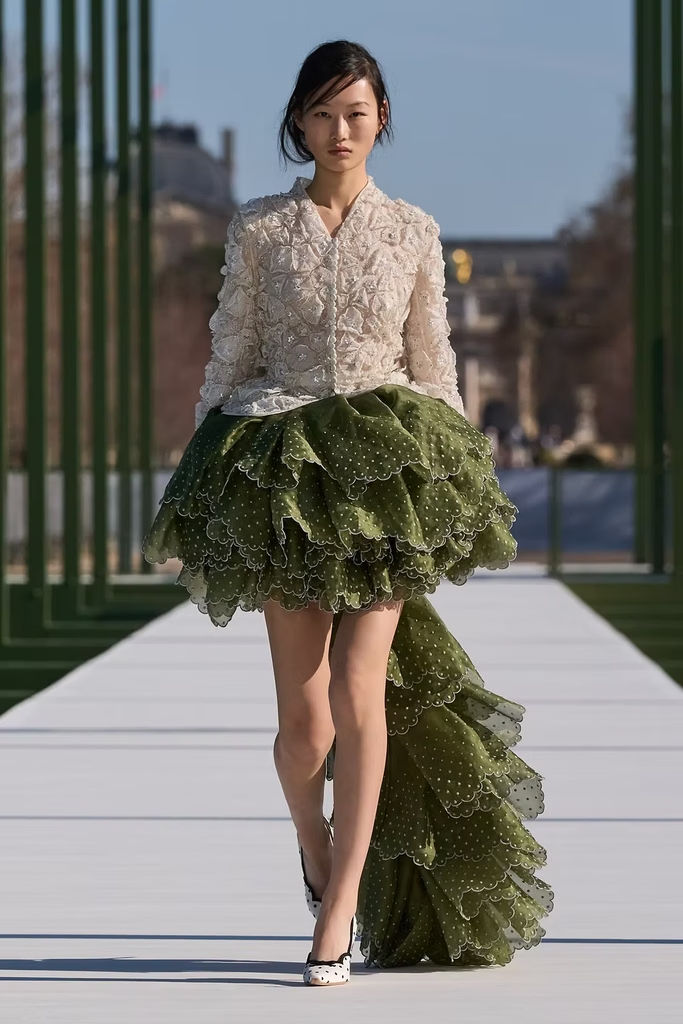
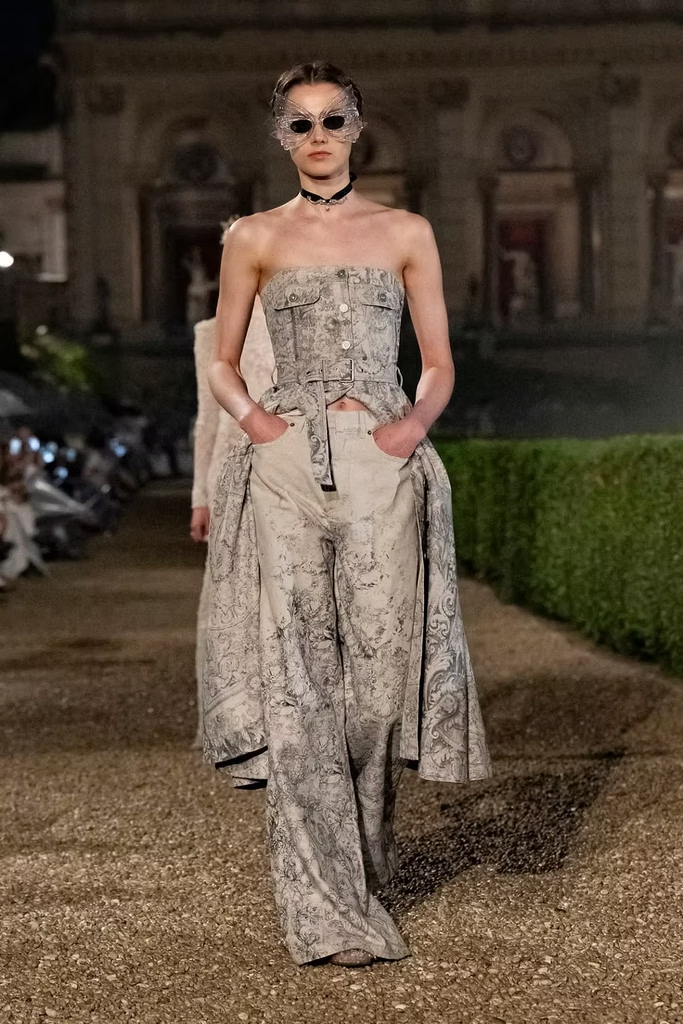
Here’s something I didn’t expect: the “brand archive” as we know it is barely a few decades old. Even Dior, one of the most historically minded houses in the world, didn’t start formally preserving its own runway pieces until its fortieth anniversary. For most of fashion’s history, according to longtime Vogue editor Hamish Bowles, a runway sample was treated as product first and artefact a distant second, if at all , you made it to sell it, not to save it. That’s changed completely; archival pieces now sell at auction for tens of thousands of euros, and houses maintain climate-controlled vaults specifically to stop, as one Sotheby’s piece put it, significant designs from falling into “conceptual landfill.” But it’s worth remembering: for the first hundred-plus years of couture, almost nobody thought to keep any of it
.
HERITAGE
The word houses reach for when they want you to feel their history without having to prove any particular piece of it. Technically it just means what’s been inherited , the founder, the codes, the techniques passed down. In practice, it’s become one of the most overused words in luxury marketing, precisely because it’s the hardest one to fake convincingly. A house with real heritage doesn’t usually need to say the word very often. The ones that say it constantly are, more often than not, compensating for not having very much of it.
MAISON
Simply French for “house” , but the word choice is deliberate. A brand sells product. A maison, in the way fashion uses the term, implies something closer to an institution: a founder, a set of codes, a lineage that’s meant to outlast any single collection or creative director. Calling Chanel or Dior a “brand” isn’t wrong, exactly. It’s just missing the point of why they call themselves something else.
So, next time one of these words shows up on a product description, a press release, or someone’s Instagram caption , you’ll actually know whether it’s earned or just borrowed. That’s really the whole use of a vocabulary like this. It’s not about sounding fashionable. It’s about being able to tell the difference between the real thing and the word wearing its costume.
All images featured in this article are credited to owners . They are used for editorial and illustrative purposes only, with no commercial intent. All rights remain with their respective owners.