 111
111 2
2 3
3 4
4 5
5 6
6 7
7 8
8
Nobody ever asks what these people would wear on their day off. We’re all too busy staring at the suit, the cape, the sentient nanotech , costume design that exists for exactly one purpose: combat. Strip away the armor for a second and you’re left with a personality, a posture, a way of moving through a room. Personalities dress themselves. So I did the thing nobody asked me to do: gave Marvel’s entire roster actual stylist’s notes.
Iron Man (Tony Stark) → Tom Ford. Stark doesn’t dress for comfort, he dresses for control , a slightly too-perfect fit, the confidence of someone who’s never once doubted a room would notice him walk in. Tom Ford’s tailoring is the only house arrogant enough to match him.
Captain America (Steve Rogers) → Ralph Lauren. Nearly six decades of selling heritage and discipline without needing a logo to prove it , exactly how Rogers carries himself. Quiet conviction over spectacle, values you trust because he’s never had to advertise them.
Thor → Dsquared2. Take away the hammer and Thor is pure larger-than-life bravado — theatrical, a little over-the-top, built for a body that’s never once doubted itself. Dsquared2’s loud, rock-star maximalism gives the god of thunder somewhere to actually be dramatic off the battlefield.
Black Panther (T’Challa) → Off-White. Wakanda’s entire visual identity blends vibranium-level technology with centuries of textile tradition, treating neither as more “advanced” than the other. Virgil Abloh built Off-White on that exact premise , streetwear and heritage craft as equally serious design languages, not a costume mash-up.
Loki → Gucci (Alessandro Michele era. ) Loki performs, always, including sincerity. Michele’s Gucci , maximalist, theatrical, gleefully gender-fluid , is the only design era chaotic enough to keep up with a god whose whole identity is the art of the convincing lie.
Doctor Doom (Victor Von Doom) → Rick Owens A man who lost everything and rebuilt himself as armor needs a silhouette that reads as a threat before he’s said a word : heavy, sculptural, monumental. Owens’ gothic scale is exactly that register.
Black Widow (Natasha Romanoff) → Bottega Veneta. Natasha’s skill is going unnoticed until the exact moment she chooses not to. Bottega’s technically flawless, deliberately quiet design language is a woman who wins by being underestimated, dressed correctly.
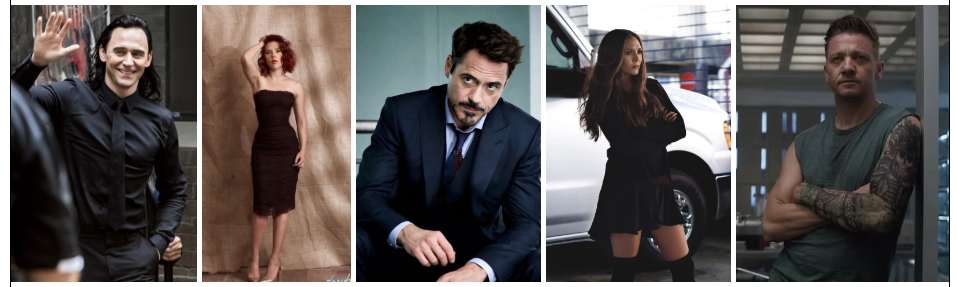
Hawkeye (Clint Barton) → Aimé Leon Dore .Clint is the Avenger with a mortgage , practical, allergic to anything expensive-looking on purpose. ALD’s East Coast prep filtered through actual function is the guy who owns one good jacket and wears it through three apocalypses.
Scarlet Witch (Wanda Maximoff) → Simone Rocha. Romance with real weight underneath , tulle that somehow still looks like it could hurt you. That’s Wanda: grief dressed as softness, until it very much isn’t.
Vision → Jil Sander. A being built from code and vibranium doesn’t need texture, he needs precision. Jil Sander’s geometric, mathematically exact minimalism is cold and perfect enough to match him.
Ant-Man (Scott Lang) → Stüssy. A guy who used to break into places for a living, now doing school pickup between apocalypses. Stüssy’s skate-culture-turned-legacy-brand energy is exactly that , a little edge that never fully grew up.
The Wasp (Hope van Dyne) → Alexander Wang. Hope moves fast and doesn’t wait for permission. Wang’s sharpest work is cut the same way , efficient, body-conscious, built to actually move in.
Shang-Chi → JUUN.J. Shang-Chi’s whole arc is reconciling two inheritances without letting either one shout over the other. Jung Wook-jun’s “street tailoring” , technical, East-meets-West, precise without ever being loud , is the same balancing act in fabric
.
Winter Soldier (Bucky Barnes) → Fear of God. Decades as a weapon with no say in the matter, still figuring out who he is without a mission. Jerry Lorenzo’s muted, heavy-fabric minimalism reads like a uniform for someone rebuilding an identity from nothing.
Reed Richards (Mister Fantastic) → Loro Piana. Arguably the smartest person in the Marvel universe, dressing like it means nothing to him , because to Reed, it genuinely doesn’t. Loro Piana’s quiet, borderline invisible luxury fits a man with nothing left to prove.
Sue Storm (Invisible Woman) → Celine (Phoebe Philo era). There’s a nice irony giving the woman who can disappear the house built entirely on quiet, unbothered confidence. Philo’s Celine never asked for permission and never needed to be seen to win , Sue’s power, made literal in fabric.
Johnny Storm (Human Torch) → Palm Angels. Famous before he was ever useful, and he knows it. Palm Angels’ loud, camera-ready streetwear fits a man who was always going to end up on someone’s phone.
Ben Grimm (The Thing) → Carhartt. Ben doesn’t dress up, because Ben is always, physically, on the job. Carhartt built its name on clothes made for actual labor, not the aesthetic of it.
Professor X (Charles Xavier) → Wooyoungmi. Xavier leads through calm conviction, never volume. Woo Young-mi’s menswear — refined, understated, built on decades of quiet authority rather than logos — is leadership dressed exactly the way Charles has always practiced it.
Magneto (Erik Lehnsherr) → Comme des Garçons (Rei Kawakubo era). Magneto believes peace was never actually on the table, only survival and eventually dominance. Kawakubo’s most confrontational work operates the same way — beauty that refuses to apologize for how it makes you feel.
Mystique → Maison Margiela. A literal shapeshifter belongs in the house built on the idea that identity itself is the raw material. Margiela never told you who was underneath. Neither does Mystique.
Cyclops (Scott Summers) → Thom Browne. Scott holds the team together without needing to be the loudest one doing it. Thom Browne’s rigid, rule-bound American tailoring is exactly that — discipline as leadership, precision as authority.
Storm (Ororo Munroe) → Valentino Haute Couture.Storm commands weather itself — already, functionally, a design language. She’s one of the only characters here who could walk an actual couture runway tomorrow and change nothing about who she is.
Wolverine (Logan) → Schott NYC.The house behind the original Perfecto biker jacket, unchanged since 1928, for a man who’s been wearing the same battered leather attitude for decades. No logos, no trend-chasing.
Rogue (Anna Marie) → Alaïa. Rogue’s power lives in the space between two bodies. Alaïa’s obsession with the body’s actual shape , second-skin fit, always a little dangerous to get close to — is almost uncomfortably on the nose.
Gambit (Remy LeBeau) → Etro. Louisiana charm wrapped around a playing-card motif and too much confidence for his own good. Etro’s paisley-drenched romantic maximalism is the only house theatrical enough to keep pace with him.
Emma Frost → Mugler. Weaponized femininity, daring you to underestimate her. Mugler’s been building corseted, sculptural power dressing on that exact premise since the 1980s.
Jean Grey → Chloé. Soft and romantic right up until the Phoenix wakes up, and none of that softness was ever a weakness. Chloé’s effortless prettiness holding real power underneath is the same quiet warning.
Beast (Hank McCoy) → Issey Miyake. Hank is a scientist first, mutant second, in his own head. Miyake built an entire design legacy on engineering , pleating technology, fabric innovation — over spectacle. It’s function elevated by genuine invention, exactly Hank’s own instinct.
Nightcrawler (Kurt Wagner) → Yohji Yamamoto.Real devotion and real melancholy in equal measure, moving through the world sideways, half in shadow. Yamamoto’s heavy, almost monastic black draping reads the same way — devotional, a little sorrowful.
Sabretooth (Victor Creed) → Rick Owens. Feral, deliberately hard to read as human, built to threaten before he’s said a word. Owens’ aggressive, all-black minimalism looks like a warning before it looks like clothing.
Thanos → Junya Watanabe. Thanos doesn’t see himself as a villain, he sees himself as inevitability. Watanabe’s technical, deconstructed maximalism , fabric engineered rather than simply cut — reads as monumental rather than merely large, built to occupy space rather than move gracefully through it.
Kang the Conqueror → Dolce & Gabbana Alta Moda. Kang rules across timelines, plural, simultaneously, and dresses like someone bored of conquering just one. Alta Moda’s baroque, deliberately overwhelming imperial maximalism is the only register grand enough for a man who considers “emperor” a starting position.
Ultron → Balenciaga (Demna era). A self-aware machine convinced he’s an upgrade on humanity needs clothes that feel cold and synthetic on purpose. Demna’s most unsettling Balenciaga seasons read exactly like Ultron’s own assessment of the species he’s trying to replace.
Killmonger (Erik Stevens) → Amiri. Killmonger turns generational grief into a weapon. Amiri’s luxury-meets-rebellion aesthetic , distressed, expensive, quietly furious , carries that same tension between polish and anger.
Red Skull (Johann Schmidt) → Ann Demeulemeeste. rA fanatic who’s already decided the world owes him its mourning doesn’t dress for the present. Demeulemeester’s severe, almost funereal draping carries that same weight — beautiful, and genuinely a little frightening.
All images featured in this article are credited to owners . They are used for editorial and illustrative purposes only, with no commercial intent. All rights remain with their respective owners.